

Before we head off into the weekend, let’s take a look back at the biggest stories on Reston Now in recent days.
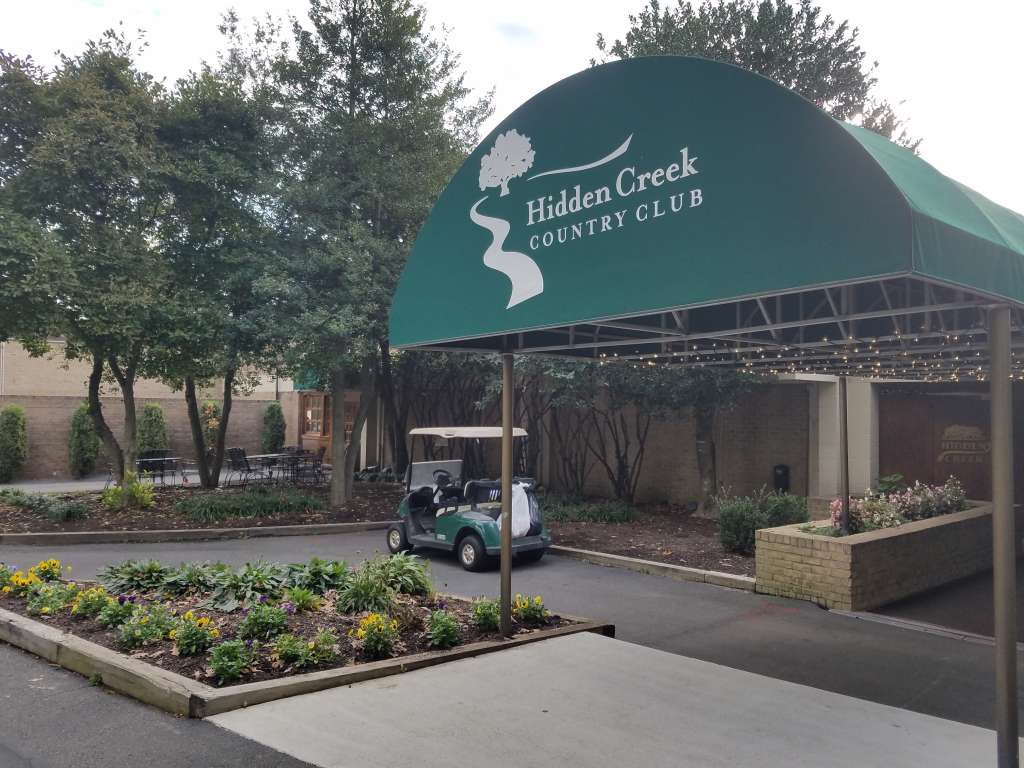
- Wheelock to Discuss Redevelopment Plans for Hidden Creek Country Club
- New Expansion for RTC West Approved by County Board
- Comstock Resubmits Site Plan for Downtown Herndon
- Updated: Police Find Missing Endangered Man Last Seen in Reston
- Op-Ed: Wheelock Contemplates Grand Park, Open Space for All
If you have ideas on stories we should cover, email us at [email protected] or submit an anonymous tip. We’re also looking for photos of Reston submitted by readers.
Feel free to discuss these topics, your weekend plans or anything else that’s happening locally in the comments below.
File photo
 This is an opinion column by Del. Ken Plum (D), who represents Reston in Virginia’s House of Delegates. It does not reflect the opinion of Reston Now.
Four hundred years ago next year will be the quadricentennial of important events happening in Virginia in 1619. Those events are not the rah-rah kind of happenings that are too often recognized with simple merriment. They are not examined for what we can learn from whence we came to understand how we got to where we are. The English established their first permanent colony in what became America in 1607; they did not “discover” America. There were an estimated 50,000 residents on the North American continent when the English bumped into the continent on their way to the riches of the Far East. The Spanish had visited the mid-Atlantic region decades before the English arrived but did not stick around since they found no gold or fountain of youth.
The indigenous people living in what the English named Virginia had a form of government in a confederation under the Great Chief Powhatan, an agricultural system, environmental protection, and a religion based on the natural spirits. They resented the people showing up in great ships and booming guns and taking land on which their forebears had lived for as many as 15,000 years. There should be no surprise that the indigenous people begrudged these illegal immigrants coming and taking their land and responded with what some people called savagery.
Joining the new settlers at the community they called Jamestowne in 1619 were an essential component of keeping a community thriving into the future — women. Just in time for the 2019 celebration, the Women’s Commission has construction underway for a monument celebrating the contributions of women in making Virginia thrive. Not a bit too soon!
Women were invited to join the men at Jamestowne to help start a new life in a new world. Not invited to join the white men and women were the enslaved Africans who were dropped off at Jamestowne without their consent and with an indentured servant agreement that could never be paid off. The enslaved Africans in 1619 were the first that would be brought to the colony to work in the tobacco fields and to do the hard labors without any of the benefits a new start in life was supposed to bring. The relationship between the white and black populations in Virginia was to dominate so much of the history of the state to the senseless killings of the Civil War and the complexities of race relations today.
In 1619 representatives of the plantations in the colony of Virginia met together in the mud-dab constructed church in Jamestowne to form a local government, much like a homeowner’s association, because the real power of governance continued to reside in London. That meeting is celebrated as the first meeting of representative government tracing its beginning in 1619 through the Revolutionary War, with a slight deviation of the Civil War, to today.
File photo

Before we head off into the weekend, let’s take a look back at the biggest stories on Reston Now in recent days.
- Planning Commission Approves RTC West Expansion
- Police: Herndon Man Arrested After Exposing Himself to 10-year-old
- Cleanup Underway After Trash Truck Fire on Dulles Toll Road
- What’s Going On This Weekend in Reston?
- Developing: Bullets Fired Inside Home On Kettering Drive
If you have ideas on stories we should cover, email us at [email protected] or submit an anonymous tip. We’re also looking for photos of Reston submitted by readers.
Feel free to discuss these topics, your weekend plans or anything else that’s happening locally in the comments below.
Photo via Handout/Fairfax County Government
This is an opinion column by Del. Ken Plum (D), who represents Reston in Virginia’s House of Delegates. It does not reflect the opinion of Reston Now.
The proposed Equal Rights Amendment (ERA) designed to guarantee equal legal rights for all American citizens regardless of sex has had a long and tortuous history. With the almost daily unfolding stories of abuse of women from lower pay, discrimination in employment, physical and mental abuse and other degradation, it has become obvious that it is about time for the ERA.
Alice Paul of the women’s suffragist movement is credited with writing the first draft of the ERA that was introduced in Congress in 1921. An amendment for submission to the states for ratification as required by Article V of the Constitution did not pass both houses of Congress until 1972 with a deadline of March 22, 1979 for the states to act. That deadline has been extended twice as the required 38 state ratification has never been met.
Currently 37 states have ratified the ERA although several states have sought under questionable legality to rescind their ratification. Both houses of the Virginia General Assembly have never ratified the ERA, but the State Senate has ratified it in 2011, 2012, 2014, 2015, and 2016. The Senate resolutions were never reported from the House Privileges and Elections Committee nor were resolutions introduced by House members ever reported from committee. I have been a supporter of the ERA during my entire tenure in the House of Delegates and co-patron of resolutions to ratify it; I have never had an opportunity to vote on it because the conservative House Privileges and Elections Committee has never had enough favorable votes to report it to the floor.
I am hopeful that the Virginia legislature will step up to be the state to finally ratify the ERA. Even with a favorable vote there are certain to be court challenges to the ratification because of the missed deadlines and because of efforts by some states to rescind their earlier ratifications. Even with these challenges the Virginia General Assembly should take action. The outcome of the 2016 state elections with the increased number of women in the House of Delegates should be enough to nudge Virginia forward. The phenomenal increase in activity by women in various political organizations in Virginia will send a signal to candidates for the House of Delegates in 2019 that they need to support the ERA.
The arguments of the past that women would be drafted into the armed services if the amendment was ratified no longer seem legitimate with women already providing outstanding service in the military. The high-profile stories of women being harassed and abused in work and social situations provide support for the ERA being part of the Constitution.
Virginia’s declaration of rights drafted by George Mason became the model for the Bill of Rights of our federal Constitution. Just as Virginia led in the fight to enumerate our rights, the Virginia General Assembly can lead again albeit a little tardy by being the final state needed to ratify the Equal Rights Amendment. It’s about time!
File photo
This is an op/ed submitted by Wheelock’s Dan Green and Steve Coniglio, the company’s local partner. It does not reflect the opinions of Reston Now. No development plans for Hidden Creek Country Club have been formally proposed to the county. If you wish to submit an opinion piece, email [email protected].
When Wheelock Communities purchased Hidden Creek Country Club in October 2017, we immediately recognized the special character of Reston and the need to include the community in exploring all the possibilities for the future of the private golf club.
From the day we purchased Hidden Creek, we have been open and honest about our intentions to work in partnership with the Reston community and club members to explore potential changes to the property that could provide the Reston community with additional public amenities, civic spaces, enhanced environmental benefits and new housing choices.
With that idea and Bob Simon’s Founding Principles of Reston in mind, Wheelock engaged the community by establishing a Focus Group to gain the perspective from a broad-based group of approximately 20 Reston residents that included representation from Rescue Reston, Reston Association, Reston Community Center, Hidden Creek Country Club members, nearby residents and other stakeholders in Reston.
We hired the best local firm, LandDesign, and a national land planning expert, John Sather of Swaback Partners, to work with the Focus Group. We gave both LandDesign and John Sather “free rein” to work with the group to ensure there were not any preconceived notions about the future of the property.
During the four interactive sessions, discussions centered on how the property could benefit the Reston community by creating significant public open space versus its current private use, providing public amenities to fulfill unmet community needs, rejuvenating the environmental condition of the stream areas and providing a mix of diverse housing, including the potential for senior housing and affordable/workforce housing.
We did a lot of listening during these sessions. We understand there is a group of residents that prefers Hidden Creek remain a private golf club available to its members. We also heard from the Focus Group the importance of public open space and the desire for this open space to be accessible to all Reston residents, not just the Hidden Creek Country Club members and those utilizing the portion of the Blue Trail that traverses the property. Improving the environmental condition of the land, removing the “road from nowhere” from the Comprehensive Plan and creating additional housing choices all were mentioned during this process.
Taking all this information, we challenged our team to think “big” on a special public element. In effect, we began by doing what few others do… we began by looking at public open space as the predominant part of the property.
At the final meeting of the Focus Group, the team presented a vision for a world-class, 100-acre Grand Park that the entire Reston community would be able to enjoy and shape. In creating this vision, our team examined other signature parks such as Merriweather Park in Columbia, Md., and Prospect Park in New York City. The vision presented included both passive and active recreational amenities, an indoor tennis facility, the Blue Trail and other trails providing community connectivity as well as cultural elements that adhere to Bob Simon’s Principals for Reston.
The Grand Park preserves more than 60 percent of the site as public open space. With additional trails and open spaces included within the development areas, as much as 75 percent could be open space. The remaining land would be planned for a variety of housing, some of which will help meet Reston’s needs for senior, workforce and affordable housing to continue Reston’s heritage of being an inclusive community. The exact number of homes has not been discussed as we are in a conceptual stage. However, we can say the housing, if approved, would be a mix of townhouses, single family and multi-family homes.
Reston is a place like no other. The Grand Park idea further reinforces that, making Reston one of the finest communities of our time.
We firmly believe in an open, public process and working in a partnership with the community to envision the future of the golf course. We look forward to continuing the discussion.
File photo
This is an op/ed submitted by Rescue Reston’s North Course Committee. It does not reflect the opinions of Reston Now. No development plans for Hidden Creek Country Club have been formally proposed to the county. If you wish to submit an opinion piece, email [email protected].
Wheelock Communities, the Connecticut-based company that bought the Hidden Creek Country Club in north Reston, says it wants to build housing on 40 percent of the golf course land on almost half of the golf course that comprises the biggest part of north Reston’s open space. The land design firm that Wheelock is working with told a community focus group last month that Wheelock foresees building between 500 and 2,000 housing units in the open space.
Building housing on Hidden Creek golf course would violate the Reston Master Plan that is part of the Fairfax County Comprehensive Plan, as well as require a change in the County zoning ordinance. The County has designated Hidden Creek as private recreational open space, specifically a golf course.
All of the Hidden Creek golf course needs to remain as private recreational open space, and here’s why: In this area, buying a house is almost always the biggest investment decision that any of us will make.
Because it is such a consequential decision, we homeowners count on the land-use plan to give us some confidence about what we can expect to see in our community over time. In fact, the Fairfax County website says, “The purpose of planning is to ensure that Fairfax County’s excellent quality of life will continue.” The Reston Master Plan Task Force’s goal was to guide the community’s growth and development for the next 30 to 40 years.
Why should one real estate development company that has had no connection to our community be able to make an investment decision that would undermine the individual investment decisions of many thousands of Reston households?
Allowing that would be counter to one of Robert Simon’s primary goals for Reston: “that the importance and dignity of each individual be the focal point for all planning, and take precedence for large-scale concepts.”
Building new housing where it’s not supposed to be–and losing 40 percent of north Reston’s planned open space at Hidden Creek in the process–would hurt Reston households. And it would hurt not just those who live in the Lake Anne/Tall Oaks district of Reston, but all Restonians who rely on the two major north-south roads through north Reston: Wiehle Avenue and Reston Parkway.
Before we head off into the rainy weekend, let’s take a look back at the biggest stories on Reston Now in recent days.
- Updated: Mother, Two Children Found Dead in Apparent Double Murder, Suicide
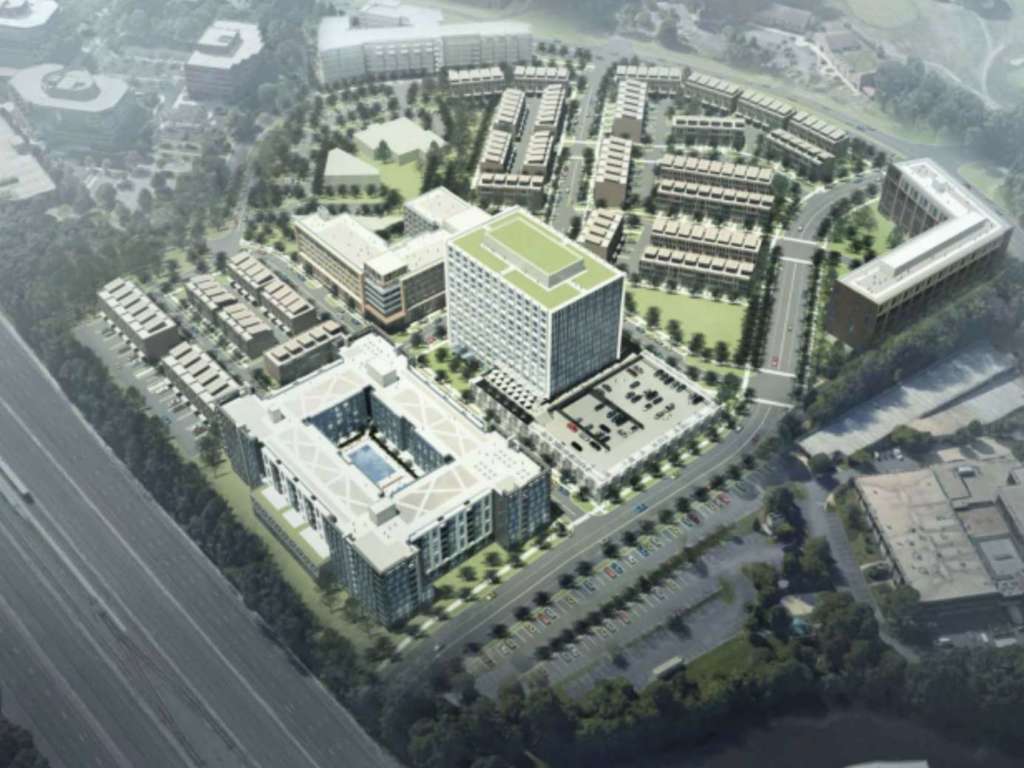
- Another New Mixed-Used Project Proposed Near Wiehle-Reston East
- Sprouts Farmers Market, LA Fitness to Open in Herndon Centre
- Farmers Market to Begin in Reston Town Center Tomorrow
- Coming Soon: Thai Restaurant to North Point Village Center
If you have ideas on stories we should cover, email us at [email protected] or submit an anonymous tip. We’re also looking for photos of Reston submitted by readers. And if you’re looking for things to do in Reston this weekend, check out our weekly roundup of events.
Feel free to discuss these topics, your weekend plans or anything else that’s happening locally in the comments below.
Photo via Fairfax County Government
This is an opinion column by Del. Ken Plum (D), who represents Reston in Virginia’s House of Delegates. It does not reflect the opinion of Reston Now.
While many of us express concern that we do not see as many solar collectors on Virginia roof-tops as we would like, the Commonwealth is showing significant progress on turning sunlight into electrical energy. As with any major change there are some hazy areas that need to be considered as well.
According to the Solar Energy Industries Association (SEIA) as reported in the August 2018 issue of Virginia Business magazine, Virginia currently ranks 17th nationally with 631.3 megawatts of installed solar capacity. The ranking is a significant jump from 2016 when the state ranked 29th nationally. Even with the advanced standing, only 0.59 percent of the state’s electricity comes from solar. By way of contrast, North Carolina is second in the nation in installed solar capacity with 4,412 megawatts brought about by generous tax incentives. For North Carolina that is nearly five percent of their electricity supply.
Virginia’s future with solar appears bright with 59 notices of intent with the Department of Environmental Quality to install 2,646 megawatts of solar according to the Virginia Business article. Driving the expansion of solar energy is a sharp drop in price from $96 in 1970 to 40 cents per kilowatt this year and an insistence on the part of technology giants like Amazon, Microsoft, Google and Facebook, all of whom have a presence in Virginia, that their electric power come from solar systems. The Grid Transformation and Security Act passed by the General Assembly this year requires 5,000 new megawatts of solar and wind energy to be developed. Included in that total is 500 megawatts of small, roof-top panels.
Middlesex County Public Schools opened this year with two of its three schools powered by solar energy. Although a small, rural school system, Middlesex has the largest ground-mounted solar system of any school division in the state and is expected to save over two million dollars per year. Excess electricity generated is sent to the grid for credit for any electricity the schools takes from the grid at night through a net-metering arrangement.
Some shadows along the way can be expected with such a massive shift in the way electricity is produced. It takes about eight acres of land for each megawatt produced. Solar farms take up large amounts of land. Just last week the Culpeper County Board of Supervisors voted to deny a conditional-use permit for a 178-acre utility scale solar facility in the County. The supervisors indicated that they had questions about the project for which they did not receive adequate answers. One factor is likely to have been the results of a study by the American Battlefield Trust that indicated the project would be visible from some of the half-dozen signal stations around Culpeper County that were used during the Civil War to detect troop movement. The County depends on a high level of tourism based on its Civil War battlefields and apparently does not want to jeopardize its attraction to Civil War buffs.
The clouds will pass, and Virginia is on its way to a bright future with solar energy.
File photo
 This is an op/ed submitted by Terry Maynard, co-chair of the Reston 20/20 committee. It does not reflect the opinions of Reston Now.
Reston’s future lies largely in the numbers that define the county’s plan for Reston’s transit station areas (TSAs)–the areas roughly within a half-mile of each Metro station. The results of looking at those numbers are shocking, but not really surprising.
The Board of Supervisors-approved Reston Master Plan calls for 44,000 dwelling units (DUs) in Reston’s TSAs, virtually all of which will be high-rise (“elevator”), high-density DUs–condos and apartments.
County planning assumes 2.1 people will live in each high-rise, high-density DU.
Put together, that means a potential population of 92,400 people in Reston’s station areas. That’s without any affordable housing “bonuses” or development waiver approvals or other uncounted DUs or people, a frequent fact of life in Fairfax County.
When the Reston Master Plan Task Force was working on a new plan for the station areas, the county provided several different numbers for the actual acreage of the study area. These ranged from 1,232 acres (1.925 square miles) to 1,683 acres (2.630 square miles) of land in Reston’s TSAs. The county provided no explanation for the range of values.
Dividing the number of people by the acreage, the resulting number is somewhere between 55 and 75 per acre. On a square mile basis, that Reston TSA density is between 35,200 and 48,000 persons per square mile (pers/SM).
According to Wikipedia, Manhattan has a density of 26,403 pers/SM. That makes the planned population of Reston’s TSAs at least one-third denser than and potentially nearly twice as dense as Manhattan is today.
Wikipedia adds that Manhattan’s residential density “makes it the densest of any American municipality with a population above 100,000.” And Reston’s TSA population may well exceed that 100,000 number if the county continues its bonus and waiver giveaways to developers.
I don’t think anyone who lives in Reston thinks that two square miles of super-density in Reston’s TSAs cutting through the middle of our community is consistent with any definition of preserving, much less improving, Reston’s quality of life. And the county has no meaningful plans or means to meet the infrastructure requirements of this population or the needs of the surrounding Reston community.

Before we head off into the weekend, let’s take a look back at the biggest stories on Reston Now in recent days.
- Updated: Mother, Two Children Found Dead in Apparent Double Murder, Suicide
- Updated: Three People Found Dead Inside Herndon Home
- Body Worn Camera Pilot Program in Reston Ends
- Police Investigate Robbery at 7-Eleven on Soapstone Drive
- Restriping of South Lakes Drive Ignites Concerns, Fury
If you have ideas on stories we should cover, email us at [email protected] or submit an anonymous tip. We’re also looking for photos of Reston submitted by readers.
Feel free to discuss these topics, your weekend plans or anything else that’s happening locally in the comments below.
Photo via Fairfax County Police Department
This is an opinion column by Del. Ken Plum (D), who represents Reston in Virginia’s House of Delegates. It does not reflect the opinion of Reston Now.
Sorry, but this is yet another column on the continuing effort to de-gerrymander House of Delegates districts in Virginia as directed by the federal courts. In this instance, it was the Republican Party who in the majority after the 2010 census drew district lines that were designed to keep them in the majority until the next census in 2020 when lines must be drawn again. They ran into trouble when to dilute the votes of African Americans who traditionally vote Democratic they packed them into eleven districts in the Richmond and Hampton Roads regions. A panel of federal judges found the practice violated the constitutional rights of the individuals involved and ordered the districts to be redrawn. The Governor called the General Assembly into special session last week to carry out the court’s directive. The legislature went home without success after one day of effort.
Why is the Republican majority failing to do as the court directed? The reason is quite simple. If it took an unconstitutional drawing of district lines to maintain their majority in the House of Delegates, an undoing of those lines would likely take away their majority. Is the court favoring Democrats in what they are doing? No, the court is protecting the constitutional rights of individuals. The court does not take into account partisan outcomes. You simply cannot deny equal representation in the legislature of a class of people without running afoul of their constitutional protections.
When the court found Virginia’s Congressional districts to be unconstitutional several years ago, the remedy of that situation was new districts that resulted in the election of an additional African American congressman from the state that up to that point had only one. Both happen also to be Democrats.
The court has denied an appeal from the Republicans of their directive to resolve the unconstitutional districts. If the General Assembly fails to carry out the court’s mandate, the court will redraw the districts themselves. Presumably there would be special elections held right away in the new districts.
In the meantime, House Democrats have proposed a redrawing of the legislative lines to make the districts constitutional which unsurprisingly could result in the election of as many as five new Democrats. The authors of the new maps insist that they did what needed to be done to follow the court’s directive and not what would give them more seats. The day of the special session was spent with the Republicans picking apart the proposed map in an attempt to show that it was too partisan.
Republicans called the map hypocritical, and one of my Democratic colleagues, Delegate Steve Heretick, called it a “self-serving political power grab.” I draw two conclusions from the last several months: The court needs to take immediate remedial action to correct the constitutional problems with the current districts, and the General Assembly at its next legislative session must pass a constitutional amendment establishing a truly independent commission to do redistricting. The amendment would need to pass a second session of the General Assembly and a referendum of the people. Legislative bodies simply cannot rise above their own self-interests to do the job fairly.
File photo

Before we head off into the weekend, let’s take a look back at the biggest stories on Reston Now in recent days.
- Restriping of South Lakes Drive Ignites Concerns, Fury
- Edibles Incredible Desserts to Leave Reston Town Center Location of 15 Years
- Design Guidelines for Reston’s Transit Station Area Move Forward
- $50 Million Luxury Condo Tower Planned North of Reston Town Center
- Thursday Morning Notes
If you have ideas on stories we should cover, email us at [email protected] or submit an anonymous tip. We’re also looking for photos of Reston submitted by readers.
Feel free to discuss these topics, your weekend plans or anything else that’s happening locally in the comments below.
File photo
This is an opinion column by Del. Ken Plum (D), who represents Reston in Virginia’s House of Delegates. It does not reflect the opinion of Reston Now.
On August 30, I and my colleagues in the General Assembly will return to the State Capitol in Richmond at the request of Governor Ralph Northam to un-gerrymander eleven House of Delegates districts that have been found by a panel of federal judges to be unconstitutional. The court’s action was based on a finding that the districts as drawn violated the equal protection of the law afforded to everyone by the United States Constitution.
In the redistricting of 2011, the Republicans who had a majority in the House of Delegates packed African Americans in the Richmond-Hampton Roads regions into the eleven districts that have been found unconstitutional. From a partisan perspective the packing resulted in African Americans who historically vote Democratic to be limited in their influence over voting outcomes throughout the region. From a legal perspective African Americans were denied their constitutional protection from the gerrymandering that put them into fewer districts over which they might have an influence.
The requirement to un-gerrymander legislative districts in Virginia is not new. Most recently and earlier this year the congressional districts in the Richmond-Hampton Roads region were found to be unconstitutional. When the districts were redrawn Democrats won an additional congressional seat with an African American candidate.
Unraveling a partisan gerrymander is not easy. With the congressional districts, the courts had to redraw them because the General Assembly could not come to an agreement as to how it should be done. There is serious concern as to whether the General Assembly will be able to redraw the district lines for the House of Delegates or whether it will revert to the courts for correction. With any of these revisions there are likely to be winners and losers, and legislative bodies have not shown the ability to draw lines that will disadvantage a member(s) in re-election. With the congressional redistricting, for example, one member of Congress lost a seat to the African American candidate who ran in a newly redrawn district.
To correct the clear racial discrimination in the eleven districts that have been found to be unconstitutional, it will be necessary to redraw more than thirty district lines as currently constituted. As the redrawing takes place some voters will find themselves in new districts as will some incumbent legislators. The election outcomes are likely to be different as the racial bias of how the districts have been drawn is removed.
The courts have not taken up cases of gerrymandering when allegations of partisan discrimination are alleged. The courts are interested in issues of constitutional protections most often found when racial discrimination can be shown. Issues of removing partisanship from the redistricting process, as some have expressed it–to have the people choose their elected representatives instead of legislators choosing their constituents–have been resolved in other places by having an independent, nonpartisan commission draw the lines. I first introduced a bill to establish such a commission in Virginia in 1982 and have introduced such a bill many times.
The General Assembly must carry out its responsibility to undo the racially discriminating districts that currently exist. Additionally, it should take the next step to put an independent non-partisan commission in place.
File photo
Before we head off into the weekend, let’s take a look back at the biggest stories on Reston Now in recent days.
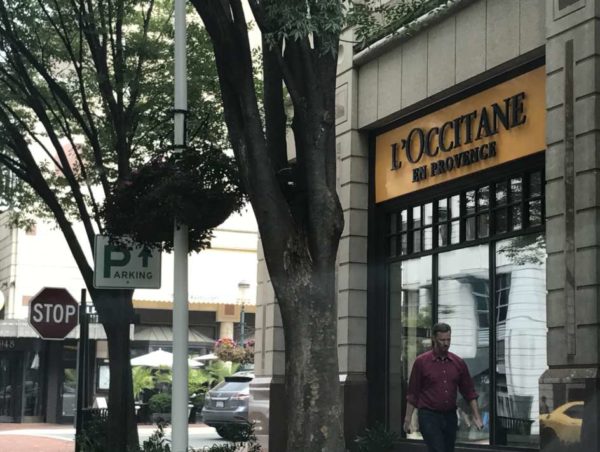
- L’OCCITANE en Provence in Reston Town Center is Temporarily Closed
- Entries for Abandoned Boat Raffle Due This Week
- Herndon Man Wins Top Lottery Prize
- Op-Ed: Worrisome Signs That Wheelock Never Intended for Hidden Creek To Remain a Golf Course
- Developing: Man Hit With Possible BB Pellet While Walking Dog
If you have ideas on stories we should cover, email us at [email protected] or submit an anonymous tip. We’re also looking for photos of Reston submitted by readers.
Feel free to discuss these topics, your weekend plans or anything else that’s happening locally in the comments below.
File photo
This is an opinion column by Del. Ken Plum (D), who represents Reston in Virginia’s House of Delegates. It does not reflect the opinion of Reston Now.
The federal administration policy of breaking up families as an intentional strategy aimed at refugee families has shocked the conscience of most Americans. Taking innocent children out of the arms of their mothers or fathers and shuffling them off to a “facility” without any explanation or known plans for their future has to be one of the cruelest acts of the federal government ever and is completely abhorrent to the moral standards of most Americans.
At the same time we condemn these evil acts of a misdirected federal agency and work in every way in the courts and through the ballot box to get these policies changed, it is important that the subject of isolating children be viewed in its larger context. As more is learned about the traumatic effects separation and isolation can have on the future emotional stability, mental health, and behavior of children, the necessity of reforming the way that our juvenile justice system functions becomes obvious.
Information gathered by The Commonwealth Institute shows that almost three-quarters of youth who have been held in the state’s juvenile prisons are convicted of another crime within three years of release. Data shows the longer a child is held in a facility the more likely it is they will commit a crime.
I recently talked with Valerie Slater who heads RISE for Youth: United Families, Safe Communities on my television show “Virginia Report.” Listen to that conversation on YouTube. She points out that racial disparities in Virginia’s juvenile system are higher than the national average. In Virginia, black youth are seven times more likely to be incarcerated than their white peers, and youth of Latino heritage are 2½ times more likely to be incarcerated than their white peers. Likewise, the higher the rate of poverty in their community the more likely children are to be sent to youth prisons. As Valerie wrote recently, “we must dismantle, once and for all, the systems that allow the institutionalization of children. The best way to protect and rehabilitate children is to ensure their parents are the foundation of their support, whether in their homes, communities or suitable community-based environments. There are community-based alternatives to youth prisons that work better, cost less, and help young people get the support they need to get back on track.”
At the recent meeting of the National Conference of State Legislatures (NCSL) I learned of the important work being done by a committee in NCSL to identify the principles that states should adhere to in reforming their juvenile justice systems. It is being demonstrated in states that it is possible to reform the system to reduce crime and recidivism, enhance public safety, and produce good citizens from those who in the past may have been referred to as criminals. I am pleased that Virginia is making improvements, but we must stay vigilant to continue progress.
As a nation of high moral standards, we must insist that the youngest and most vulnerable among us have an opportunity to succeed even if they are in our poorest communities or seeking asylum for their safety among us.
File photo
