
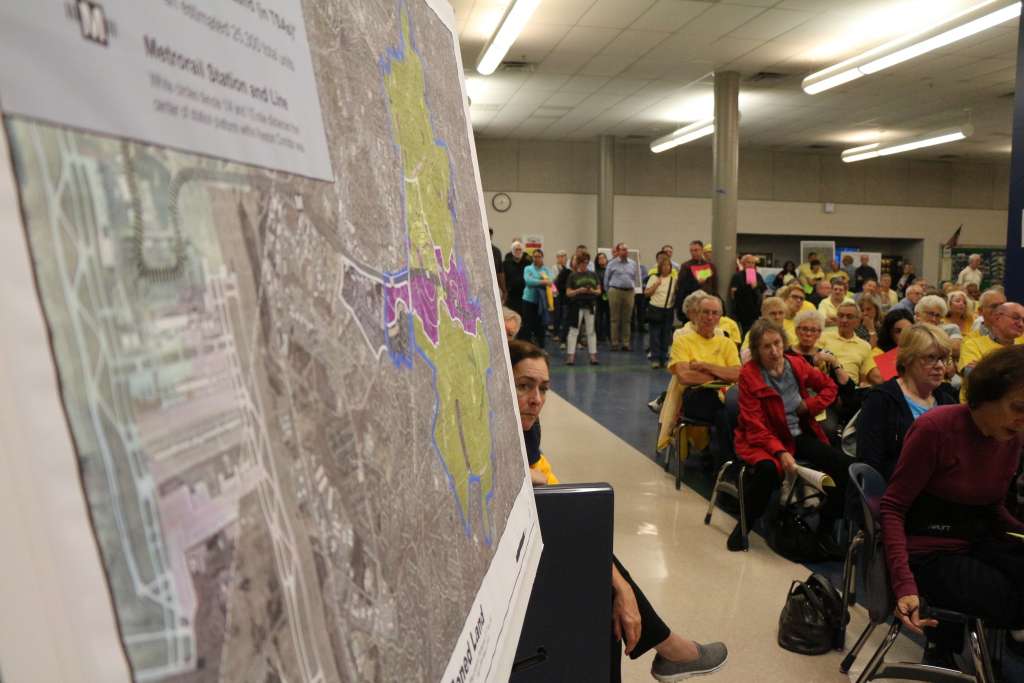
Dozens of Reston residents and locals showed up to testify in opposition to a contentious proposal that would increase the population density in Reston at the Fairfax County Planning Commission’s five-hour-long public meeting yesterday (Jan. 23).
The proposed amendment to the zoning ordinance would increase the maximum allowed population per acre in the Planned Residential Community (PRC) district — Reston’s primary zoning district — from 13 persons to any number up to 15.
It would also allow residential development at a density of up to 70 dwelling units per acre — the current maximum is 50 dwelling units per acre — for properties designated for high density on an approved development plan and located in a transit station area planned for mixed-use within the Reston PRC District.
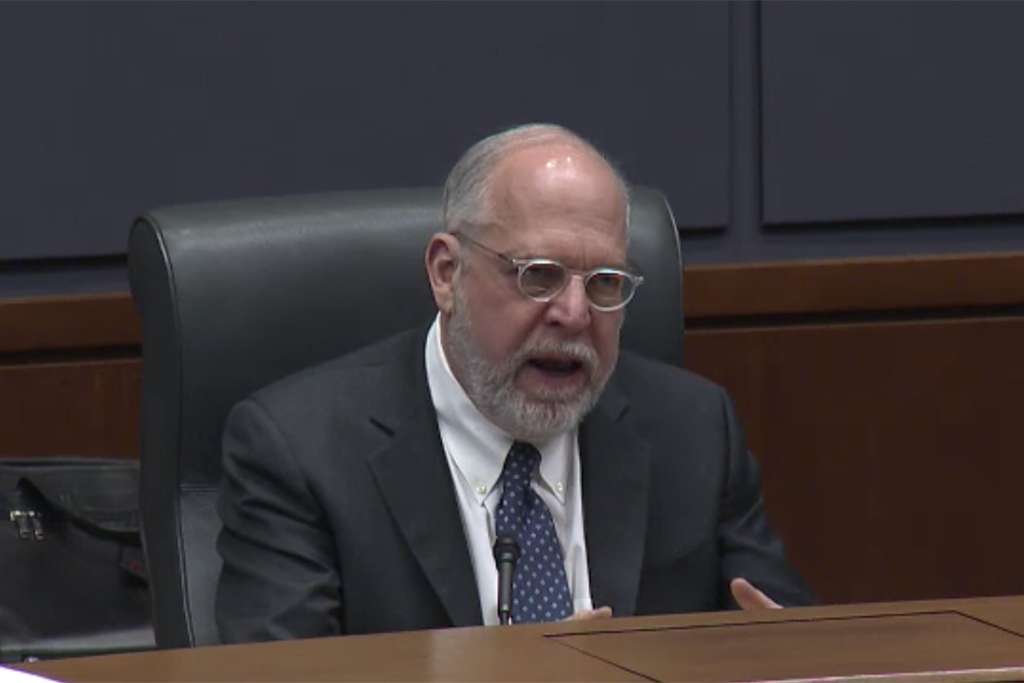
Shortly before the meeting ended at 11:55 p.m., Vice Chairman and At-Large Commissioner James Hart deferred a decision on the item until Feb. 13.
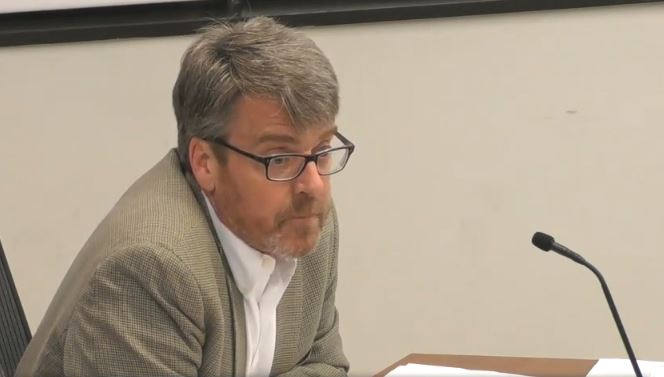
Hart, the main person leading the proposal, started the meeting by telling his fellow commissioners and the audience that opposition to raising the density cap was a common theme of the many letters he received: “That message came through loud and clear.”
Yet, the commissioners still face a “nuanced” dilemma, from complicated numbers to whether it is better to raise the cap so that applications can come in as PRC or deal with applications zoned as PRM or PDC after the current PRC zoning is used up, he said.
Regardless of the future decision, he said he hopes that the controversy over the amendment “can spark interest and participation in the land use process.”
Most of the 29 who testified on what that decision should be urged the commission to reject the amendment.
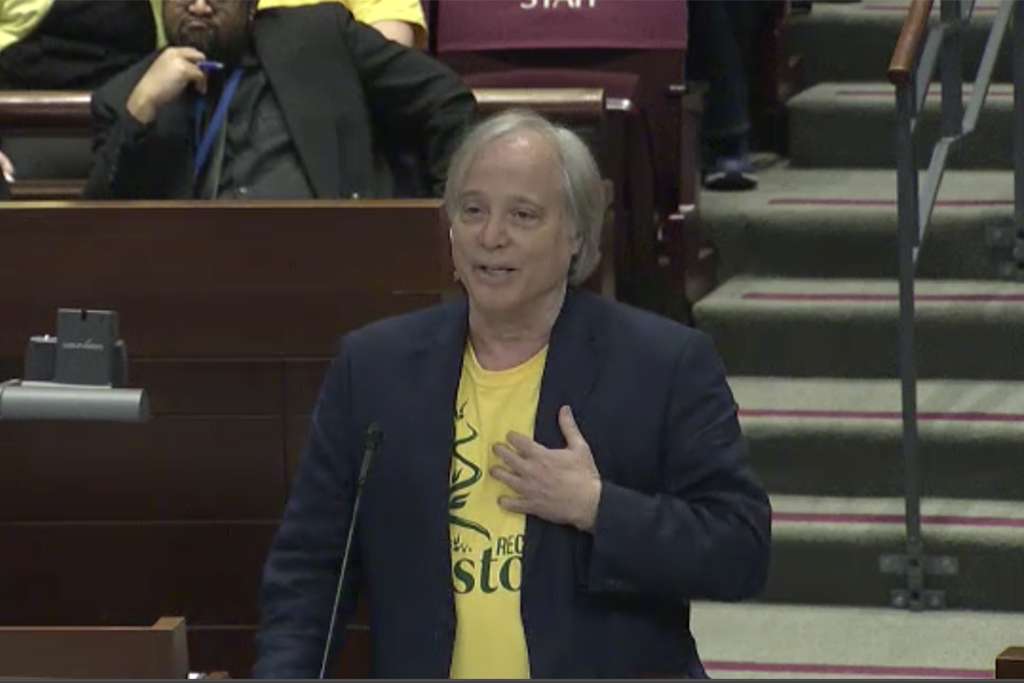
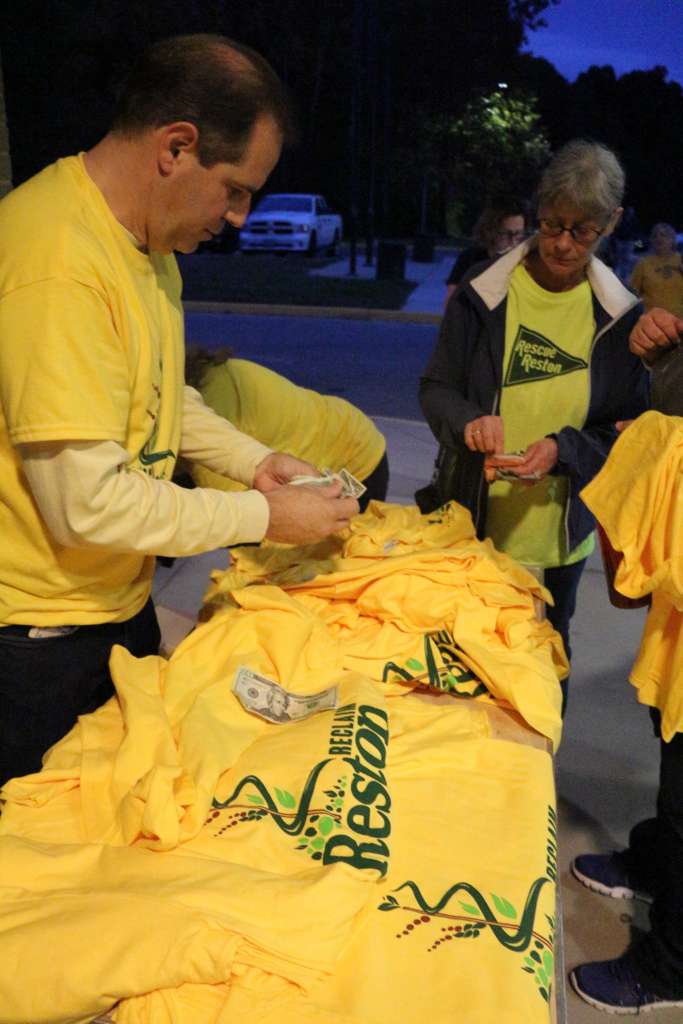
Opponents — many of whom wore yellow clothing to symbolize their unity against increasing the density — said raising the density cap will jeopardize green spaces, worsen traffic congestion, crowd schools and encourage development before infrastructure is in place.
Many residents also voiced criticism that the proposal to raise the density cap was made without adequate community input and is based on faulty numbers.
Dennis Hayes, the president of the Reston Citizens Association, testified that county staff worked on the PRC amendment over a short summer and only held information meetings with the community.
“Meetings we were told would happen never occurred,” he said. He noted that the difference between a PRC capped at 13.7 versus 14.2 has not been demonstrated.
Roughly half of a dozen people spoke in support of the amendment.
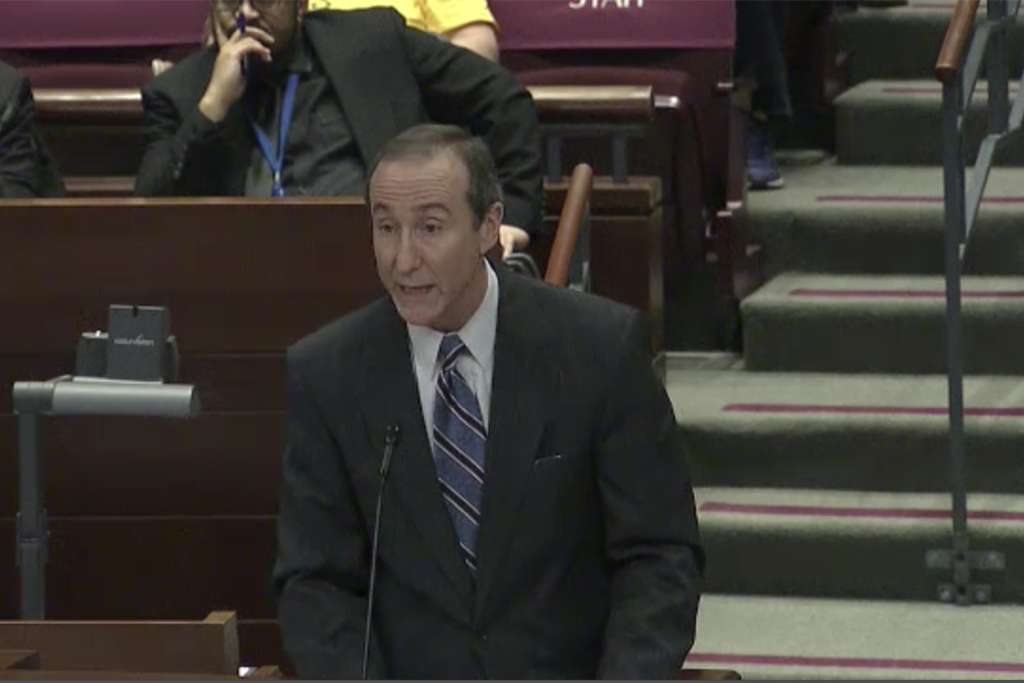
Mark Ingrao, the president of the Greater Reston Chamber of Commerce, argued that the amendment encourages balanced growth under the Reston Master Plan.
“The Reston Master Plan process was well thought out,” Ingrao said, adding that it requires infrastructure to be phased-in with development — not happen beforehand. “The idea that streets and schools get built before people can use them is incongruent with the rest of the county.”
Ingrao also said that concerns about an exploding population are overhyped. “It took over 50 years to reach [Reston’s] current population, and it will take decades to achieve full buildout under the plan,” he said.
Mike Jennings, a Reston resident of 33 years, pushed back on the notion that the comprehensive plan did not include community involvement and that the Reston Planning and Zoning Committee is easily swayed to developers’ desires.
Jennings warned the commissioners to “be careful before assuming the very visible and vocal opponents of this amendment are representative of Reston.”
The record will remain open for public comments until Feb. 13.
Hart ended the meeting by saying that he’s learned from the mistake of separating zoning and planning and that in the future, the two must get planned together. “We’ve left ourselves a real mess,” he said about the current state of things.
Photos via Planning Commission
 This letter was submitted by Terry Maynard, who resides in Reston. It does not reflect the opinions of Reston Now. We publish article and opinion contributions of specific interest to the Reston community. Contributions may be edited for length or content.
As a Restonian who has worked hard on Reston planning and zoning for more than a decade, I was stunned by the letter mentioned in a recent Reston Now article. It was signed by 17 people — many of whom are associated with the leadership of the Greater Reston Chamber of Commerce (GRCOC) — to Hunter Mill District Supervisor Cathy Hudgins.
One of the most stunning claims in the letter was that “Reston’s Comprehensive Plan was the product of a five-year planning process involving the full community.” The fact of the matter is that the Reston community was marginalized throughout this timeframe, and its contributions were opposed by developers and ignored by the county.
No community representative, then or now, has opposed reasonable residential and commercial development in the transit station areas. They have objected and continue to object to the excessive development proposed by private and county land use interests.
Only six of the two dozen primary members of the RTF studying Phase 1 for the transit station areas were Reston residents who represented the interests of Reston residents. They included representatives from three community organizations — Reston Association, Reston Citizens Association and Alliance of Reston Clusters and Homeowners — and three independent “at large” residents.
The Task Force recommended 27,932 dwelling units — homes for about 59,000 people — in the station areas based on a study of multiple density and mix scenarios — a development level community representatives could live with. That was set at 27,900 when the Board of Supervisors (BOS) approved the Phase 1 plan in early 2014 — a number Reston community representatives could live with.
Then that Phase 1 planned station area dwelling unit number was raised by more than half to 44,000 dwelling units — 92,000 people — in mid-2015 by the BOS in the process of approving the Phase 2 plan without any community involvement or even foreknowledge. Yet the county insists it only revises plans every five years.
Community involvement in Reston planning was even more limited during Phase 2 for Reston’s suburban areas. It included only four county-led and controlled community meetings and an open house. It was agreed that residential areas should remain “stable,” but the redevelopment of Reston’s village centers drew controversy. Draft county language to require a comprehensive plan amendment to redevelop village centers was dropped from the Board-approved mid-2015 Reston Master Plan because it would make the redevelopment approval process more cumbersome. This effectively shut off public comment on critical changes and eases development.
No meaningful commitment was made in the Reston Master Plan to provide needed infrastructure on a timely basis, despite the GRCOC letter saying, “The Plan requires that infrastructure be ‘phased’ with development.” In fact, that is illegal in Virginia and the RMP planning principles say it “should occur with development.” Language about specific infrastructures–transportation, schools, parks, etc., is vague and the proposals are inadequate.
Moreover, no meaningful funding has been committed to building any of the so-called “planned” infrastructure elements, which are all generally inadequate against even county policy standards, excluding the library where a $10 million bond funding may disappear in 2022.
Now the county is proposing to amend the Reston Planned Residential Community (PRC) zoning ordinance to increase allowable community-wide population density from 13 to 15 people per acre in suburban Reston and increase the allowable density on a single PRC property designated “high density” from 50 to 70 dwelling units per acre, including the village centers and several so-called “hot spots.” In its staff report on the proposed zoning density change, the county calculates roughly a quadrupling of planned housing in the village center areas from less than 1,500 to 5,800.
It also identifies three suburban residential “hot spots”– Saint Johns Wood, Charter Oaks and Fairway — for high-density redevelopment that would more than double the number of dwelling units to 1,863 residences.
The bottom line is that Restonians have had — and continue to have — limited access to the planning and zoning process throughout and their contributions and concerns have almost universally been ignored.
The cumulative effect of the new zoning in the station areas and the prospect of increasing the Reston PRC zoning density would be to allow Reston’s population to triple from its current 63,000 people to more than 180,000. At the same time, there is little or no assurance of the arrival any time soon of needed infrastructure that would maintain Restonians’ quality of life as a model planned community.
Now it is imperative that Restonians rise up and stop the county’s ill-considered PRC density increase proposal driven by Supervisor Hudgins. Attend the Planning Commission hearing on the PRC amendment at 7 p.m. on Jan. 23 in the Fairfax County Government Center wearing a yellow shirt. The presence of hundreds of Restonians will be as great a message to the Planning Commission as the testimony of Reston’s representatives and residents.
— Terry Maynard
File photo
RA urges members to attend PRC meeting — In the latest Reston Today video, Reston Association’s Board President Andy Sigle urges RA members who are concerned about population density to attend a Jan. 23 meeting related to the county’s proposed amendment to the Planned Residential Community zoning ordinance. [YouTube]
Dense fog alert — This morning the National Weather Service issued a dense fog advisory until noon today for portions of the region, including Fairfax County. Drivers are encouraged to slow down, use their headlights and leave plenty of distance ahead of you. [National Weather Service]
“Superior Donuts” opens tonight — Reston Community Players’ production opens tonight at RCC Hunters Woods at 8 p.m. Tickets are $28. [Reston Community Center]
Ed-tech merger — Herndon-based Real Time Cases merged with Delray Beach, Fla.-based Elearis. The Herndon startup’s ideo-based business case studies paired up with the technology platform from Elearis for a new Herndon-based firm. [Washington Business Journal]
Photo via Marjorie Copson
 This letter was submitted by Bruce Ramo, a member of community groups Reclaim Reston and Coalition for a Planned Reston. It does not reflect the opinions of Reston Now. We publish article and opinion contributions of specific interest to the Reston community. Contributions may be edited for length or content.
It’s a lot to ask of everyone in Reston to understand the minutiae of land use law. We have families and jobs and other responsibilities. And, after all, we chose to live in a planned community with loads of covenants and design guidelines. We can leave it to the “experts.” Except we can’t.
Like it or not Restonians have little say over how our community is being developed, and the elected official who should be watching out for us, our county supervisor, has retreated to a defensive posture. She frequently tells us “we just don’t understand” and has suggested that Reston, perhaps the most progressive community in Virginia, opposes the proposed increase in the density cap out of fear of “the other” sharing our neighborhoods. This is simply untrue. The community group Coalition for a Planned Reston proposed an increase in the required affordable housing levels for Reston–our supervisor did not support us.
So what’s the big deal about increasing the density cap, from 13 to 15 persons per acre, in the primarily residential areas of Reston called the Planned Residential Community district? The supervisor and county staff tells us that the increase is necessary to implement 2015 changes to the Reston Master Plan. Those changes allow significantly increased density in the Village Centers and other “hot spots” throughout established neighborhoods of Reston, far from the Metro stations. We are also scolded about speaking up now because, as the story goes, the public had lots of opportunities back in 2014-15 to comment on changes to these portions of the Reston Master Plan changes called “Phase 2.” (Phase 1 involved only the transit station areas.)
Our supervisor and county staff frequently repeat the myth of significant community involvement in Reston Master Plan Phase 2. However, the county disbanded the citizen “task force” set up for community review before the Phase 2 review. There simply was little in-depth public review of the changes that are the driver for increasing the density cap.
Why should you care? Because if the zoning density cap is lifted, the ability of the community to push back on significant high-density development in our established residential neighborhoods effectively will be eliminated. Sure, each of us can watch out for individual development applications, but the force of overall community oversight based on a reasonable density cap will have been taken from us forever.
We have invested our financial resources, identities and emotional loyalty to Reston as a planned community. The density increase is an existential threat to those investments.
Take action to protect your hometown. Help maintain the current density cap and the modicum of control it provides over those who would rob us of a community grounded in diversity, environmental stewardship and quality of life.
Attend the Jan. 23 meeting of the Planning Commission at the Fairfax County Government Center at 7 p.m. (and wear your yellow shirts!)
Write to our County officials: Supervisor Hudgins: [email protected]; other Fairfax County Supervisors: [email protected]; and the Fairfax County Planning Commission: [email protected].
File photo
 The Fairfax County Planning Commission will hold a workshop tonight on a proposed zoning amendment opposed by several local groups.
The proposal would increase the maximum allowed population per acre in the Planned Residential Community (PRC) district — Reston’s primary zoning district — from 13 persons up to 15.
While county planning officials say the change is needed to put into action Reston’s Master Plan, which allows for future growth over the next 40 years, critics argue it is rushed through and under-explained. Several opponents reaffirmed since the New Year why they think the proposal should get axed.
Reston Association’s Board of Directors, which opposes the proposal, held their own workshop last week on Jan. 2 where the board considered various options to try and prevent the county from passing the amendment. The RA does not have legal jurisdiction in the matter, yet the board voted to send a letter to tell the county that RA membership, which includes 21,000 residential units, need a prominent voice in the decision.
Less than a week later on Tuesday (Jan. 8) RA President Andy Sigle, on behalf of the Board of Directors, sent a letter to the Fairfax County Planning Commission, reiterating RA’s opposition to the proposed PRC zoning amendment. The letter outlined initiatives the association could take to potentially stop the adoption of the amendment and strongly urged the commission to ask the Fairfax County Board of Supervisors to not approve the amendment.
“As we have often stated, our primary basis for our opposition stems from the repeated failure of Fairfax County’s staff to provide a thorough and convincing explanation of the need for the proposed ordinance amendment at this time,” Sigle wrote in the letter.
RA’s position is that any potential change to the density cap must be done concurrently with the next upcoming review of the Reston Master Plan. Sigle said the Reston Association “has no choice but to vigorously pursue any and all options available to us to inform and engage its members, including, but not limited to, a ballot initiative adjunct to its upcoming elections as well as a strong and substantial social media campaign about the proposed PRC zoning amendment.”
Reston 2020 wrote in a post on Monday (Jan. 7) that Reston would get crowded if the proposal is approved. “At the same time, the county has not funded plans to meet Reston’s transportation, school, park and other needs associated with this growth, even as required by its own county policies,” the post says, adding that the “massive unplanned imbalance between growth and infrastructure will be a dramatic loss of quality of life in Reston.”
Also on the same day, Coalition for a Planned Reston encouraged locals to write to the Board of Supervisors and Planning Commission and also to wear yellow clothing to the upcoming Planning Commission public hearing scheduled for Jan. 23.
Dennis K. Hays, the president of the Reston Citizens Association, outlined 10 reasons to leave the cap alone in a letter to the editor posted on Reston Now last week. (Letters to the editor do not reflect the opinions of Reston Now.)
Amid the many concerned voices, the proposal has still found supporters.
On Jan. 2, 17 people, including Greater Reston Chamber of Commerce President and CEO Mark Ingrao and Reston Master Plan Study Task Force Chair Patricia Nicoson, sent a six-page letter to Hunter Mill District Supervisor Cathy Hudgins supporting the Reston PRC District Residential Density Zoning Ordinance Amendment.
They wrote the following in the letter:
The intent of this letter is not to prejudge or determine what if any changes may be appropriate to address specific issues discussed in the extensive community meetings the county pursued in recent months. But we think it [is] important that there be greater understanding and appreciation for what is actually contained in the Comprehensive Plan and the rationales that underlie those decisions. We all appreciate that growth is not universally accepted and is not without challenge, but the decision to embrace very significant growth, with an accompanying process and plan for necessary infrastructure development, was incorporated into the Reston Comprehensive Plan as the result of an extensive and participatory community process that had the widespread support of community representatives intimately engaged in that process…
Reducing or disincentivizing residential growth is at odds with the comprehensive vision the Task Force so powerfully (and almost unanimously) endorsed. These issues were exhaustively discussed throughout an arduous, inclusive, five-year Task Force and Village Center process; revisiting and endlessly debating these issues will create uncertainty about the Plan’s stability and risks halting needed development or creating uneven or disjointed results, which we don’t think is in Reston’s interests. There will be numerous opportunities for community input as this process evolves over the next several decades, and individual projects will be subject to multiple approvals and community input before they can proceed. For all these reasons, we support County Staff’s pending administrative recommendations, which we think are broadly consistent with implementation of the vision adopted in the Comprehensive Plan.
The letter included eight points “that are sometimes missing from the ongoing dialogue about staff’s proposals,” arguing that adding significant new residential development is central to the Task Force recommendations and essential to ensure balanced growth. The letter also said that build-out — along with “phased-in infrastructure” — of the plan will take decades and that the community’s ability to participate throughout that process is protected.
Hudgins has supported moving forward the zoning proposal’s consideration. Meanwhile, Dranesville District Supervisor John Foust and Braddock District Supervisor John Cook have expressed frustration about the process.
The Planning Commission workshop takes place tonight at 7:30 p.m. at the Board Auditorium of the Government Center at 12000 Government Center Parkway in Fairfax, Va. The workshop will be for the commissioners’ questions and discussion only and will not be an opportunity for public input.
People can watch it remotely via online streaming.
The Fairfax County Board of Supervisors’ public hearing is set for March 5. The Planning Commission must say “yea” or “nay” to the proposal by March 15, according to county rules.
File photo
Updated at 5:00 p.m. — Corrects the spelling of Laurie Dodd’s name and the time of the Planning Commission meeting on Jan. 23.
Reston Association’s Board of Directors unanimously voted to continue its opposition to a proposed zoning amendment, which would increase Reston’s population density, at last night’s meeting.
The proposal would increase the maximum allowed population per acre in the Planned Residential Community (PRC) district — Reston’s primary zoning district — from 13 persons up to 15.
After an executive session to consult with the land use counsel, Vice President Sridhar Ganesan said that the current density at 12.46 people per acre is a “very inaccurate population estimate.”
“A lot of slack is built into the current density,” Ganesan said. “I believe the director of the Planning and Zoning Commission told us –some of the members on the board — they are trying to recalculate the population estimate in Reston, and they don’t have an accurate estimate just yet.”
Given the wiggle room in the current density and the outrage from many community members, Ganesan said the PRC density level should not increase.
Several community groups, including the Coalition for a Planned Reston and Reston 2020, are fighting the move, arguing that the proposed amendment is rushed through and under-explained.
County planning officials have argued that the change is needed to put into action Reston’s Master Plan, which allows for future growth over the next 40 years.
President Andy Sigle said that the RA is still working through “reams” of data and information in support of the zoning proposal from a series of emails on Dec. 11 from Fairfax County.
“We have a concern that the wrong number on this PRC density will overwhelm the infrastructure prescribed in the Reston Master Plan, so it’s important that we get the right number,” Sigle said at the meeting.
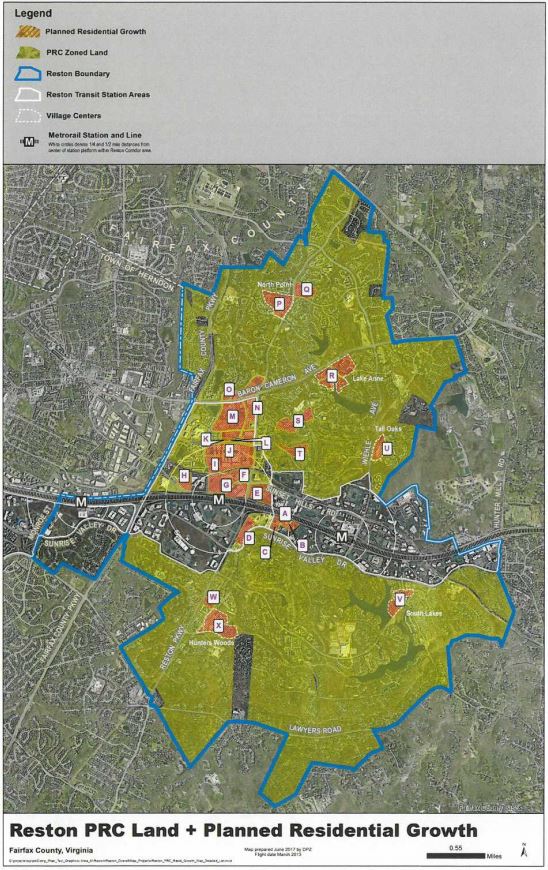 The board also approved setting up a work session for RA’s board prior to the Planning Commission’s Jan. 10 workshop on the amendment.
Fairfax County’s Board of Supervisors clashed over community input on the proposed zoning changes at their Dec. 4 meeting, before authorizing public hearings on the proposal.
Hudgins said at the Dec. 4 meeting that locals have had plenty of opportunities to get the desired information. “Yes, there are some questions that people have,” Hudgins said. “Those questions have been answered before or are not relevant to this.”
Meanwhile, Dranesville District Supervisor John Foust and Braddock District Supervisor John Cook argued for more community input.
Residents expressed frustration and disapproval to RA’s board last night (Dec. 13), pointing to a lack of community input to the county’s board and insufficient infrastructure to support increased density in Reston.
Laurie Dodd, a resident for the last 23 years, criticized Hunter Mill District Supervisor Cathy Hudgins for asking to schedule hearings on the zoning proposal without following through on promised community engagement.
“It is disturbing to me to see other supervisors in Fairfax County speak up about the right of residents to be heard more than our own supervisors had done,” Dodd said.
The Planning Commission is scheduled to hold a public hearing about the zoning proposal at 7 p.m. on Jan. 23, followed by the Board of Supervisors’ public hearing at 4:30 p.m. on March 5.
The Planning Commission must say “yea” or “nay” to the proposal by March 15, according to county rules.
Secretary John Mooney urged Restonians to stay informed and engaged. “Please attend the county meetings,” he said.
Photo via Reston Association/YouTube
This story has been updated

Chinchillas, hedgehogs and hermit crabs are one step closer to legalized pet status in Fairfax County.
The Fairfax County Planning Commission last night (Dec. 6) approved changing the definition of commonly accepted pets to include all three.
“All those hedgehogs in Fairfax County are extremely happy tonight,” Chairman Peter Murphy, who represents the Springfield District, said after the vote.
Hunter Mill District Commissioner John Carter voted against the proposal, along with Vice Chairman James Hart and Mason District Commissioner Julie Strandlie.
Strandlie said that while she supports chinchillas and hermit crabs as pets, more input from professionals is necessary regarding hedgehogs.
The increasing popularity of chinchillas, hedgehogs and hermit crabs as pets in recent years spurred the proposed amendment to the county’s zoning ordinance, according to the proposal.
Arlington and Loudoun counties allow hedgehogs and chinchillas as pets, with Loudoun County also permitting hermit crabs. Fairfax City and Falls Church either do not allow or remain unclear about the legality of the three animals as pets.
The commission tackled health and safety concerns mainly around hedgehogs as pets at a public hearing last Thursday (Nov. 29), deferring a decision to last night at the request of Mary Cortina, an at-large member of the commission.
Some of the concerns that came up involved hedgehogs’ ability to spread salmonella and how well owners can care for hedgehogs, given their high levels of maintenance.
Hedgehogs are nocturnal animals that require space, exercise and room temperatures above 70 degrees Fahrenheit to ensure they do not start hibernating, according to the Hedgehog Welfare Society.
Hart said he concludes that hedgehogs still fall under the “exotic pet” definition based on the temperature requirements raised during the testimonies last week.
Dranesville District Commissioner John Ulfelder said he took four areas into consideration when deciding how to vote — public safety, public health, environmental impact and animal welfare.
Addressing the salmonella concerns, Ulfelder said that other animals, such turtles, can spread the bacteria.
For him, the prickliest issue concerned animal welfare. “It is true these animals are a little bit difficult to take care of,” he said. “I think for people who are up for that, they can be very nice pets.”
Strandlie praised a student from Longfellow Middle School in Falls Church, who argued at the public hearing in favor of legalizing pet hedgehogs.
The student, who said he has cared for his turtle for eight years and his monitor lizard for two years, said he believes hedgehogs are easier to care for than reptiles, based on his research. If the county approves the amendment, he said he would get a hedgehog.
Even though Strandlie voted “no,” she said the student probably persuaded some of the commissioners to support the proposal.
Fairfax County’s Board of Supervisors authorized a public hearing at 4 p.m. on Jan. 22 to consider the controversial proposal.
“I think we should be allowing people if we can — if they have the ability — to have hedgehogs as pets,” Ulfelder said.
Photo via Planning Commission
Fairfax County’s Board of Supervisors approved Woodfield Acquisitions’ redevelopment of Roland Clarke Place at its Tuesday (Dec. 4) meeting.
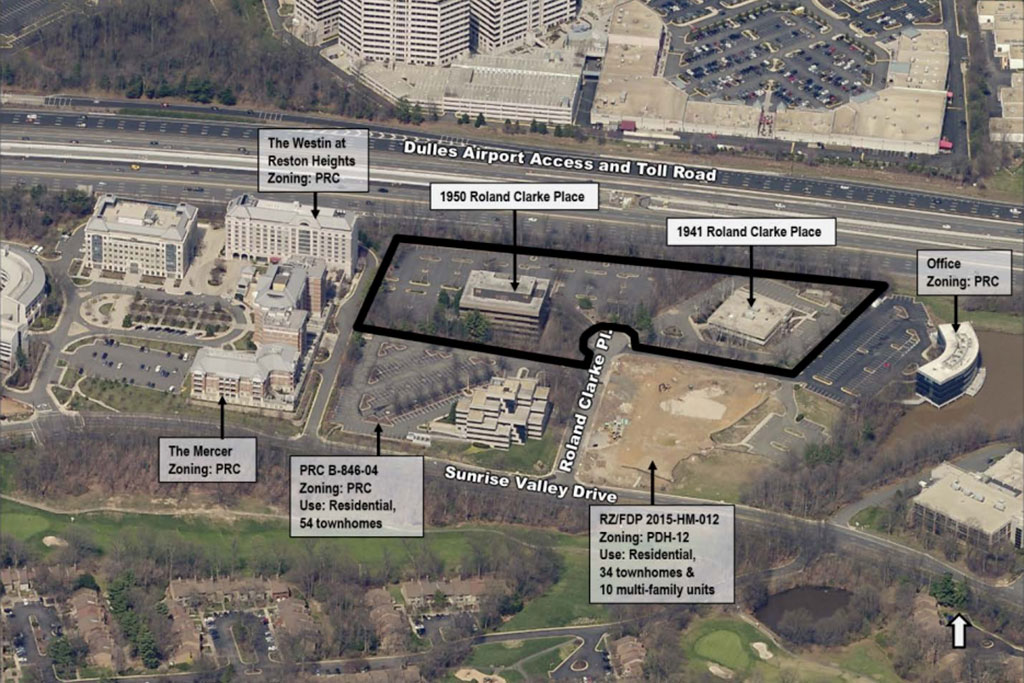
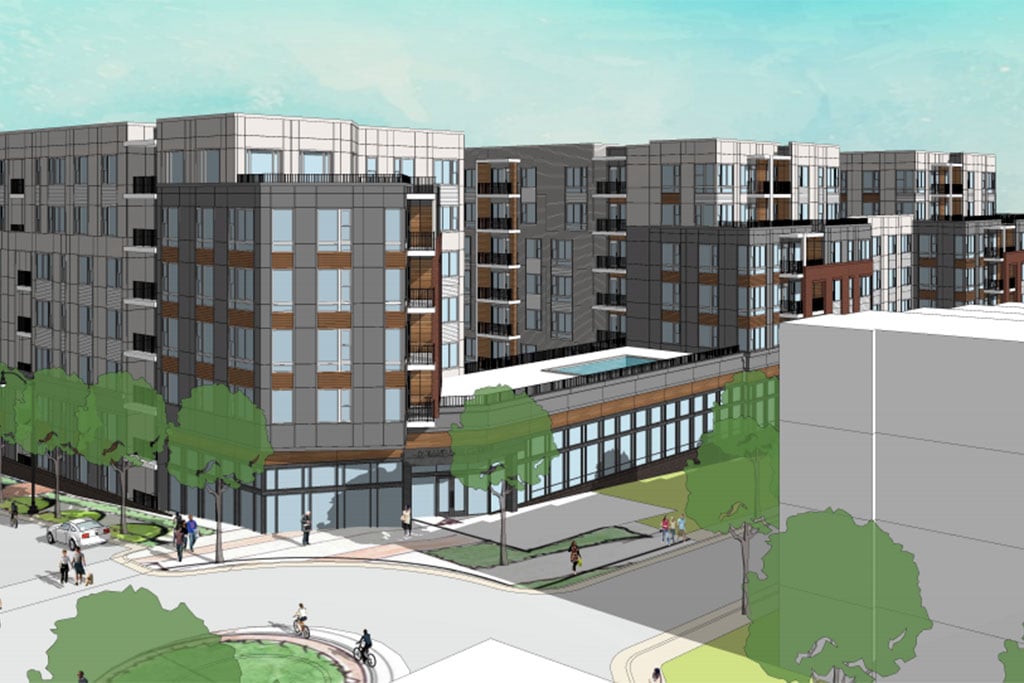
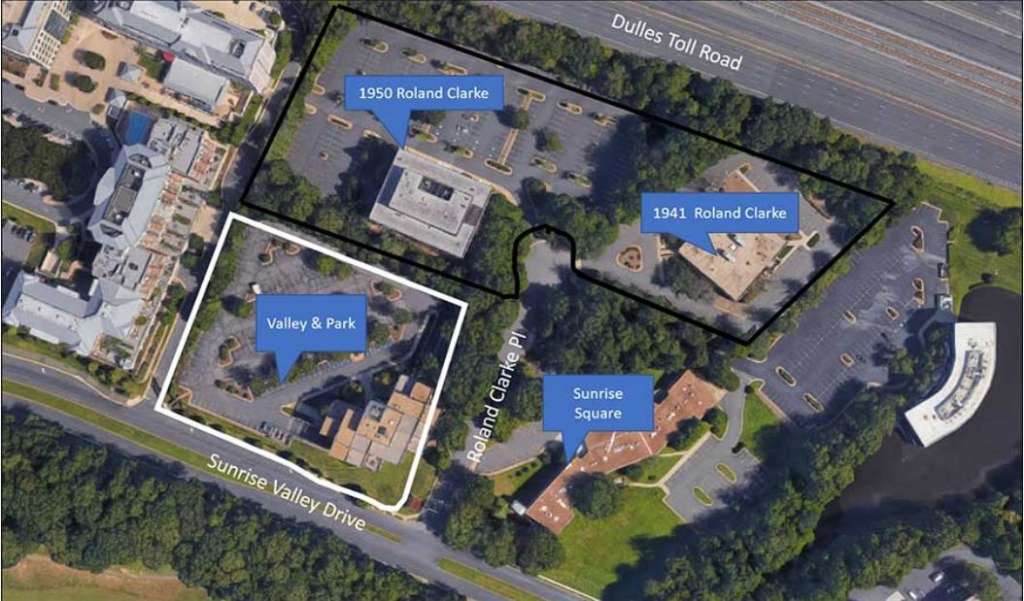
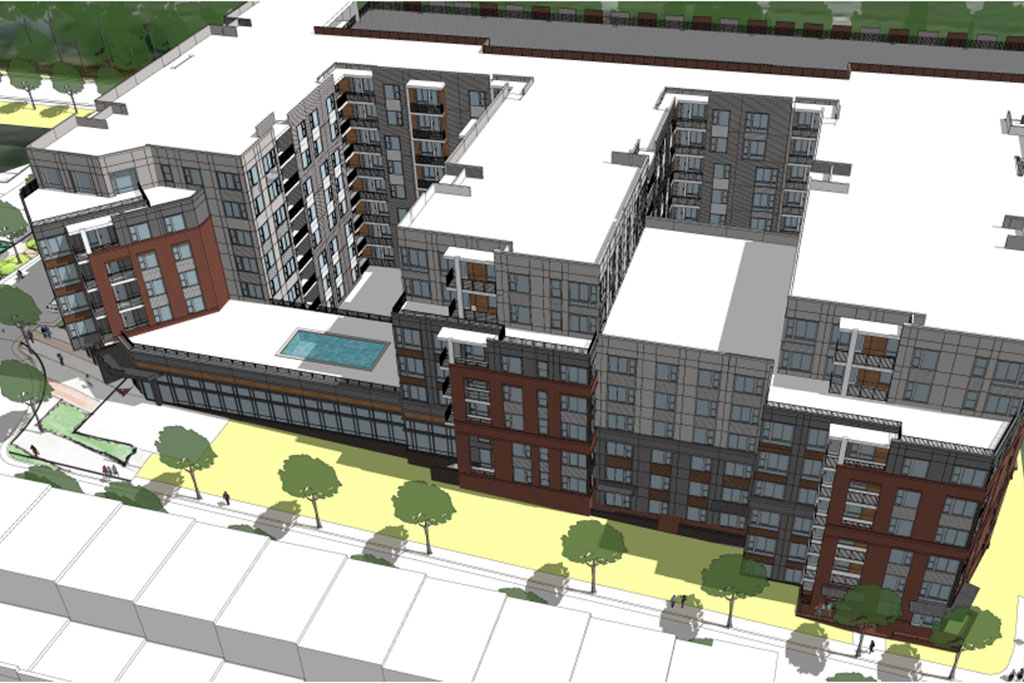
The redevelopment is set to replace a vacant, two-story office building at 1941 Roland Clarke Place with a 308-unit residential complex just south of the Dulles Toll Road.
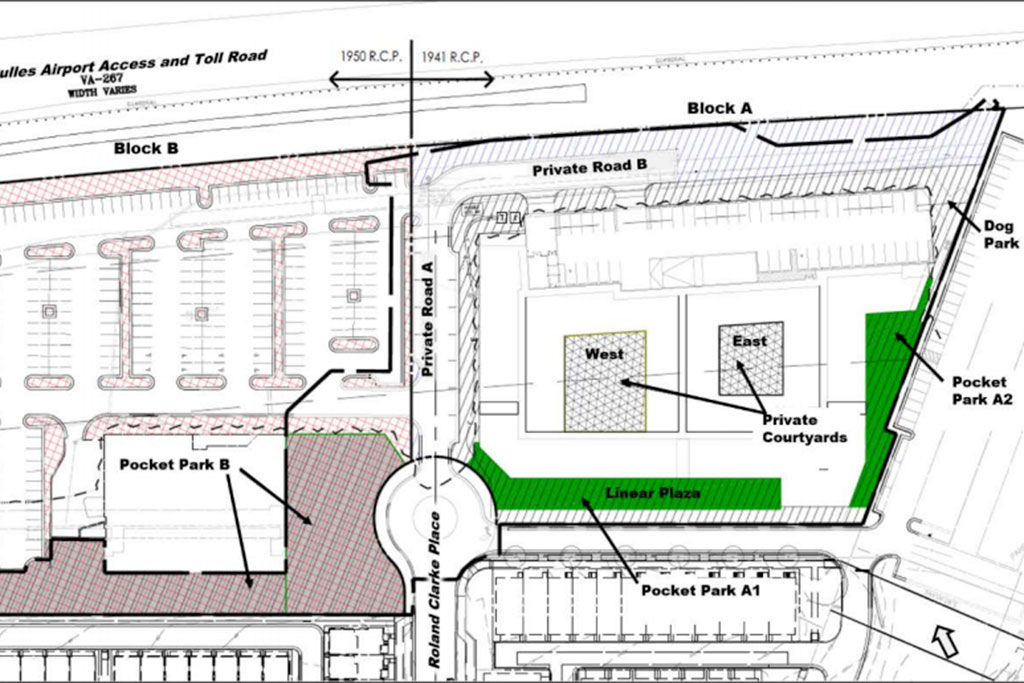
The seven-story apartment building will be about a mile between the Wiehle-Reston East and Reston Town Center Metro stations. Plans for the building include two interior courtyards, an outdoor pool, seating on a third-floor patio and a 409-space, eight-level parking garage behind the building. About one-third of the new development is slated to remain as open space.
The existing office buildings on the site were constructed in the early 1980s.
The board delayed making a decision after the project’s public hearing on Nov. 20. The Fairfax County Planning Commission unanimously approved a series of proffers for the redevelopment on Nov. 15.
The board also greenlighted three other developments in Reston, including the Midline and the Tall Oaks Village Center, at the Tuesday meeting.
Images via Fairfax County and Fairfax County Planning Commission
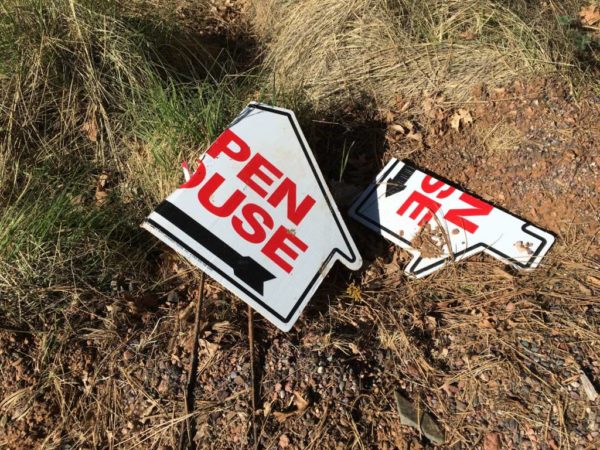
Fairfax County Government is currently mulling over changes to its sign ordinance that has everyone from schools and parks to local realtors concerned.
At a Planning Commission meeting last night (Wednesday), the commission deferred a decision on the new sign regulations until Jan. 16 to allow for more discussion on the impact of the ordinance.
Currently, county staff are reviewing changes to the zoning ordinance to make the language content-neutral. The change is in response to the United States Supreme Court’s 2015 ruling in Reed vs. Town of Gilbert, which ruled that localities that define sign categories based on the message expressed, or content-based, is unconstitutional unless it furthers a compelling governmental interest.
Rather than allow free reign for Fairfax residents of businesses to erect signs regardless of content, a proposed amendment would clamp down on sign regulations across the board.
Changes to the sign ordinance are widespread but often minor corrections. One of the biggest changes is that one freestanding building identification sign is permitted for each detached building and such signs must be limited to identifying the name of the building or the individual enterprises located therein, the address, trademark or identifying symbol of the building occupant.
According to county staff, minor signs (formerly referred to as temporary signs) were the largest challenge in the zoning ordinance rewrite.
“While staff acknowledges that the proposed language could negatively affect some developments that are currently exempt from regulation, we continue to recommend the language found in the draft text as it provides the closest level of regulation as the current provision.”
A representative from real estate investment company Macerich said at the meeting said the company had a laundry list of concerns but has been working with county staff to whittle those issues down. Another local realtor at the meeting said the new ordinance could push the open house signs and corner signs off of local lawns and into the already crowded right-of-way spaces.
The sign ordinance changes sparked concern with the inclusion of language that would remove government exemptions from sign ordinances.
“Staff has received comments from both Fairfax County Public Schools (FCPS) and the Fairfax County Park Authority (FCPA), neither of which is in favor of eliminating the current exemption status. Of particular concern to the Park Authority is the limitation on the size, number and location of minor signs permitted for non-residential uses in a residential district. These signs are used to announce summer concert series, camps and other activities at the parks. The schools have raised concerns with the proposed height of permitted freestanding signs for non-residential uses in residential districts which is proposed to be limited to 8 feet in height.”
As a result, staff said at the Planning Commission meeting that there would be modifications to the ordinance allowing some exceptions for schools and parks.
Planning Commissioner Phillip Niedzielski-Eichner said at the meeting he was generally in favor of holding Fairfax County government accountable to many of the same sign regulations as the public.
“There’s something to be said with us being able to model our behavior consistent with what we expect from the private sector,” said Niedzielski-Eichner. “There is a different benefit to be realized to the public with the park authority and public school [having] latitude with signs, but frankly I’m comfortable with them doing it within a regulatory context… not unfettered.”
Photo via Flickr/Alan Levine
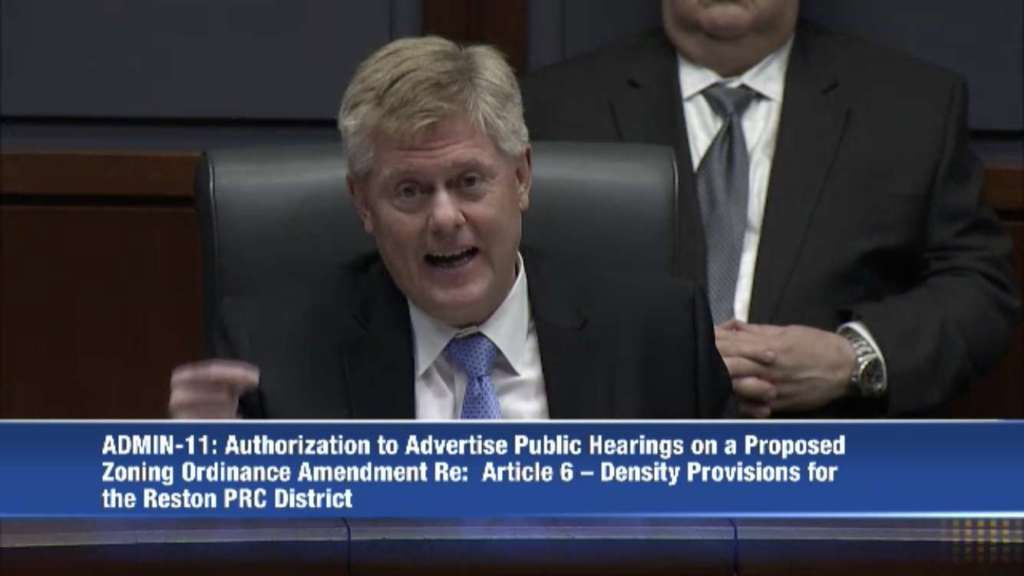
Fairfax County’s Board of Supervisors disagreed about community input on contentious proposed zoning changes, before authorizing public hearings early next year on the changes at their meeting today.
The proposal, which would increase the population density in Reston, has sparked a backlash from community groups, including the Reston Association, Coalition for a Planned Reston and Reston 2020.
County planning officials have argued that the change is needed to put into action Reston’s Master Plan, which allows for future growth over the next 40 years.
Dranesville District Supervisor John Foust vented frustration at the Dec. 4 meeting that Reston residents have not heard back from the county regarding the public hearings for the zoning proposal.
In response to Foust’s concerns, Hunter Mill District Supervisor Cathy Hudgins said that locals have had plenty of opportunities to get the desired information.
County officials began small workgroup sessions hosted by the Coalition for a Planned Reston, a grassroots organization, and the Reston Association in July to discuss the controversial plan.
“Yes, there are some questions that people have,” Hudgins said. “Those questions have been answered before or are not relevant to this.”
Hudgins stressed that consideration of the proposed zoning changes is moving forward because of the work, including 13 follow up meetings since May and regular meetings with the Reston Association, already done.
Hudgins praised the “noble” staff for answering community questions.
Braddock District Supervisor John Cook said that verbal responses from staff to locals are not enough, adding that the community would benefit from written questions and answers available online.
“I don’t think it’s enough to have oral questions,” Cook said. “Not everyone can get to public meetings.”
Cook added that community input must have limits. “It’s fair to have a cut off date for questions,” he said.
The Fairfax County Planning Commission has 100 days from the referral — the staff report published Dec. 4 — to take action on the zoning proposal. The Board of Supervisors authorized public hearings on the zoning changes for 7:30 p.m. on Jan. 23 and at 4:30 p.m. on March 5.
“The clock starts today,” Lee District Supervisor Jeff McKay said.
https://twitter.com/FairfaxMemes/status/1069993011189288961
Chinchillas, hedgehogs and hermit crabs face scrutiny over health and safety concerns as the county debates legalizing them as pets.
The Fairfax County Planning Commission held a public hearing last night (Nov. 29) on possibly changing the definition of commonly accepted pets to include all three.
The proposed amendment to the county’s zoning ordinance was spurred by the increasing popularity of chinchillas, hedgehogs and hermit crabs as pets in recent years, according to the proposal.
Casey Judge, a senior assistant to the county’s zoning administrator, said that care for chinchillas is similar to rabbits and care for hedgehogs is similar to ferrets in her presentation to the commission.
Judge said that research for the proposal included consultation with nearby breeders and veterinarians for exotic animals. People for the Ethical Treatment of Animals (PETA) was not contacted, she said.
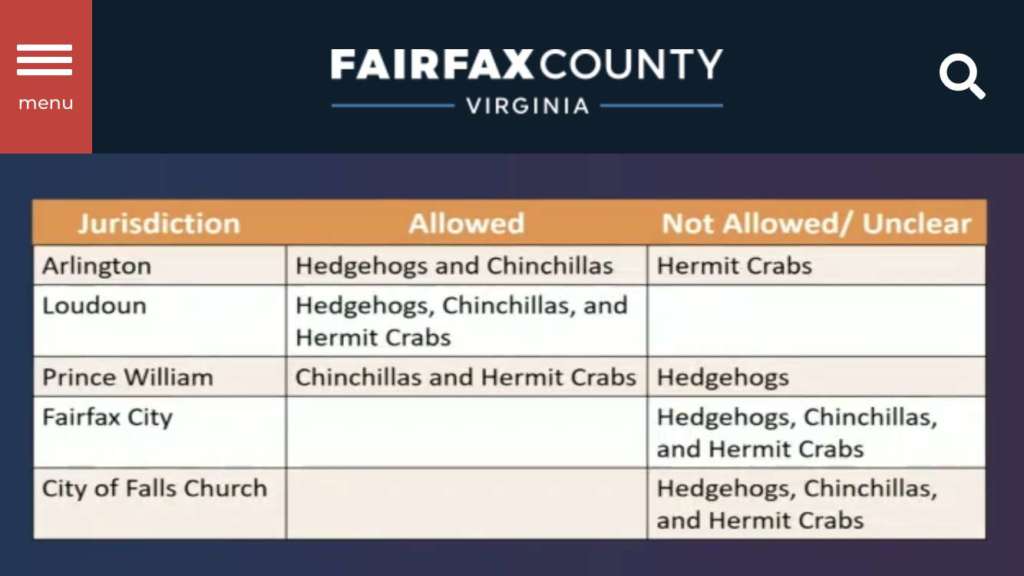 Arlington and Loudoun counties allow hedgehogs and chinchillas as pets, with Loudoun County also permitting hermit crabs.
Arlington County has reported two hedgehog abandonments since 2013 and no reports of any strays, the presentation said.
Fairfax City and Falls Church either do not allow or are unclear about the legality of the three animals as pets.
During public comment, local James Hart brought up concerns about hedgehogs’ ability to spread salmonella. Hedgehogs, along with cats, dogs, frogs, hamsters and many other animals, can spread the bacteria, according to the Center for Disease Control and Prevention.
In response to the salmonella concerns, Judge said that a common pet — turtles — poses the same risk for spreading the bacteria, according to the CDC.
Another concern that came up involved how well owners can care for hedgehogs, given their high levels of maintenance. Hedgehogs are nocturnal animals that require space, exercise and room temperatures above 70 degrees Fahrenheit to ensure they do not start hibernating, according to the Hedgehog Welfare Society.
Judge said that it would be difficult to enforce requirements on temperature and enclosures for the animals.
 Phillip Church from the county’s Animal Services Advisory Commission, which opposes the amendment, said that three vets he interviewed said hedgehogs are expensive and challenging to care for.
“I don’t think many people who are going to take home a hedgehog will give them proper care,” he said, adding that he doesn’t want to give people the opportunity to abandon or unintentionally mistreat the animals.
Judge said that breeders self-regulate for responsible pet owners and provide a plethora of resources, guides and training to ensure the animals will be safe at their new homes.
Local Mark Spisak likened hedgehogs to porcupines in his public testimony and said that demand for them as pets fuels an exotic pet trade that poses risks to animals. “I can see no advantage to wild animals being kept as pets,” Spisak said. ‘They should live their lives outside as nature intended.”
The commissioners lauded testimony from a student from Longfellow Middle School in Falls Church, who argued for legalizing pet hedgehogs.
The student, who said he has cared for his turtle for eight years and his monitor lizard for two years, said that he believes hedgehogs are easier to care for than reptiles, based on his research. He also gave an overview of hedgehog breeding — since the importation of wild-caught African pygmy hedgehogs to the U.S. was banned in the 1990s, people have to go to local breeders for one.
If the county approves the amendment, he said he would get a hedgehog.
Mike Bober, president of the Pet Industry Joint Advisory Council in Alexandria, also voiced support for hedgehogs as pets.
Mary Cortina, an at-large member of the commission, asked to delay a decision on the proposal until the meeting next Thursday (Dec. 6). The county’s Board of Supervisors is scheduled to hold a public hearing on the matter in January.
Hedgehog photo courtesy Kelly W.
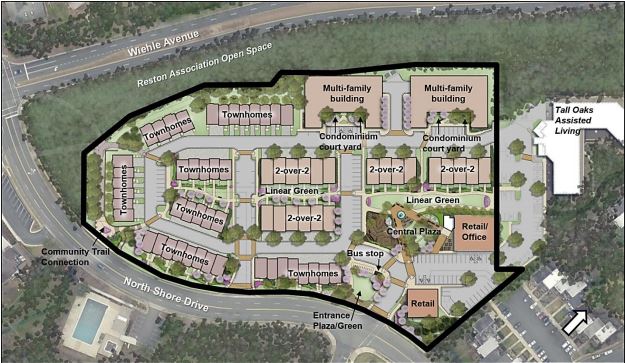
The Fairfax County Planning Commission approved Thursday night (Nov. 29) parking and access adjustments for the Tall Oaks Village Center redevelopment.
Stanley Martin’s redevelopment would transform the Tall Oaks Village Center (12022 North Shore Drive) into a mostly residential neighborhood.
The redevelopment will create 156 residential units, which include 42 two-over-two multi-family units, 44 single units and 70 multi-family units in two residential buildings. It also plans to add nearly 8,500 square feet of retail and 5,800 square feet of office space.
The commission approved:
- a 200-square foot privacy yard requirement for single-family units
- tandem parking for the two-over-two dwelling units to count towards the off-street parking requirement for multi-family dwelling units
- a modification for the required number of loading spaces
- a modification for the transitional screening and barrier requirements
Ellen Hurley, who represents the Braddock District, abstained from the vote.
The shopping center, which was anchored by a Giant grocery store until it closed in 2007, has struggled without a stable grocer. Roughly 86 percent of the shopping center was vacant in 2016, according to the application.
The Fairfax County Board of Supervisors approved in July 2016 the owner’s plan to redevelop the retail center into a mixed-use project.
The development has been held up several times this year. Reston’s Design Review Board delayed voting on several aspects of the plan for several months. The garage size requirements stalled the redevelopment.
Another issue was the bus pad and bus service for the site. At the time of the approval, the county was planning to continue Fairfax Connector bus service through the development. The Fairfax Connector has since decided to no longer provide bus service through the development.
The Fairfax County Board of Supervisors will consider the project on Tuesday (Dec. 4).
Rendering via Fairfax County Planning Commission
With little to no discussion and debate other than fixing a typo, the Fairfax County Planning Commission unanimously approved a series of proffers for Woodfield Acquisitions’ redevelopment of Roland Clarke Place last night.
The Thursday vote sets into motion a series of waivers and modifications to allow a new residential complex to be built just south of the Dulles Toll Road. The Fairfax County Board of Supervisors will consider the project on Tuesday (Nov. 20).
The development will replace the office buildings at 1941 Roland Clarke Place and 1950 Roland Clarke Place. A 308-unit residential building will replace 1941 Roland Clarke Place, including roughly 37 workforce units. The application says 1950 Roland Clarke Place will be redeveloped as a small park until another development on the site can be planned.
Though no open space was required for the site, a little over two acres of the new development will remain dedicated as open space. In addition to two private courtyards within the residential complex, two smaller parks and a dog park surround the proposed residential building.
Among the waivers and modifications received for the site an allowance of a residential building 59 feet from the Dulles International Airport from the zoning ordinance’s minimum distance of 200 feet.
The existing office buildings on the site were constructed in the early 1980s. In 2008, the redevelopment of the buildings was planned into three new office buildings, but the plan was never implemented.
Photos via handout/Fairfax County Planning Commission
Schools closed, Fairfax Connector continues normal service — Although Fairfax County Public Schools are closed today due to a wintry mix slowly descending onto the region, the Fairfax County connector will continue normal service today. [Fairfax Connector]
Vote on Reston Association budget expected tonight — The Board of Directors will vote on the final budget for the next year, as well as a planned $11 assessment increase. The meeting is set for 6:30 p.m. Other items on the budget include an update on the state of the environment in Reston and an executive session to discuss personnel and contractual matters. [Reston Association]
Another vote of note tonight — The Fairfax County Planning Commission is expected to vote on a plan by Woodfield Investments to replace a vacant office building at 1941 Roland Clarke Place with an apartment building. [Fairfax County Government]
A chance for gift giving — The Fairfax County Fire and Rescue Department is seeking donations for its annual Toys for Tots campaign beginning Nov. 19. All county fire stations will accept donations through Dec. 12. [Fairfax County Fire and Rescue Department]
Flickr pool photo by vantagehill
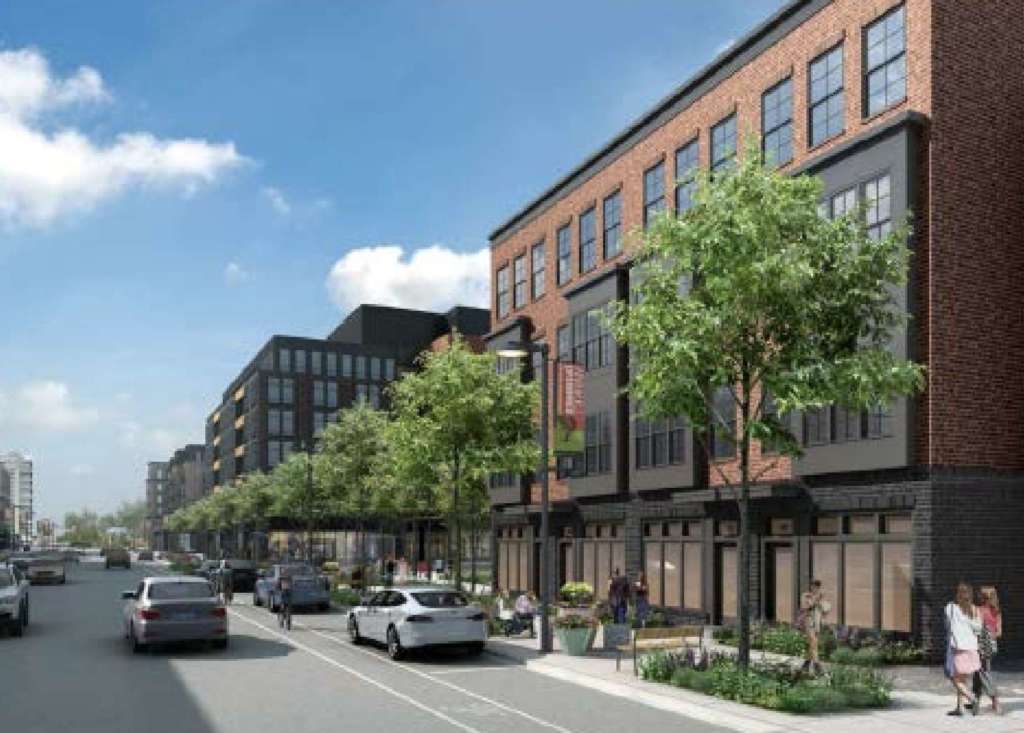
The Fairfax County Planning Commission unanimously approved the Midline, a mixed-use project near the Wiehle-Reston East Metro Station Thursday night.
The approval sets the project, which would bring 1.8 million square feet of development across 17..5 acres east of Wiehle Avenue and south of Sunset Hills Road, in motion for a Board of Supervisors’ vote on Dec. 4.
John Carter, the Planning Commissioner for the Hunter Mill District, lauded the development team, JBG Smith, EYA and Chevy Chase Land Co., for bringing a diverse mix of low-rise housing to the area, a feature that he said is lacking in other projects recently approved in Reston.
Four blocks with several buildings are proposed on land that is currently used for low-rise office buildings and surface parking. The plan includes 127 independent units, a 33-bed assisted living facility, a 225-unit multi-family building and a mix of townhouses. A 14-story office building and retail is also planned on the site nearer to the Metro Station.
Carter said the mix of affordable and workforce housing units, which is integrated throughout the site, is not intended to serve as a precedent for other projects. Due to the variety of housing options proposed, the developer has integrated several affordable units in the townhouse area and the multi-family building, creating a dispersed mix of affordable housing throughout the project, Carter said. Parking will be offered at a cost reduced by 70 percent of the price for market-rate units. The affordability tiers are also 70, 80, and 100 percent of the area median income — a distribution lower than the typical county requirement of 80, 100 and 120 percent of the AMI. Independent living and affordable units will have shared access for several amenities.
Following concern about limited public amenities, the development team also added additional dog parks, playing areas for children, and agreed to work with area developers to install street lights, updated curbs, and signage along Reston Station Boulevard. That road will extend into the Midline project and pedestrian and bicyclist access to the Washington and Old Dominion Trail will also be provided.
The commission deferred a decision on Woodfield Acquisition’s plan to replace office buildings on Roland Clarke Place with residential units to Nov. 15 in order to allow the developer to devise a better way to create a grid of streets in the area.
Photo via handout/Fairfax County Government