


Route 7 Getting Upgrades to Connect Communities — The widening of Route 7 will also include new trails and a tunnel that will connect Tysons Corner to Reston. The plans apply to a seven-mile stretch from the Dulles Toll Road to Route 193, and work is expected to be completed by 2025. [Greater Greater Washington]
Two Area Schools Get New Principals — Fairfax County Public Schools welcomed five new principals this week. Among the schools to receive them are Herndon High School and Herndon Elementary. Herndon High welcomes Elizabeth Noto and Herndon Elementary welcomes Teresa Fennessy. [FCPS News]
Track Work Will Disrupt Weekend Metro Service — Repairs to Metro tracks will mean disrupted Silver Line service this weekend, including some routes being replaced by shuttle buses. In addition, WMATA says Metro will shut down and buses will replace the Orange, Blue and Silver Line routes in downtown D.C. the weekend of Feb. 4-5. [WMATA News]
County’s Legislative Delegation to Hold Public Hearing — Fairfax County’s delegation to Virginia’s General Assembly will hold a hearing for public comment Saturday at 9 a.m. at the County Government Center (12000 Government Center Pkwy.). Speakers who wish give opinions on issues the General Assembly is likely to consider in its upcoming session can register in advance. [Fairfax County]
Virginia Macy’s Stores on the Chopping Block — After disappointing holiday sales, Macy’s announced this week that it will close more than 60 stores nationwide. On the list of closures are the stores in Alexandria and Lynchburg. In addition, the Tysons Corner store’s building has been sold, but Macy’s said it plans to keep the location open by leasing it back. [CNBC]
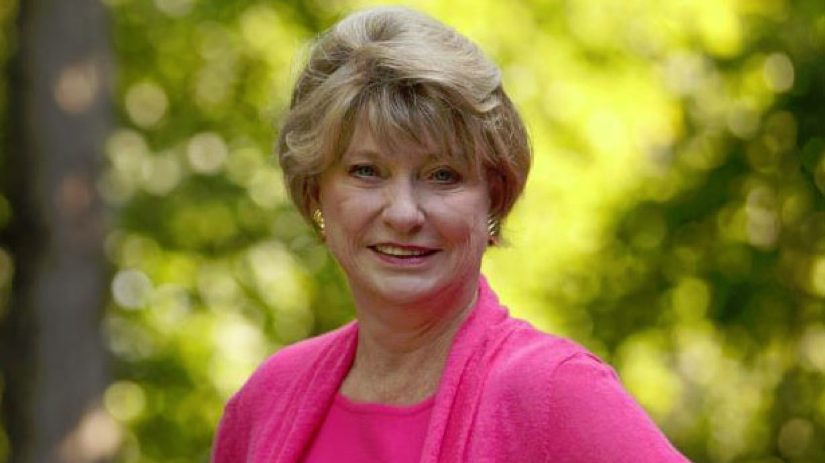 As lawmakers across Virginia head to Richmond for next week’s start of the 2017 General Assembly session, one local representative is looking for a warning on handguns.
SB 893, being proposed by Sen. Janet Howell (D-Fairfax), was officially filed for consideration Dec. 20. It would make it “unlawful for any licensed manufacturer, licensed importer or licensed dealer to sell, deliver or transfer any handgun to any person… unless the handgun is accompanied by a warning, in conspicuous and legible type in capital letters printed on a label affixed to the gun and on a separate sheet of paper included within the packaging enclosing the handgun, that handguns should be locked and kept away from children…”
The only exception in the bill is for firearms that are “accompanied by a locking mechanism,” though it also allows leeway for law enforcement and governmental agencies.
Howell and Del. Ken Plum (D-Reston) co-hosted their annual Town Hall with locals Dec. 19, in an effort to hear citizens’ thoughts on issues they and other Virginia lawmakers are proposing. Among the issues discussed at the forum were rights for same-sex couples and former felons, and punishment for marijuana offenses.
This year’s 30-day session is scheduled to begin Wednesday, Jan. 11.
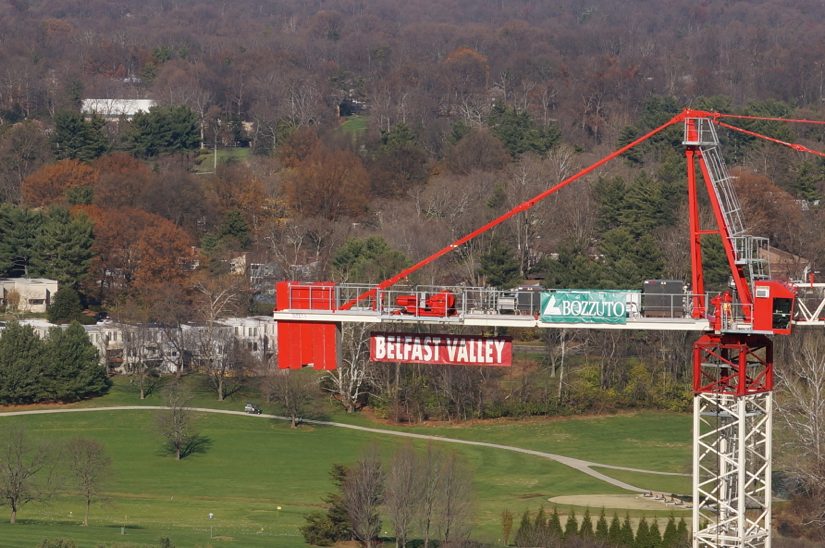 Virginia Gov. Terry McAuliffe (D) signed a bill into law on Wednesday that will limit proffers, which local governments rely on to get builders to contribute to park, roads and other improvements in exchange for development.
As the bill went through the House and Senate, many local governments, including Fairfax County’s Board of Supervisors and Reston Association, asked the governor to amend or not sign the legislation.
The law requires that proffers be limited to offsetting impacts that are directly attributable to new residential developments, such as traffic. The restrictions do not apply to high-density areas, commercial developments or neighborhoods near Metro stations.
The law is effective July 1, 2016.
This is important time in Reston, which is undergoing a period of multifamily housing growth as it turns towards being a transit-oriented community. However, most of that growth will occur near Metro stations, so the impact here remains to be seen.
Reston Association President Ellen Graves, who wrote a letter to the governor last month voicing the association’s opposition to the bills, said the final version looks to pretty much leave Reston alone due to parameters of Reston’s Master Plan.
“It’s good for us,” Graves said Thursday. “The final version excludes all pending zoning applications and all residential or residential/mixed use [applications] located in an area near existing or future Metro. ”
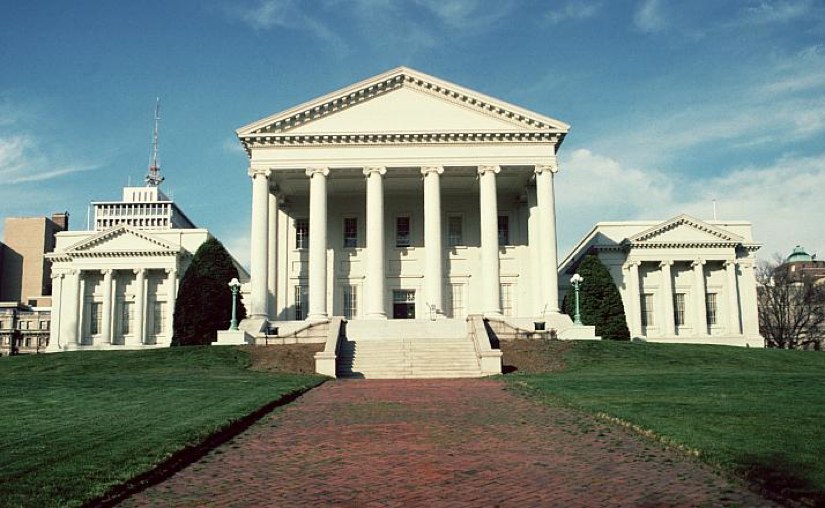 Several Reston-area organizations are appealing to Virginia Gov. Terry McAuliffe to veto or amend bills that recently passed the Virginia House and Senate that limits the amount of proffers localities can for from developers.
The final versions of the bills are expected to go to the governor to be signed into law as soon as this week.
Limiting local government’s ability to ask for proffers could have a big impact in Reston, which is undergoing a period of multifamily housing growth in the areas around Metro stations at Wiehle-Reston East and Reston Town Center.
However, according to the Senate bill, restrictions would not increase in areas in direct proximity to Metro, where much of Reston’s future development will occur.
Proffers are concessions local governments ask for from developers in exchange for development. Proffers can be anything from road improvements to traffic mitigation to money for a new recreation center or school.
Del. Ken Plum (D-Reston) voted in favor of the House version of the bill. He said on Monday that House members were previously assured that the deal would not have an effect on Fairfax County’s interests.
“Since then time, the story seems to have changed,” said Plum. “What I trust is going to happen is when the bills cross between the House and the Senate, there will be accommodations. I trust we can get it done.”
Plum says the bills’ intent was primarily aimed at fast-growing counties near Richmond, where developers have been demanding cash proffers, which is driving up the cost of housing. In Fairfax, cash proffers are not allowed.
Reston Association Board President Ellen Graves sent a letter to McAuliffe last week saying the association “opposes the Proffer Reform Legislation (Senate Bill No. 549 and House Bill No. 770) as it is currently written because it adversely affects the ability of Reston Association, the county and a developer to mitigate impacts of residential development on Reston Association’s budget, facilities and programs.”
Reston Association would like the restricted area expanded to allow an exemption from the new rules within one mile (rather that one-quarter mile of a Metro station.
“Since Reston Association’s facilities, services and programs are technically not deemed ‘public’ facilities under the statute, any mitigation could unfortunately be deemed an unreasonable proffer,” wrote Graves. “We ask that [the legislation] be amended to provide that this legislation shall not apply to mixed use development or a plan that allows additional residential density, within one mile (rather than one-quarter mile) of an existing or planned Metrorail Station.”
Earlier, the Fairfax County Board of Supervisors wrote to the Fairfax County General Assembly Delegation, asking them to “Please oppose HB 770/SB 549, or seek amendments to safeguard Fairfax County’s proffer authority.”
Wrote Board of Supervisors Chair Sharon Bulova:
“Virtually all development in the county is infill development. In these types of cases, proffers are critical in meeting infrastructure and compatibility needs of surrounding areas. If enacted, these bills may require us to rewrite entire sections of our Comprehensive Plan and Zoning Ordinance.”
Bulova says the proffer system provides an opportunity for developers to work with the county to address community concerns related to the increased density of such development.
Advocacy group Reston 2020 has also written to McAuliffe, saying “the draft legislation, as it stands, would severely impact the quality of life, even safety, throughout the entirety of our community well beyond the boundaries of our Metro stations.”
Reston 2020 says it understands there needs to be some controls over proffers due to “serious overreach” in other counties.
“However, this is not the case in Fairfax County,” Reston 2020 said. “Indeed, we believe Fairfax County should seek greater proffers or other similar arrangements with developers to offset the impact of their for-profit private development in our community given its expected intense development.”
Photo: Virginia Statehouse in Richmond/file photo

Correction, 4:30 p.m. Thursday: Janet Howell did not vote in favor of the bill. She did not vote.
The Virginia Senate passed a bill on Tuesday that could weaken developer proffers, which Fairfax County officials commonly use to get builders to contribute to park, roads and other improvements in exchange for development.
The bill passed the Senate 29-8. Reston’s Sen. Janet Howell (D) did not vote.
A House version passed on Friday. Reston’s Del. Ken Plum (D) voted yes on the bill.
Limiting local government’s ability to ask for proffers could have a big impact in Reston, which is undergoing a period of multifamily housing growth as it turns towards being a transit-oriented community.
For instance, the Fairfax County Park Authority has said it will seek developer proffers to partially pay for a multimillion indoor recreation center, now slated for Reston Town Center North.
Developers of a proposed assisted and senior independent living facility at Hunters Woods have been asked to donate move than $100,000 to the Fairfax County Park Authority or Walker Nature Education Center, as well as install new traffic lights to help traffic flow near the entrance.
The county also has identified more than $2 billion in infrastructure improvements needed in Reston over the next several decades — money that would likely come from proffers, as well as taxes, bonds and even a new special tax district.
Features of the bill require that proffers be limited to offsetting impacts that are directly attributable to new residential developments, such as traffic. The Senate version of the legislation does not apply to high-density areas, commercial developments or neighborhoods near Metro stations.
The bill places restrictions on what local officials can ask for in development negotiations.
The Fairfax County Board of Supervisors this week asked Fairfax County General Assembly delegation members to oppose HB 770 and SB 549 or seek amendments to “shield Fairfax County from the significant restrictions these bills would place on development and proffers.”
Read more about the impact of the bills in this previous Reston Now story.
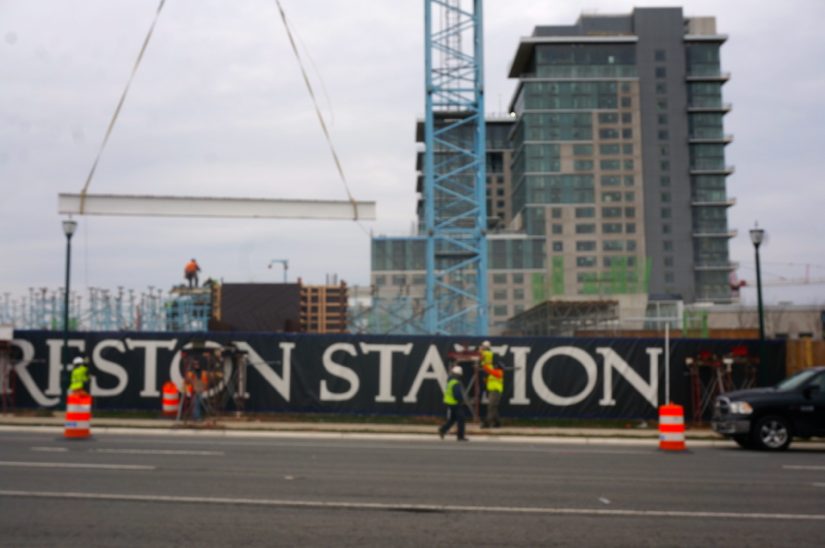 The Virginia Senate will vote today on a bill that would weaken developer proffers, which Fairfax County officials commonly use to get builders to contribute to park, roads and other improvements in exchange for development.
This is important in Reston, which is undergoing a period of multifamily housing growth as it turns towards being a transit-oriented community.
For instance, the Fairfax County Park Authority has said it will seek developer proffers to partially pay for a multimillion indoor recreation center, now slated for Reston Town Center North. The county also has identified more than $2 billion in infrastructure improvements needed in Reston over the next several decades — money that would likely come from proffers, as well as taxes and even a new special tax district.
Features of the bill require that proffers be limited to offsetting impacts that are directly attributable to new residential developments, such as traffic. The Senate version of the legislation does not apply to high-density areas, commercial developments or neighborhoods near Metro stations.
The bill places restrictions on what local officials can ask for in development negotiations. A House version of the bill passed 68-27 last week.
Officials in Northern Virginia told the Washington Post that changing the legislation would hamper their ability to negotiate for extra amenities from developers. They also argue that amending the land-use tool would open them up to lawsuits if builders whose projects were rejected argued that they were denied because of their refusal to agree to “unreasonable” proffer requests.
The proffer system in Virginia has been around for three decades. In Fairfax County, rapid growth in the 1970s prompted local government to demand that builders contribute to offset population growth’s effect on traffic, sewers and other systems, as well as help grow affordable housing.
The presidents of the Home Builders of Virginia told the Post that the proffer system has gotten out of control, developing into a list of demands rather than requests.
“We feel that proffers have gotten out of control,” said J.M. Snell, whose group helped craft the legislation. “They’ve grown out of proportion to where now localities have already predetermined proffers, which become demands, which is exactly the opposite of the word ‘proffer.’ “
Fairfax County Supervisor Chair Sharon Bulova says the new restrictions could lead to development projects’ not being approved.
 Education, transportation, support from the state to local municipalities and support for local government.
Those are the four main priorities Fairfax County plans to stress to the Virginia General Assembly as the General Assembly prepares for its 2016 legislative session in January.
The county’s Legislative Committee has held four meetings, and the Board of Supervisors plan to adopt the 2016 legislative program and meet with the Fairfax County General Assembly delegation on Dec. 8.
In a draft of the program, the county urges the commonwealth to step up — or witness a decline in services and economic competitiveness in Fairfax.
“Fairfax County and the Commonwealth have long maintained a strong partnership in promoting economic development,” reads the draft. “The County has created a strong business climate, with a fair and competitive tax structure, excellent schools, an educated workforce, and services and amenities that attract new businesses every
year.”
“Unfortunately, it has been the practice of the Commonwealth to significantly underfund core services, leaving localities to fill funding gaps with local revenues in order to maintain essential services. This poses a particular threat to economic development efforts, as state funding cuts in recent years, coupled with the impact the recession has had on local revenues, threaten to destroy the very attributes that draw and retain businesses.”
Some highlights of the county’s requests:
Fully meet K-12 funding:
At present, the state is failing to provide the funding necessary to
implement its own standards and requirements, while Fairfax County and other Northern Virginia localities more than meet their responsibilities for K-12 education through large contributions to the state General Fund, strong local effort, and the effect of high local composite indices. Conversely, state funding for K-12 has declined
significantly in recent years – in FY 2009, K-12 funding comprised over 35 percent of the state General Fund, but by FY 2014, investments in K-12 education had fallen to less than 30 percent of the General Fund.
Continue and build upon the successful enactment of significant, new
transportation revenues by the 2013 General Assembly:
It is critical that Northern Virginia continue to receive its fair share of statewide revenues, as required by HB 2313, particularly in light of the new HB 2 process for prioritizing projects. If any changes to the HB 2313 revenues are considered, alternative revenues must generate funds at least equal to those previously approved.
This is a letter from Dianne Blais and Lois Page of the League of Women Voters of Virginia. It does not reflect the opinion of Reston Now.
Sept. 1 brought yet another reminder of the partisan rancor that too often paralyzes the Virginia General Assembly these days. Despite convening briefly for a special session in mid-August, that body failed to meet the deadline imposed by a federal court for redrawing the boundaries of the state’s 3rd Congressional District.
To briefly recap, a three-judge panel of the 4th U.S. Circuit Court of Appeals ordered the General Assembly to go back to the drawing board after it found that its 2011 Congressional redistricting plan sought to pack as many African-Americans as possible into the district represented by Democratic Rep. Bobby Scott of Richmond. Because African-Americans now make up nearly 20 percent of the state’s population, this approach served only to dilute their potential political power in a state that has 10 other Congressional districts.
While the legal and political wrangling continues, the failure of the General Assembly to address its responsibilities will likely leave the map-drawing in the hands of the federal judiciary — a job that the League of Women Voters of Virginia (LWV-VA) suspect the judges are not eager to take on.
The LWV-VA believes that these maps are a good place to begin, because they were developed by persons seeking to adhere to the redistricting requirements embedded in the Virginia Constitution, rather than by persons seeking only to amass enough voters of the right political stripe in their districts to assure their easy re-election.
The judges DO have the opportunity to set a very positive example for all future redistricting efforts by using as their starting point the independent, bipartisan redistricting plans that were developed during the last redistricting cycle. A good redistricting plan would respect natural geographic boundaries, the boundaries of local jurisdictions and communities of interest.
If redistricting is done in a way that is fair and non-partisan, it will ultimately produce a result that permits democratic processes to flourish in our state and reflects the true political power of minorities and other ethnic groups within our increasingly diverse Commonwealth.
The court also has the opportunity to follow a key recommendation of Gov. Terry McAuliffe’s bipartisan Integrity Commission. The commission recommended amending the Virginia Constitution so that future redistricting plans would always be drawn by an independent commission, rather than partisan politicians.
It was commendable that then-Gov. Bob McDonnell appointed an independent, bipartisan advisory commission, which held hearings around the state before proposing three different congressional redistricting maps. The commission also encouraged the consideration of the winning maps that emerged from a competition among Virginia college teams that year.
Now that the U.S. Supreme Court has upheld the constitutionality of using such commissions to draw the boundaries of legislative districts, we believe the current impasse provides the appeals court with a rare opportunity to demonstrate that this approach CAN actually work in the Commonwealth of Virginia. In doing so, the court can strike a blow for fairness, transparency and good government — and take an important step toward promoting a healthier democracy in our very politically polarized state.
The League of Women Voters of Virginia (LWV-VA), along with Leagues across the country continue to press for redistricting reform at the state level. To learn more about redistricting and LWV-VA decades-long efforts to decrease gerrymandering, visit our page on the topic. A major effort of LWV-VA is to have redistricting reform by 2021 when the next redistricting occurs.
This weekend is the time to shop tax free for all things back to school or emergency supplies or energy-saving appliances.
In its 2015 session, the Virginia General Assembly passed legislation that combined all its previous tax-free holidays into one shopping weekend that begins the first Friday in August.
The tax free purchases, available Aug. 7-9, include:
School-related items
- Qualified school supplies – $20 or less per item
- Qualified clothing and footwear – $100 or less per item
- Virginia’s list of qualifying items
Hurricane and Emergency Preparedness Items
- Portable generators – $1,000 or less per item
- Gas-powered chainsaws – $350 or less per item
- Chainsaw accessories – $60 or less per item
- Other specified hurricane preparedness items with a sales price of $60 or less per item
- Detailed list of hurricane preparedness items
Energy Star and WaterSense Items
Qualifying items carrying either the Energy Star or WaterSense label with a sales price of $2,500 or less purchased for non-commercial home or personal use.
- Qualifying Energy Star items include dishwashers, clothes washers, air conditioners, ceiling fans, light bulbs, dehumidifiers, and refrigerators
- Qualifying WaterSense items include bathroom sink faucets, faucet accessories such as aerators and shower heads, toilets, urinals, and landscape irrigation controllers
- Detailed list of Energy Star and WaterSense items
Online purchases of qualifying products will also be exempt from the sales tax as long as the orders are placed during the Aug. 7-9 exemption period and the sellers have the items available for immediate shipment.
For more information, visit the Virginia Department of Taxation website.
A bill sponsored by Del. Ken Plum (D-Reston) that would make cannabis oil legal for patients suffering from illnesses that could be helped by it was left in committee in Virginia’s General Assembly session earlier this month.
However, a similar bill sponsored by Del. Dave Albo (R-Springfield) passed both the house and the senate and will become a law. Albo’s law allows epilepsy to be added to cancer and glaucoma as medical conditions that can be helped by the oil derived from marijuana.
Left in committee is a common outcome for Plum, who has been representing Reston for more than 30 years — the longest of any Virginia House member.
He says each year when he goes to Richmond, he knows is in for a fight as his liberal-leaning perspective is in the minority in the Virginia House, which is dominated by Republicans (67 Republicans, 32 Democrats, 1 Independent this session).
“I am not here for a batting average, I am here to do what’s right,” says Plum. “My role as a senior legislator in the minority party is to see to it that the majority party does not get to ignore the big issues — Medicaid expansion, nonpartisan redistricting, and gun safety as examples.”
Even if he proposes — and loses — big reform, it gets people thinking, says Plum.
“These are game-changers for Virginia,” he says. “It takes a while to get these ideas in place. Over time, we will prevail. Probably more than 90 percent of legislation has little impact. It corrects the Code, deals with courthouse or business affairs with little no no impact on the average person, or are local matters. There’s more than enough legislators to introduce these bills.” Read More
 Home-schoolers in Reston and other Virginia locations are closer than ever to getting the right to play for their local high school teams.
After several years of failed attempts, the Virginia General Assembly this week passed legislation to allow home-schooled students to participate in public-school sports.
The measure is commonly known as the “Tebow bill.” It is named for Tim Tebow, the former NFL quarterback who was home-schooled and allowed to play football for his local high school.
The idea has been repeatedly passed by the Republican-heavy Virginia House of Delegates in recent sessions before being killed in the state Senate.
The Senate, which flipped from Democratic to Republican control last year, approved the bill Tuesday on a 22-13 vote. The bill now heads back to the House.
However, the bill leaves it up to local school boards whether to implement the policy.
Gov. Terry McAuliffe has not said whether he will sign it.
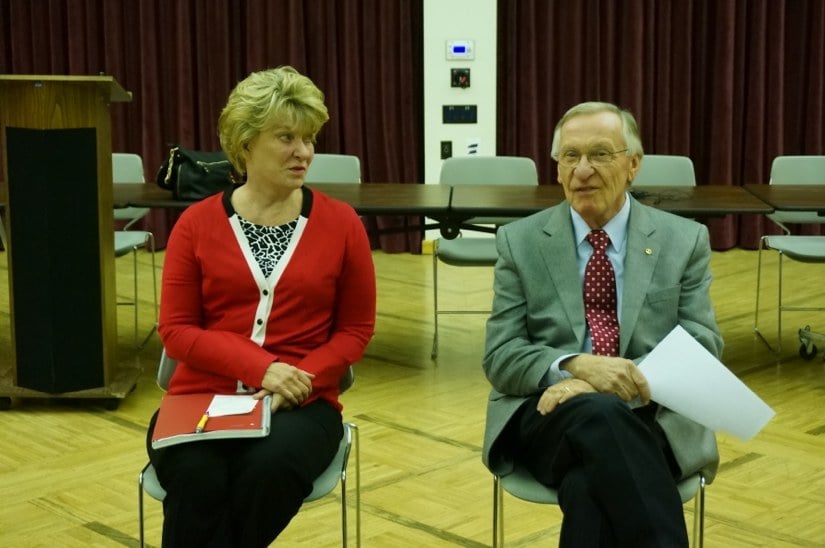 Sen. Janet Howell (D-Reston) says that the commonwealth is heading in the wrong direction when it comes to gun control measures in Virginia.
“Gun safety measures were defeated in close, almost party line, votes,” Howell said about last week in the current Virginia General Assembly in an email to constituents.
“Sadly, we continue to go backwards on reasonable gun safety measures. Closing the gun show loophole was defeated. My bill prohibiting the possession of firearms by those charged with family violence failed. Also defeated was reinstating the ‘one gun a month’ limit on gun purchases.”
“When in effect, that limitation had effectively stopped Virginia from being the gun running capital of the East Coast. A bill to allow guns on school property passed through committee. Another bill to let concealed weapons permit holders purchase lifetime permits also passed through committee. It is still possible that some of the reckless bills may be defeated during the legislative process. It is not possible that the reasonable gun safety bills (that are supported by almost 90 percent of voters) will pass.”
Howell was the chief patron on SB 909, which prohibits a person who is subject to a protective order from possessing a firearm. Under currently laws, such person is only prohibited from purchasing or transporting a firearm and such conduct is punishable as a Class 1 misdemeanor.
The bill was defeated 10-4 in the Courts of Justice Committee on Jan. 26.
Said Howell: “During the debate on the gun bills we consistently heard testimony from the NRA and Citizens Defense League on one side and, on the other side, State Police, local police, Commonwealth Attorneys, police benevolent societies, victims groups, Chiefs of Police, and — poignantly — family members of victims of gun violence. Needless to say, the NRA and CDL always prevailed.” Read More
 Del. Ken Plum’s (D-Reston) bill to require a background check for all gun purchases was defeated in a House subcommittee at the Virginia General Assembly session in Richmond on Thursday.
The bill had the support of Gov. Terry McAuliffe, as well as several groups advocating for new Virginia gun laws.
HB 1604 would have added a definition of “firearms show vendor” or “vendor” and require that a criminal history record information check be performed on the prospective transferee before the vendor may transfer firearms at a gun show.
Under current law, only licensed dealers must obtain such a check. The bill also required that the promoter of a firearms show provide vendors access to licensed dealers who will conduct the criminal history record information check.
“Of course I am disappointed,” Plum said. “But the outcome was pre-ordained. Four of the five members of the subcommittee have perfect or near-perfect ratings on the National Rifle Association scorecard. That same subcommittee defeated all the common sense gun safety bills including one to prohibit domestic abusers from having access to guns.”
On the Senate side, the Republican-led Courts of Justice committee earlier in the week killed off 10 gun bills, the majority of a gun control package introduced by McAuliffe. Among the dead bills, a bid to reinstate Virginia’s one-handgun-purchase a month law, which the General Assembly dismantled in 2012, and one that would take away concealed carry permits from owners behind on child support payments.
The Courts of Justice committee advanced several bills that will ease state codes for gun owners. Among them: one that allows lifetime concealed-carry permits rather than requiring re-registration every five years. Other bills allow the possession of weapons on private religious school campuses and allow people with concealed carry licenses to leave guns in their cars in public school parking lots.
However, many of the bills will still face a veto from McAuliffe if they pass the full General Assembly, the Newport News Daily Press reported.
Photo: Ken Plum/file photo
 As the Virginia General Assembly works through its annual 45-day session, the legislators will soon turn their attention toward passing the state budget.
State Sen. Janet Howell (D-Reston), calls the state’s budget outlook “bleak” while praising Gov. Terry McAuliffe’s proposed budget, which closes the projected shortfall through a series of tax changes and spending cuts.
However, Howell and other area Democrats say the budget doesn’t go far enough in improving the state’s K-12 education system.
“Fortunately, the Governor’s budget closes the budget gap. His budget is balanced,” Howell said in a newsletter to her constituents. “What we do not have, however, is any real ability to make investments in public education, higher education, human services, or workforce development.
“Direct aid to public education has been spared additional state cuts,” she continued. “However, unless we have a sudden, unexpected upswing in our economy, we will have to jettison a proposed and deserved salary increase. For context, in terms of per pupil general funds for public education, by FY 2016 we will be just back to FY 2008 levels on a statewide basis.”
Over the summer, McAuliffe announced Virginia was projected to have a $2.4 billion budget shortfall over the next two years. Much of that deficit, Howell said at a recent Arlington Democrats meeting, can be traced back to cuts from the federal budget sequestration and the layoffs at government contractors it prompted.
Additional revenue growth has since reduced the deficit, and cuts to the state prison system and elsewhere have saved millions. Del. Patrick Hope (D-Arlington) says the closing of tax loopholes for some corporations — most notably coal producers — are necessary to even preserve the current level of education funding.
“There are a lot of companies in Virginia that don’t pay any taxes,” Hope told ARLnow.com. “We’ve got hundreds of millions of dollars that Virginia gives out every year to companies for job creation, and research is coming out that that’s not happening today. We need to take a hard look at what those tax credits are, and if they’re not doing what the intended purposes are, we need to pull it back.”
Hope said a state yacht tax credit should also be stripped — “I can’t look my voters in the eye if I vote for a budget” that includes that tax credit, he said — but said that the budget should become more ambitious in terms of education spending. Funding K-12 education millions of dollars less than before the recession, without accounting for inflation, isn’t enough, he said.
“There’s no reason why spending shouldn’t go in the opposite direction,” he said. “We are out of the recession now, it’s time to fill those holes back up.”
Although some form of a balanced budget is expected to pass — which may include cuts to education, according to Hope, if the Republican-controlled General Assembly balks at the loophole cuts — Howell said the realities of the budget situation don’t figure to change anytime soon, especially after the sequester’s cuts to federal defense spending.
“Growth has halted or declined in the good-paying ($77k+/year) jobs in the ‘business and professional services’ categories. Instead, we are seeing more growth in lower-paying jobs, such as health, leisure and hospitality ($45k/year on average),” Howell wrote. “Unfortunately, no one believes this situation is a temporary one.”
File photo

By Ryan Goff
Del. Ken Plum (D-Reston) and Sen. Janet Howell (D-Reston) held their annual meeting with constituents Thursday night, where they discussed issues important to them and those that the public wants to see brought to attention in the 2015 Virginia General Assembly session that begins Wednesday in Richmond.
The event drew several dozen residents to the Reston Community Center Hunters Woods, where they listened to the legislators’ plans for the session, and were able to give feedback on several topics.
Among the topics discussed:
Gun Control — Plum advocated for “common-sense approaches” to gun safety, including the expansion of background checks to cover the “gun-show loophole,” in which gun buyers are able to bypass a background check by purchasing their firearm from an individual seller at a gun show.
Plum also addressed the challenges of passing bills regarding gun control.
“That whole arena of gun legislation is very controversial.” Plum said, “I will tell you that in the House there is a subcommittee that is made up of persons who have straight-A ratings by the NRA, and get all these bills, so it’s a hard climb to get these bills passed […] we need to bring pressure to say that we can protect people’s constitutional rights, but we can have common sense gun legislation.”
Several speakers from the community also voiced their support for Plum’s proposed gun safety measures.
Medicaid Expansion — Both Plum and Howell voiced their support for the expansion of Medicaid. Plum has drafted a bill allowing Gov. Terry McAuliffe (D) to proceed with the expansion of Medicaid.
“There are hundreds of thousands of Virginians today without medical insurance because of the legislature’s inability to act.” Plum said, before urging the public to contact other legislators across the state about supporting this bill.
Gerrymandering — Plum voiced his concern about the way that legislative districts are drawn by legislators, calling it “a total conflict of interest.”
Plum has once again introduced a bill calling for a non-partisan organization to handle the redrawing of district boundaries.
Howell, the former chairman of the Privileges and Elections Committee in the Senate, has introduced a similar bill.
“I have put in, like Ken has, a bill for non-partisan redistricting,” said Howell. “It was my misfortune during last redistricting to be chairing that committee in the Senate. Like Ken said, we have a lot of lawsuits, unfortunately not challenged, with the Senate redistricting. But I will tell you that process was horrible because we had to take all these political factors, and it was almost impossible to keep communities of interest together, and yet that is something we need to do.”
