
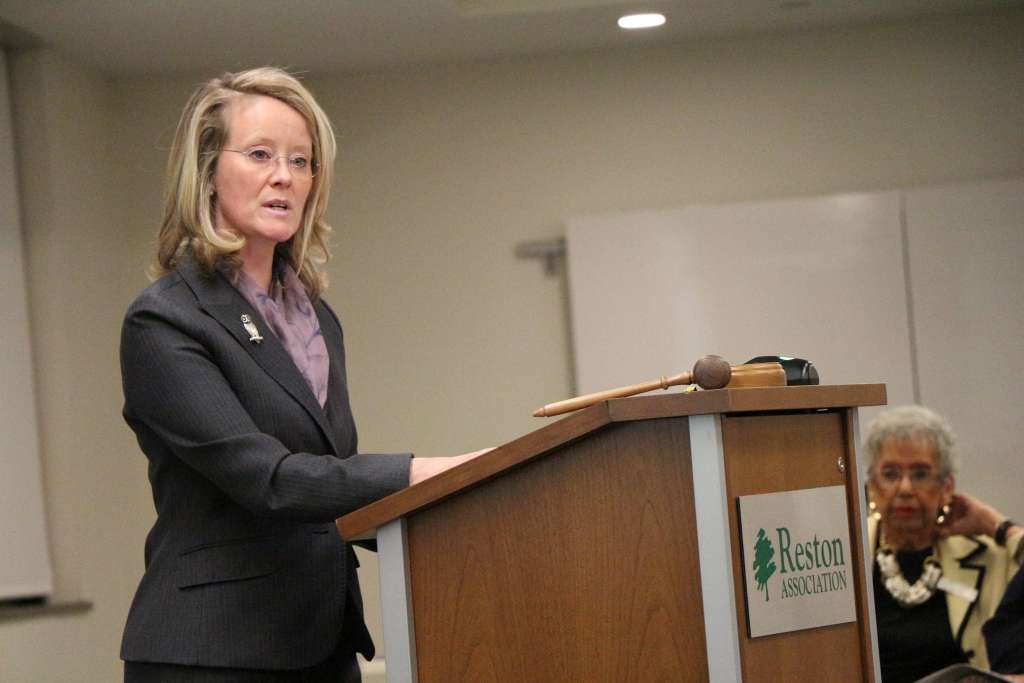
 Speaking at Reston Association’s annual Members’ Meeting on Tuesday, CEO Cate Fulkerson said she is looking to capitalize on the opportunities presented by challenges RA has faced in the past year.
“For anyone who knows my leadership style, I’m not one who walks away from a challenge or ignores difficulties,” Fulkerson said as she addressed the audience. “I believe in taking responsibility for errors, correcting them so they do not happen again, and I believe in finding opportunity in difficulty.”
Specifically, the difficulties of which Fulkerson spoke included the controversy surrounding the Tetra/Lake House renovation, concerns about how RA handles conflicts of interest, and the public input process regarding the Lake Newport soccer field proposal. Moving forward, Fulkerson said she understands the importance of building community trust and continuing on the path of leading sustainable change.
Fulkerson said she and her staff have a number of important tasks to complete in order for that to happen. The first, she said, is to establish a solid foundation with the incoming board — based, she said, on mutual respect, reciprocal communications and shared purpose.
The CEO said the StoneTurn Group review of the Tetra/Lake House deal highlighted several ways Reston Association can work toward bettering internal control policies and procedures for project management. She said she is developing a proposal along with RA CFO Robert Wood that includes the conduct of an internal process control and a walk-through review of RA’s purchasing practices, contract processing and capital-project management.
“The goal will be to have a new system in place by August of this year, so we can take the opportunity to invite StoneTurn to audit the Association in 2018 and to make sure the new processes and policies are being followed,” Fulkerson said.
Continuing work to establish a Code of Ethics for Reston Association is also on Fulkerson’s list of tasks, as she said it is of utmost importance as they work to build community trust.
In regard to new development, Fulkerson said Reston National Golf Course, Tall Oaks Village Center and St. John’s Wood are just some examples of “how vitally important it is for Reston Association to keep on track with leading sustainable change by vigilantly monitoring land-use happenings and advocating for trees, trails and thoughtful design.”
Fulkerson said community input is important to all decisions made by Reston Association. She said listening meetings are being planned for May and June in each of Reston’s districts to gather feedback on what matters most to RA members.
“Our interest is to engage you in conversation,” she said. “The timing of these listening meetings goes hand-in-hand with the development of the 2018 and 2019 Capital and Operating budgets.”
In addition to inviting feedback at the upcoming meetings, the CEO encouraged members to fill out request/suggestion forms for the budget.
Full video of Fulkerson’s speech is available through the Reston Association YouTube channel.

A half-dozen residents have thrown their hats in the ring for an At-Large seat on the Reston Association Board of Directors, and they faced the community Thursday in a candidate forum at RA headquarters.
Roberto Anguizola, Eric Carr, Mike Collins, Charles Dorfeuille, Ven Iyer and HeidiAnne Werner are all vying for the three-year term on the board. The forum provided them an opportunity to tout their abilities, as well as their goals if they should be elected.
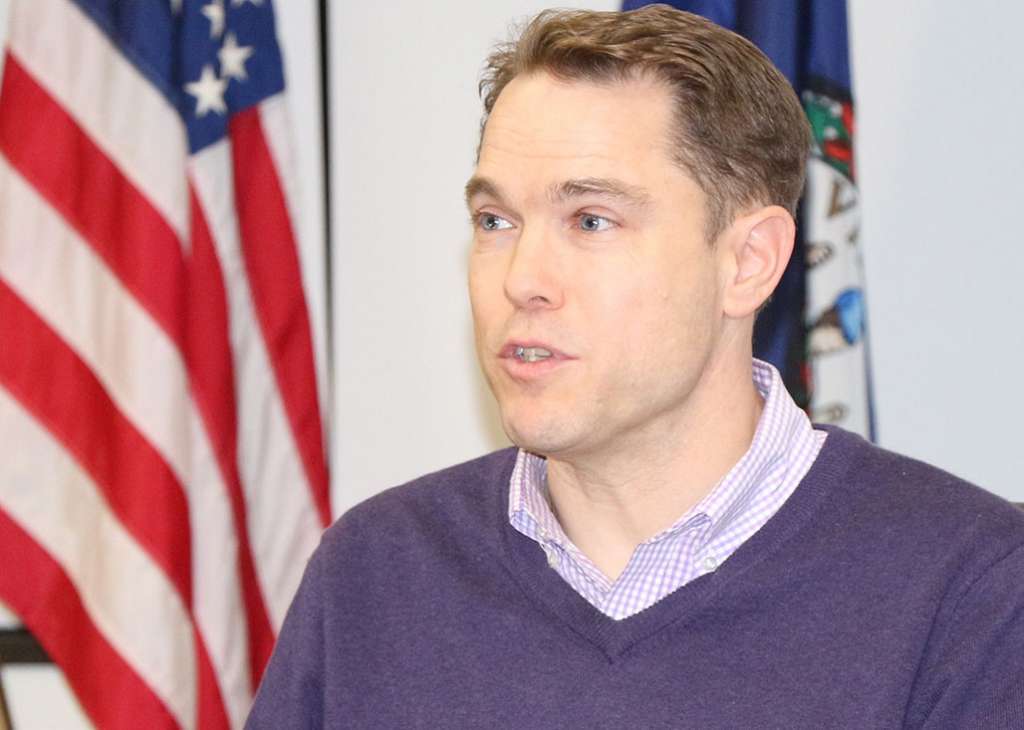 When contemplating the 2018-19 Reston Association budget, which will be approved later this year, candidates said there is a wide number of factors that must be considered. Collins, who was an RA board member from 2010-2013, said it is important for the board to get back to fundamentals.
“We’re not doing the very basic thing we have to do, and that’s maintaining our facilities to the best of our ability,” he said. “That’s going to require laser-like focus by the board, they are going to have to be intimately familiar with our operations, and they have to just say no.”
Dorfeuille, an eight-year resident and a member of the Community Engagement Advisory Committee, advocated for a line-by-line analysis of the budget that separates essential items from non-essential.
“We are spending too much for what I believe we as a community are being given,” he said. “What is non-essential, we look at in the line-by-line review of what we can reduce or what we can de-prioritize.”
 Iyer, also an eight-year Reston resident and the president of a technology business, said the budget must be brought in line without continuing the trend of increasing assessments.
“Our assessments have nearly doubled in the last 15 years — this is not sustainable and it is not warranted,” he said. “In another 30 years, the Reston as we know it now will only be affordable for the wealthy top.”
Carr, a former cluster president with over 20 years of nonprofit and government management experience, said a long-term capital plan is needed so the RA board can “get [its] arms around” the existing capital assets that need to be addressed.
“We think about these 40-, 50-year assets we own in two-year budget cycles,” he said. “That doesn’t make sense and it’s very hard to project into the future, and we continue to get surprised when pools fall into disrepair or when pathways need maintenance.”
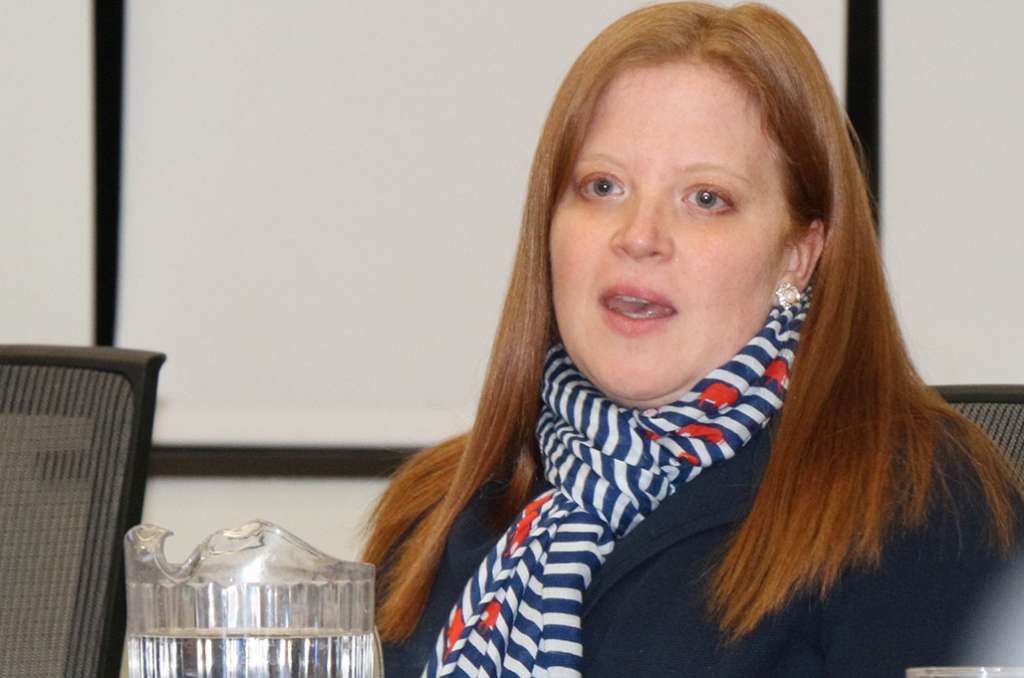 Werner, a lifelong Restonian who works as an association manager, said natural environments need to be protected from development. She added that services, programs and facilities available to Reston Association members need to be optimized.
“This really is to put a focus on our facilities, to make sure they are in the proper maintenance and attractive for members to use,” she said.
 Anguizola, a trial attorney who has lived in Reston since 2008, said his top priority would be to address aging infrastructure in the community. He touted partnerships with nonprofit groups and businesses as a way to achieve that goal without increasing assessments.
“Most of the recreational facilities and amenities in Reston were built in the late ’70s, early ’80s,” he said. “They need attention, and that’s going to cost money to keep them at the level everyone expects them to be at.”
Collins said the board must do a better job of managing its staff and analyzing its needs in the effort to keep costs down.
“The board needs to have firm controls on the budget from the get-go, they need to be willing to get into the details, get behind the top-level numbers and again, say no,” he said. “Sometimes we don’t need a new truck, we don’t need a new computer system. I hate getting into the weeds like that, but apparently we need to do it.”
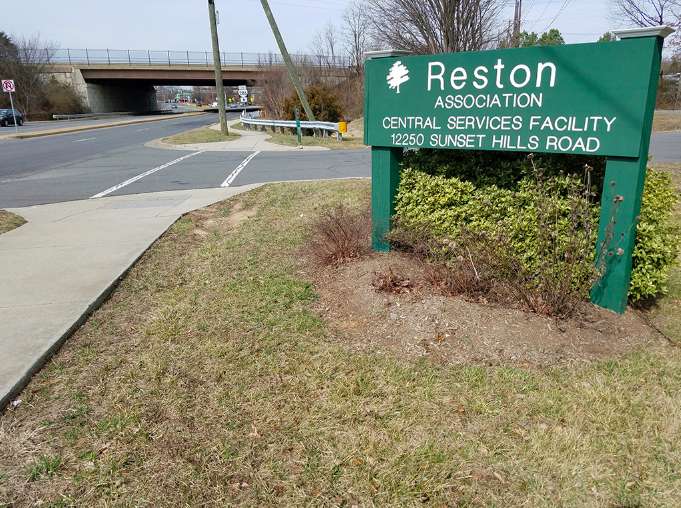
The Reston Association Board of Directors will consider Thursday releasing $200,000 in funds allocated to the Central Services Facility renovation, which staff says is needed to get the process moving before costs increase further.
Garrett Skinner, RA’s capital projects director, will address the board at its meeting this week on the status of the project. It was put on hold in June when the board recommended such large-scale projects be paused until the Tetra/Lake House independent review was conducted. The remainder of funds allocated in 2016 for the project was carried forward to the 2017 budget.
Costs of the Central Services project, primarily in construction, have increased by about 10 percent because of the delay, according to RA staff. According to notes provided to the board in their agenda packet:
“With the increased demand for construction observed in the Dulles Corridor and greater Washington region, staff is concerned that pricing for labor and materials will continue to increase and requests the Board’s permission to lift the hold on the Architecture and Engineering Project Phase in order to secure AE consultant services to develop detailed construction drawings and permitting documentation needed to officially bid out the construction phase of the project and obtain detailed cost estimates for the Implementation & Construction Phase.”
 At the meeting, the board will be asked to “move to release $200,831 of the total $1,553,185 remaining balance for the Central Services Facility renovation project to fund Architecture & Engineering so that the Board can consider Construction Estimates by the end of Q2 2017,” according to the agenda packet.
The budget for consultants on the project includes about $47,000 for architectural work, $50,000 for engineering and $95,000 for project management.
Other items on the agenda for Thursday evening’s meeting include the following:
- A “Proposal for Modified Ad Valorem Assessment Policy” will be presented by At-Large Director Ray Wedell. The proposed policy would replace the current flat-rate assessment for RA members with a formula that Wedell says would be “more fair and equitable to members.”
- The Lake Newport soccer field project, proposed by Reston Soccer, will be available for discussion by members and the board. (In an email to concerned citizens Tuesday, CEO Cate Fulkerson said the RA Board of Directors will not take the project to referendum this spring; however, time will be allowed Thursday for comment because of input recently received from the community.)
- A Conflict of Interest complaint against Director Eve Thompson, filed by Ed Abbott, will be considered.
- The fiscal ramifications of the Reston Transportation Funding Plan to RA itself will be discussed.
- A public hearing will be held on the potential RA membership of the Sunrise Square cluster.
- The Parks and Recreation Advisory Committee will present its 2017 Work Plan.
- The Environmental Advisory Committee will present its pedestrian lighting recommendations.
- The 2018-19 budget development calendar will be proposed.
The Reston Association Board of Directors will meet at 6:30 p.m. Thursday at RA Headquarters (12001 Sunrise Valley Drive).
Chart showing Central Services Facility renovation consulting costs via Reston Association
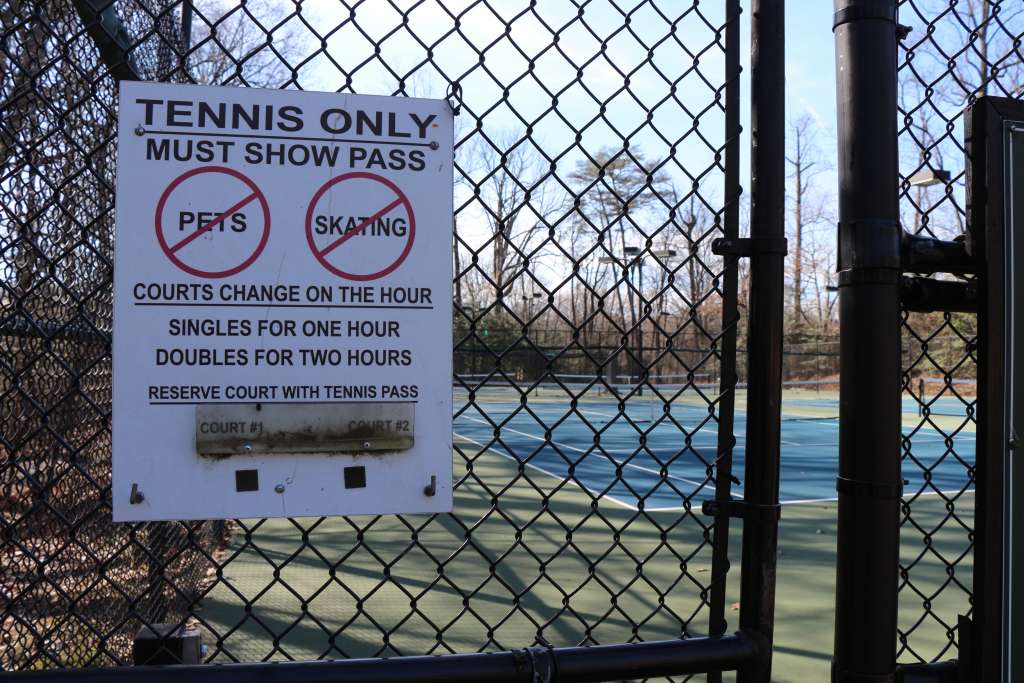
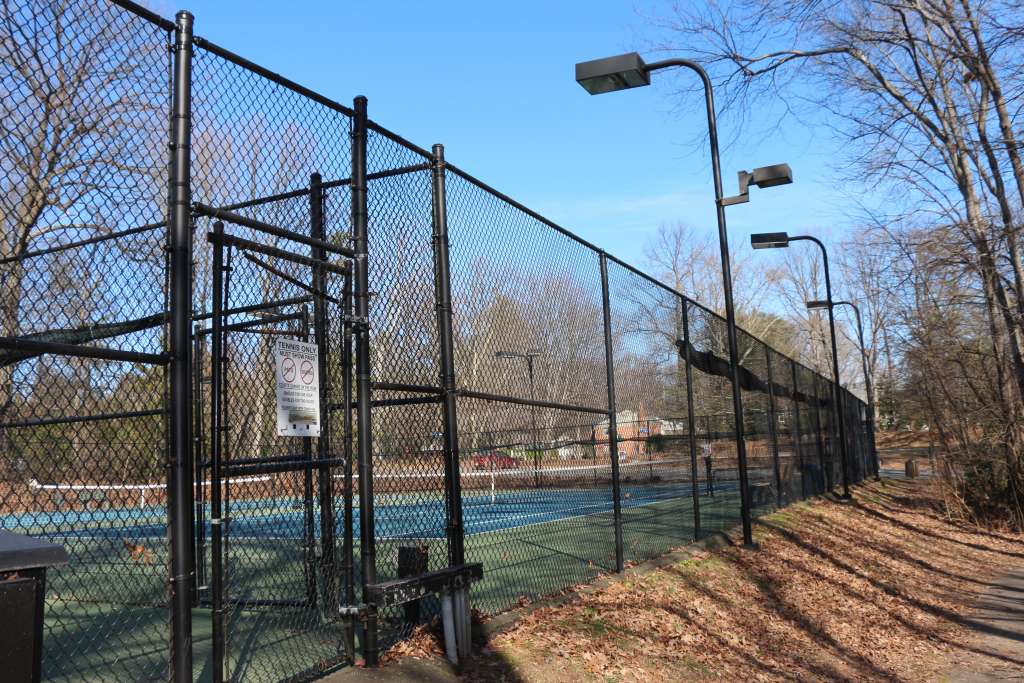
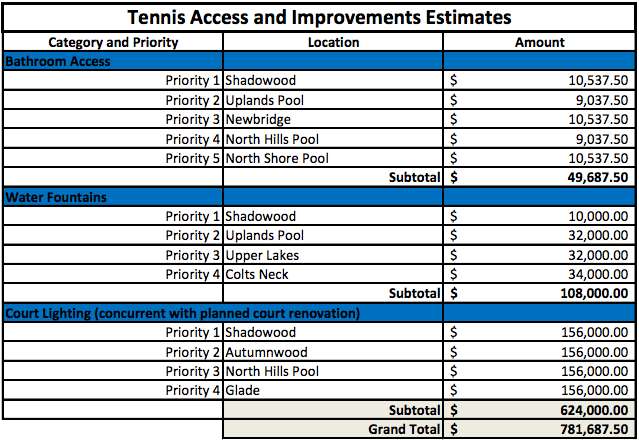
Tennis court upgrades, a proposed agenda item for the February meeting of the Reston Association Board of Directors, could cost nearly $800,000.
Garrett Skinner, RA’s director of capital projects, will bring the item before the RA’s Board Operations Committee at their meeting tonight. The BOC reviews and sets agenda items for the Board of Directors.
According to information provided in the agenda packet for tonight’s BOC meeting:
“During its December 15, 2016 meeting, Vice President [Michael] Sanio noted that tennis amenities are in need of improvement and requested that the board consider developing cost estimates for improvements including lighting, bathroom access and drinking fountains. The attached lighting and bathroom access cost estimates are based historical data and submitted costs from contractors. Costs for water fountains are rough estimates based on extrapolated estimates from Fairfax Water and unit cost estimation for construction. More concrete estimates will need to be developed based on design criteria needed for each location.”
Reston has 13 tennis facilities, six of which are lighted. The proposal has prioritized the five most in need of improved bathroom access; four most in need of improved water fountains; and four most in need of improved lighting, concurrent with planned court renovations.
The Shadowood facility (2201 Springwood Drive) is listed as Priority 1 for each category.
The cost estimates show improved lighting could cost a total of $624,000. The upgrades to water fountains and bathrooms could cost $108,000 and about $50,000, respectively.
Skinner will also give an update to the BOC on the status of the Central Services facility renovation. Scheduled to cost about $1.6 million, the project was put on hold last year pending review of the Tetra/Lake House purchase.
Pending BOC approval, the items will be placed on the agenda of the Feb. 23 meeting of the Board of Directors.
Graph via Reston Association
 Metro released on Sunday what it’s calling a “reality check” budget proposal that would increase fares and jurisdiction contributions while cutting jobs and services.
One of the more austere measures the FY18 plan proposes is downsizing Metro’s workforce by 1,000 positions in an attempt to close an estimated $290 million budget deficit.
“The most difficult part of this plan is the impact for Metro customers and employees,” Metro’s General Manager Paul J. Wiedefeld, said in a press release. “Tough choices are required to balance the operating budget.”
Peak-hour rail fares would increase 10 cents, with $2.25 as the new minimum and a $6 maximum one way. Off-peak rail fares would increase 25 cents to $2. Off-peak rail riders would pay the $2 boarding charge in addition to current distance-based fares. Other proposed fare changes beginning
July 1, 2017, include:
- For bus riders, one-way local bus fares would increase from $1.75 to $2.
- Express bus fares would increase from $4 today to $4.25, and daily parking fees would increase 10 cents.
In addition, the majority of rail service would be reduced, making trains less frequent during peak and off-peak travel times. Headway between trains would grow to 15 minutes during most off-peak periods. Other proposed changes to rail service include:
- Trains would run every 8 minutes in peak periods instead of every 6 minutes today.
During peak periods, trains would operate every 2-4 minutes at stations served by multiple lines in the system’s core. - Service would become more frequent for Blue Line riders, where trains are now scheduled every 12 minutes.
- Rush+ trains would be eliminated.
Also, about a dozen low-ridership bus routes are up for elimination.
Despite these severe cuts, Metro is still seeking an additional $130 million from the District, Virginia and Maryland. This would help offset a forecasted ridership drop of more than 20 percent from 2009, and rising maintenance costs.
“Metro has to face reality when it comes to what the region says it can afford and direct those resources to best serve the riders we have today,” Wiedefeld said. “This plan has Metro doing everything in our power to get major expense categories under control while improving safety and making the trains run on time.”
The proposal will go before the Board’s Finance Committee at its Thursday meeting. Metro’s Board of Directors will be asked at its December meeting to approve a public hearing, as well as other online and community-based outreach for consideration of the budget.
Community outreach and public hearings would begin in late January, and the full budget would take effect July 1, 2017 if approved.
 Reston Association’s Board of Directors is looking into altering outdoor pool schedules — including the possibility of closing up to four of them.
In a 2016 budget work session on Wednesday, Deputy Director for Recreation Laura Kowalski presented several cost-savings options to the board.
The board opted to move forward with two of them: to change seven pools to weekends-only from Memorial Day until the last day of school in June, and to change the number of pools open from mid-August to Labor Day from eight to four.
Reston Association has 15 outdoor pools that cost about $1.6 million annually to administer and staff. They also take in upwards of $800,000 in revenue, according to RA documents.
Changing to the weekends-only schedule early in the season would save about $10,000 annually, RA estimates. Reducing the number of pools open in late August would save about $14,000.
RA’s Board will vote on the final budget and set next year’s assessment in November.
The board opted to leave early morning and late evening swim hours at North Shore and Lake Thoreau pools in place, as well as keep North Shore and Ridge Heights open before Memorial Day and past Labor Day. It also will keep offering free sunscreen.
“I think having a longer pool season adds to the value of the pool pass,” said Larry Butler, RA’s Senior Director of Parks, Recreation and Community Resources.
A suggestion put to the board was shutting down the least-used pool in each district: Shadowood in Hunters Woods/Dogwood; Tall Oaks in Lake Anne/Tall Oaks; Autumnwood in North Point; and Newbridge in South Lakes.
Autumnwood has had an average of 10,165 visitors per summer over the last five years; Shadowood, 3,542; Newbridge, 4,211; and Tall Oaks, 4,587.
Closing each pool would save RA from $47,116 to $59,849 per pool annually, but that would only result in a savings of less than $3 on annual assessments, RA estimates show.
Butler explained it is not that easy to close a pool. When the former Lake Anne Pool was turned into a park over a decade ago, there was much discussion with Fairfax County, as well as large expense, said Butler.
“You have to get determination for zoning,” said Butler. “When Lake Anne [Pool] closed, the development plan specified ‘pool/tennis.’ The county said you had to replace it with something equivalent. You can’t just close it, bulldoze it and walk away.”
Butler said it cost RA about $700,000 to repurpose Lake Anne Pool into a park. He added that $40,000 was in demolition costs alone.
Board members said closing pools is a tough subject that is worthy of more discussion, but not as a means of keeping assessments down. They said it should be part of a future bigger discussion on facilities and long-range planning.
“Some pools are just not getting utilized and it is costing us,” said At-Large member Michael Sanio. “We have to look at what the opportunities are for savings.”
Some of the other suggestions: Save Tall Oaks for a joint investment opportunity when the Jefferson Apartment Group redevelops the nearby Tall Oaks Village Center; encourage pool rentals to groups and corporations to increase revenue; and consolidating staffing, operations and schedules among pools located close together.
 Fairfax County Public Schools is planning to put aside money to help high schools start later in Fiscal Year 2015.
When FCPS adopted its $2.5 billion FY 2015 Advertised Budget on Friday — a record amount that includes a net increase of 2.4 percent, or $59.4 million, from the FY 2014 Approved Budget — the school board also passed a motion for Superintendent Karen Garza to identify savings from the annual bus route review.
The money saved, possibly from condensing some transportation routes, would be earmarked to offset costs of implementing a later start time, FCPS said in a news release.
Parents have been advocating for later start times for Fairfax County high schools for several years. Fairfax County high schools begin at 7:20 a.m. — which means some students are on the bus as early as 5:45 a.m. The local advocacy group Start Later for Excellence in Education Proposal (SLEEP) has been very vocal, saying that 72 out of 95 Virginia counties now start at high school 8 a.m. or later.
The FCPS School Board, after hearing commissioned study results from Children’s National Medical Center, said last month that more time was needed to study the sleep issue and that it won’t likely be implemented in 2014-15.
As for the rest of the budget, it will now go before the Fairfax County Board of Supervisors and the public for discussion and changes before being approved in May.
“This is a responsible, needs-based budget that addresses rising enrollment while protecting programs for our students,” said Fairfax County School Board Chair Ilryong Moon. “We are faced with an increase in health insurance rates and we are required to fund an increase in the required contributions to the Virginia Retirement System. Superintendent Garza and members of the Board spent many hours working with stakeholders to develop this budget, which uses a shared approach of reducing expenditures along with requesting additional revenue.”
The budget includes reductions of $96.5 million. Garza said last month that she hoped most of the staff reductions would come through attrition, but she could not rule out layoffs.
The school system will also request an additional $98.1 million from Fairfax County to to offset the growing expenses.
Since FY 2010, student enrollment has grown by 15,603 students and is projected to reach 187,994 students for FY 2015. The projected enrollment growth for next year, and the changing demographics associated with it, will require an additional $25.8 million in school-based resources, FCPS said.
Increases in retirement rate costs are estimated to be $38.9 million and increases in health insurance rates are estimated to be $23.9 million. The FY 2015 Advertised Budget also includes a step increase for eligible employees.
“Retention of our outstanding employees must be a top priority. Employees have only received one step increase in the past five years and FCPS is losing ground competitively with our neighboring jurisdictions. Therefore, we must give our employees a step increase,” says Garza.
FCPS is encouraging county residents to participate in the budget process by attending an upcoming public hearing, work session, or school board meeting. Complete information is available on FCPS’ website.