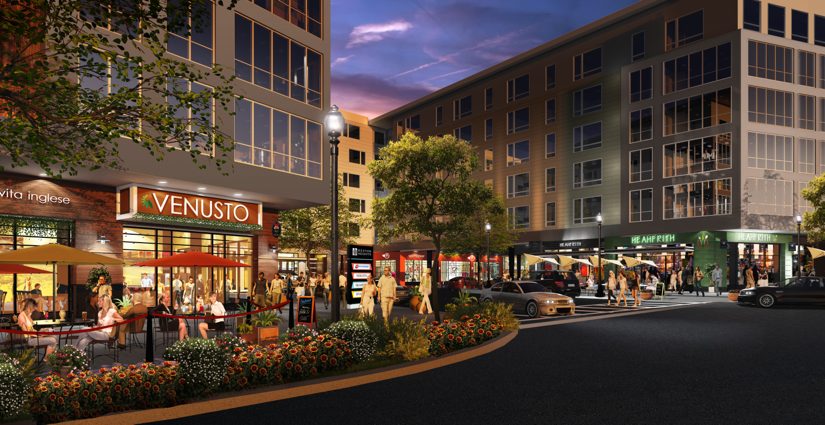


The first residential building at Reston Station, adjacent to the Wiehle-Reston East Metro, is officially open and welcoming its first residents.
BLVD Luxury Apartments is holding a celebration Tuesday from 5 to 8 p.m. Stop by the building off the Reston Station Plaza for food, wine and a tour of Comstock’s newest residential project.
BLVD features 450 apartments and is the first building to open at Reston Station. Coming soon will be a 16-story office building (under construction), a hotel, and a Founding Farmers restaurant.
If you can’t make it to the party, BLVD’s leasing center is located on the plaza at Reston Station and is now open seven days a week.
Rents will start at about $1,900 a month for a studio to more than $3,000 for a three-bedroom plus den model. There are a number of floorplans available.
Among the features and amenities:
- Stainless steel, gas appliances, hardwood laminate floors, quartz countertops and other high-end finishes in all units.
- A concierge lounge, business center, and cold-storage space for grocery delivery, as well as an exercise room and yoga/martial arts space.
- 20 percent (88 units) of the apartments are priced for workforce housing.
- A ninth-floor “skypark” with green space.
- Penthouse-level lounge, pool, media lounge, dog walk and demonstration kitchen with 360-degree views.
Residents of the building will be Reston Association members. Comstock has paid RA $650,000 in developer contributions, $300,000 of which is an association initiation fee under a new membership fee structure for buildings along the Dulles Toll Road, which were not previously RA property.
Photo: Rendering of BLVD lobby/Courtesy BLVD
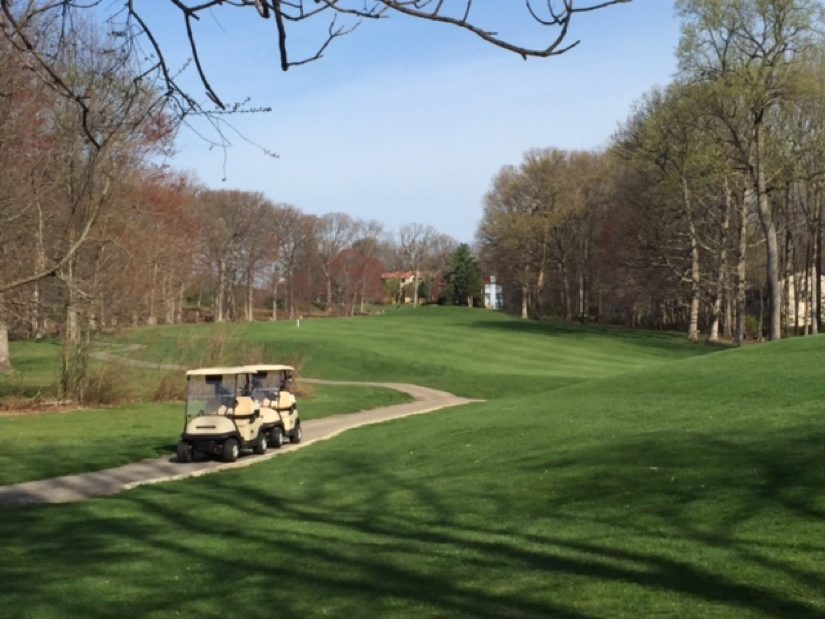 As the battle for open space in Reston heads towards the Virginia Supreme Court, a group of homeowners whose properties overlook Reston National Golf Course may be preparing for a lawsuit of their own.
The attorneys for the owners of RN Golf, the owner of Reston National Golf Course, have filed a notice that they plan to appeal the Fairfax County Circuit Court decision from last year that granted the motion for summary judgment and vacated the Board of Zoning Appeals decision that said the golf course owners could redevelop without getting a comprehensive plan amendment, which could ease the path to redevelopment of the public course.
RN Golf, a subsidiary of Northwestern Mutual Insurance, has until this week to to appeal the latest court order, says Rescue Reston, the citizens advocacy group that is fighting to maintain the golf course as permanent, open space in Reston.
Meanwhile, residents of Golf Course Square appeared at last week’s RA Board of Directors’ meeting to ask the board for its assistance in taking filmed depositions of some of the cluster’s original homeowners.
“Since 2012, our cluster has been discussing legal action we can take separate and apart from the zoning case [heading for] the Virginia Supreme Court,” said Golf Course Square resident Wilfred Hearn. “Our case is broader. The open space [is protected by] covenants and deeds. We have discussed our legal rights with an attorney.”
Hearn said the clusters has located four witnesses who either worked for Reston developer Gulf Reston (in the 1960s and 70s) or bought a house from Gulf Reston.
“The witnesses said the original developer intended the golf course would be permanent and sold houses around the golf course on that basis,” Hearn told the RA Board. “Prospective buyers were told the golf course would always be permanent and bought houses on basis that the golf course would be permanent. These witnesses have direct knowledge of the events between 1964 and ’68 in our cluster, including the building the buying and selling of our homes that surround the golf course.”
Hearn says the cluster leadership wants to petition the circuit court to for an order to take the depositions of the witnesses “to perpetuate their testimony for later use in court.” Read More
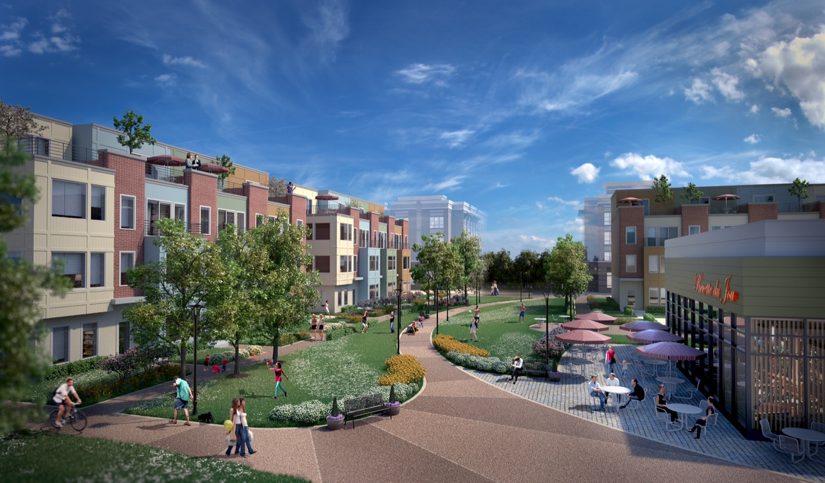 Jefferson Apartment Group’s (JAG) plans for Tall Oaks Village Center will be delayed as the developer conducts a market study examining the area’s retail viability.
JAG’s plan, which had been slated to go before the Fairfax County Planning Commission in early May, is for 150 homes and about 7,000 square feet of retail space. It has not been well-received by community members or Reston Association, which said in a letter to county officials last summer that the plan fell “woefully short” on retail and community space.
JAG’s latest plan features a variety of townhomes, 2-over-2 townhouses and condos and about 7,000 square feet (up from the original plan for 3,000 SF) of retail, and what critics say is limited open space.
JAG representatives said at community meetings in spring of 2015 that Tall Oaks’ current 70,000-square-foot retail space — which went from 90 percent occupied in 2007 to 13 percent in 2015 — was not viable.
They said they shopped the store vacancies, including the 25,000-square-foot anchor/grocery store space, to retailers but there was no interest. Read More
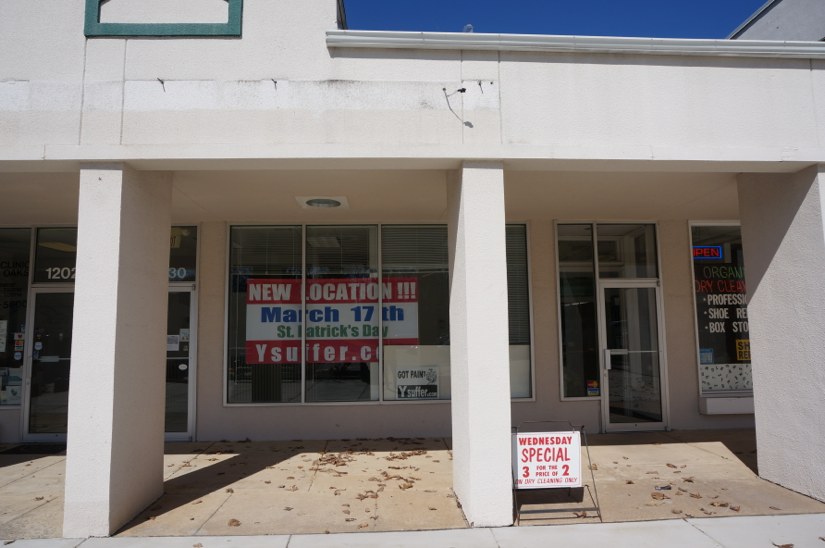 Advocacy group Reston 2020 is offering a suggestion on how the planned redevelopment at Tall Oaks Village Center could better preserve green space and add more retail to serve the neighborhood.
Tall Oaks Village Center is planned for redevelopment by new owner Jefferson Apartment Group (JAG). JAG is planning to make the center mostly residential, with 156 residential units (garden-style condos, townhouses and two-over-two townhouses) and up to 7,000 square foot of retail on the site of the nearly empty 70,000-square-foot village center at Wiehle Avenue and North Shore Drive.
JAG tweaked its design last spring after citizens said they were disappointed in the early plan for only about 3,000 square foot of retail. Read More
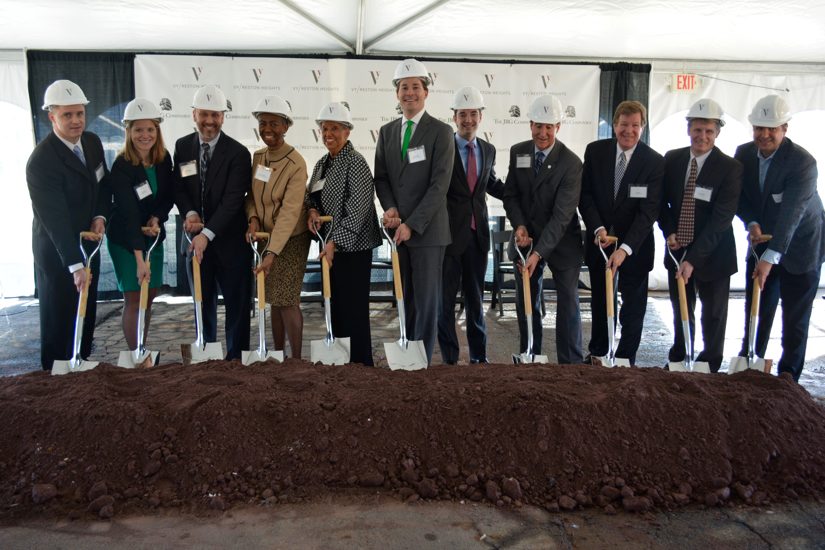
Ceremonial shovels of dirt were turned on Thursday at the site of The JBG Companies’ second phase of development at Reston Heights.
The real dirt has been churning for months, since the former Reston International Center convenience center’s shops, as well as the free-standing Chili’s Bar & Grill and a bank building, were demolished late last year.
What JBG is building in their place is VY, a 385-unit apartment community, as well as 89,000 square feet of retail.
The 483,000 square foot mixed-use VY is a continuation of JBG’s Reston Heights, which already includes the Westin Reston Heights, the Sheraton Reston, the Mercer Condos and office buildings along Sunrise Valley Drive.
JBG says it is planning active community spaces integrated throughout walkable retail, including a public plaza lined with outdoor dining, a play area and an amphitheater for programmed events.
“Reston continues to be a thriving submarket, and JBG is pleased to be expanding our strong presence here,” said JBG Principal Greg Trimmer. “VY at Reston Heights will be an active destination with social public spaces, new living options, and new shopping and dining for all of Reston.”
So far, the project has signed one major retail tenant: 24-Hour Fitness.
A JBG spokesman previously said VY is an abbreviation of “very.”
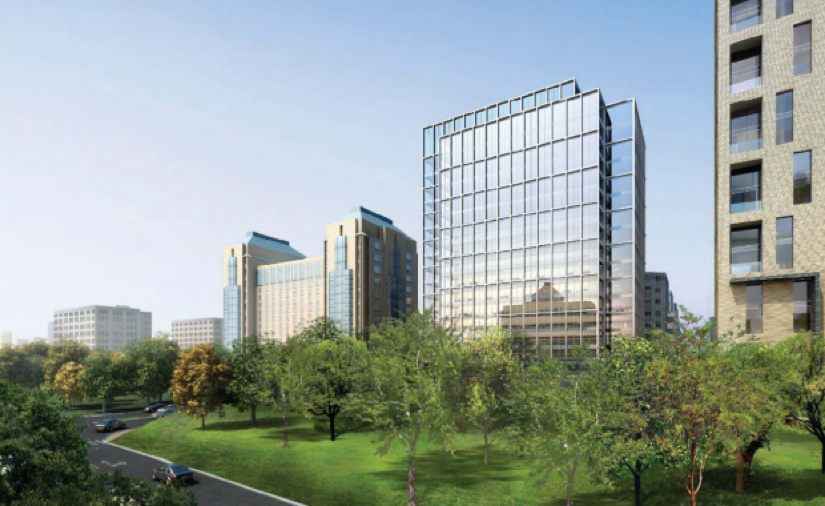 Public officials and private developers are going to have to work together as Reston embarks on rapid transit-oriented development.
That was the takeaway from a legislative forum, The Changing Future of Reston, sponsored by the Greater Reston Chamber of Commerce last week.
Speakers included officials from the Fairfax County Department of Transportation, which says Reston will need more than $2.6 billion in improvements, as well as representatives from Boston Properties, JBG Companies and Reston Association.
The county is in the process of identifying what projects will need to be done to alleviate traffic, make new streets in an urban grid pattern, and, most importantly, where the money will come from.
The county hopes to have a longterm plan in place later this year, said Janet Nguyen of FCDOT.
But don’t expect lots of immediate change. There likely won’t be a large amount of public funding until at least 2021, said Nguyen. That’s when a new cycle of the county’s six-year transportation project priorities will be formulated.
Money for changes, many of which were outlined in 2014’s Comprehensive Plan Amendment, will eventually come from a variety of sources, including federal funding, state funding, county contributions, developer proffers, and possibly a special service district, county meals tax or a rise in county real estate taxes.
Pete Otteni, senior vide president of development for Boston Properties, said “I think private developers and the public have to be in this together.”
“An interesting way to look at this is the areas around Metro, if they develop under current zoning, they will be 100-percent commercial. But if you talk about changing it into the kind of development that should reduce traffic, where people live and work in same location, you will be taking taking cars off road. We have to look at what will happen if we don’t do anything. We have to do something. It can be can be solved, but we have to be in this together.” Read More
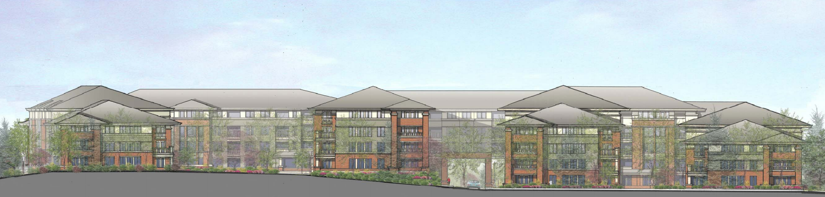
The Fairfax County Planning Commission recommended for approval plan amendments that move along a Pennsylvania company’s application to bring more senior citizen housing to the Hunters Woods Village Center area.
The plans now move on to the Fairfax County Board of Supervisors for a final approval.
The 4.3-acre lot at 2222 Colts Neck Rd. — the former site of United Chirstian Parish Church — was first approved by the Fairfax County Board of Supervisors for 210 senior housing units in 2007.
IntegraCare, which has facilities in Pennsylvania and Maryland, plans to retain 91 of the 210 previously approved independent living units and to add 79 assisted living, 24 memory care, and 16 high-acuity assisted living/memory care rooms.
The building will be 230,000 square feet in two wings, one along Colts Neck and one along Reston Parkway. The estimated completion date is 2020. Read More
 Several Reston-area organizations are appealing to Virginia Gov. Terry McAuliffe to veto or amend bills that recently passed the Virginia House and Senate that limits the amount of proffers localities can for from developers.
The final versions of the bills are expected to go to the governor to be signed into law as soon as this week.
Limiting local government’s ability to ask for proffers could have a big impact in Reston, which is undergoing a period of multifamily housing growth in the areas around Metro stations at Wiehle-Reston East and Reston Town Center.
However, according to the Senate bill, restrictions would not increase in areas in direct proximity to Metro, where much of Reston’s future development will occur.
Proffers are concessions local governments ask for from developers in exchange for development. Proffers can be anything from road improvements to traffic mitigation to money for a new recreation center or school.
Del. Ken Plum (D-Reston) voted in favor of the House version of the bill. He said on Monday that House members were previously assured that the deal would not have an effect on Fairfax County’s interests.
“Since then time, the story seems to have changed,” said Plum. “What I trust is going to happen is when the bills cross between the House and the Senate, there will be accommodations. I trust we can get it done.”
Plum says the bills’ intent was primarily aimed at fast-growing counties near Richmond, where developers have been demanding cash proffers, which is driving up the cost of housing. In Fairfax, cash proffers are not allowed.
Reston Association Board President Ellen Graves sent a letter to McAuliffe last week saying the association “opposes the Proffer Reform Legislation (Senate Bill No. 549 and House Bill No. 770) as it is currently written because it adversely affects the ability of Reston Association, the county and a developer to mitigate impacts of residential development on Reston Association’s budget, facilities and programs.”
Reston Association would like the restricted area expanded to allow an exemption from the new rules within one mile (rather that one-quarter mile of a Metro station.
“Since Reston Association’s facilities, services and programs are technically not deemed ‘public’ facilities under the statute, any mitigation could unfortunately be deemed an unreasonable proffer,” wrote Graves. “We ask that [the legislation] be amended to provide that this legislation shall not apply to mixed use development or a plan that allows additional residential density, within one mile (rather than one-quarter mile) of an existing or planned Metrorail Station.”
Earlier, the Fairfax County Board of Supervisors wrote to the Fairfax County General Assembly Delegation, asking them to “Please oppose HB 770/SB 549, or seek amendments to safeguard Fairfax County’s proffer authority.”
Wrote Board of Supervisors Chair Sharon Bulova:
“Virtually all development in the county is infill development. In these types of cases, proffers are critical in meeting infrastructure and compatibility needs of surrounding areas. If enacted, these bills may require us to rewrite entire sections of our Comprehensive Plan and Zoning Ordinance.”
Bulova says the proffer system provides an opportunity for developers to work with the county to address community concerns related to the increased density of such development.
Advocacy group Reston 2020 has also written to McAuliffe, saying “the draft legislation, as it stands, would severely impact the quality of life, even safety, throughout the entirety of our community well beyond the boundaries of our Metro stations.”
Reston 2020 says it understands there needs to be some controls over proffers due to “serious overreach” in other counties.
“However, this is not the case in Fairfax County,” Reston 2020 said. “Indeed, we believe Fairfax County should seek greater proffers or other similar arrangements with developers to offset the impact of their for-profit private development in our community given its expected intense development.”
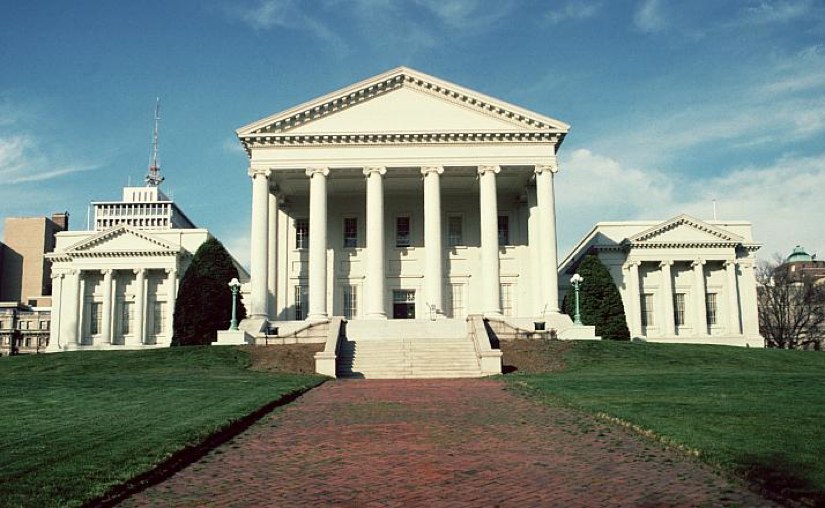
Photo: Virginia Statehouse in Richmond/file photo

A Reston developer has filed a rezoning application in order to develop a parcel of land adjacent to Plaza America.
Linden Development owns the 6.3-acre property known as Triangle Park, as well as several other Reston office buildings.
Triangle Park currently contains two office buildings directly adjacent to the side of Plaza America where Starbucks, Loft and Staples are located. The land also borders Sunset Hills Road to the north and the Dulles Toll Road to the south and is within a half-mile of the Wiehle-Reston East Metro Station.
Linden is seeking to rezone the property from office-industrial to mixed use. It says it plans a 75/25 mix of residential and non-residential (office, retail), though plans have not yet been made public.
Fairfax County Planning staff is currently reviewing the application.
Meanwhile, plans for the Soapstone connector include a route that goes almost right through this property.
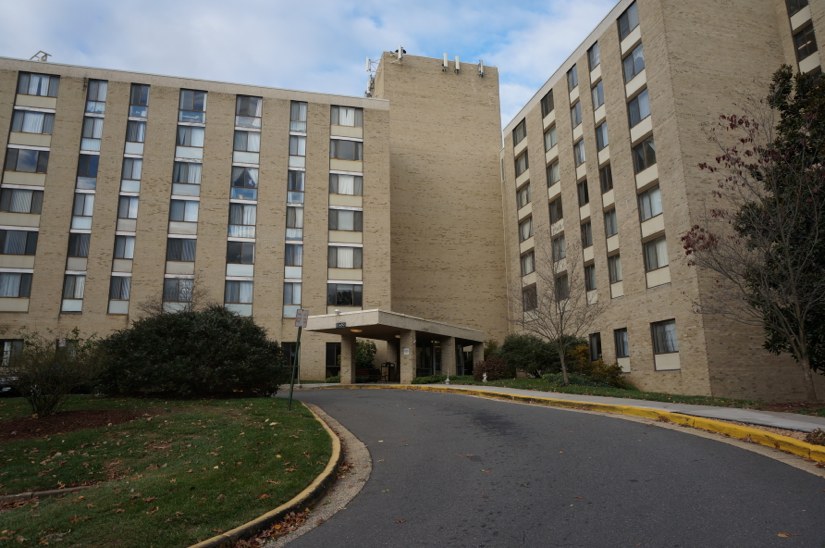 More than a year after a plan to redevelop Lake Anne Fellowship House fell apart, the foundation that runs the senior housing says new plans are on the table.
Fellowship Square Foundation announced on Wednesday it will move forward with the redevelopment of the aging, 240-unit affordable senior housing buildings at 11480-11450 North Shore Dr.
In a release, the foundation said its decision comes after a five month evaluation of conditions at the property, which was built in the early 1970s. About 114 of the 240 units are subsidized for low-income seniors.
Fellowship Square commissioned Community Preservation and Development Corporation (CPDC), a regional not-for-profit developer, to evaluate the feasibility of preserving the existing units at Lake Anne Fellowship House.
Based on the results of the study, Fellowship Square concluded that renovation could not address the structural obsolescence problems facing the building and was not a viable option. They said there is excess land available on the site to allow the construction of a new building.
“Fellowship Square is committed to revitalizing the Lake Anne community, and to helping residents grow and thrive in the place many have called home for decades. This is an important step toward the long-term preservation of affordable senior housing in the Reston community,” said Charles Wortman, Chair of Fellowship Square Foundation. “We look forward to working with residents, Fairfax County and community stakeholders on a new and improved Lake Anne.”
In 2014, Fellowship Square also came to the same realization that its aging facilities could not be repaired at it was more feasible to tear down the buildings and start over.
Many of the units do not meet Americans With Disability Standards and there is a vacancy rate of more than 20 percent, officials said in 2014.
Under the old proposal, the buildings for seniors were to be replaced, and a market-rate building for all ages was to be constructed to blend in and enhance with planned redevelopment at Lake Anne Plaza. The Lake Anne redevelopment proposal — which encompassed nearby Crescent Apartments as well as the are a around North Shore near Lake Anne Plaza — also recently fell apart and is off the table for now.
The 2014 plan for Fellowship House faced challenges, including land that at that time was owned by two different mortgage holders. In September of 2014, Fellowship Square notified the Fairfax County zoning officials that it was deferring the application indefinitely “due to our inability to advance our land use proposal in a manner that will produce the best possible outcome for our residents.”
Going forward, Fellowship Square says it intends to partner with CPDC, an experienced developer of affordable housing, to develop the project.
“We are excited about the prospect of working with Fellowship Square to deliver a property that will be an asset to the community for years to come,” Christopher LoPiano, Senior Vice President of Real Estate Development at CPDC, said in a release.
Fellowship and CPDC will meet with tenants in the coming months to discuss new construction. The site plans and design will have to go through Fairfax County and Reston approvals.
Lake Anne Fellowship House/file photo
Correction, 4:30 p.m. Thursday: Janet Howell did not vote in favor of the bill. She did not vote.
The Virginia Senate passed a bill on Tuesday that could weaken developer proffers, which Fairfax County officials commonly use to get builders to contribute to park, roads and other improvements in exchange for development.
The bill passed the Senate 29-8. Reston’s Sen. Janet Howell (D) did not vote.
A House version passed on Friday. Reston’s Del. Ken Plum (D) voted yes on the bill.
Limiting local government’s ability to ask for proffers could have a big impact in Reston, which is undergoing a period of multifamily housing growth as it turns towards being a transit-oriented community.
For instance, the Fairfax County Park Authority has said it will seek developer proffers to partially pay for a multimillion indoor recreation center, now slated for Reston Town Center North.
Developers of a proposed assisted and senior independent living facility at Hunters Woods have been asked to donate move than $100,000 to the Fairfax County Park Authority or Walker Nature Education Center, as well as install new traffic lights to help traffic flow near the entrance.
The county also has identified more than $2 billion in infrastructure improvements needed in Reston over the next several decades — money that would likely come from proffers, as well as taxes, bonds and even a new special tax district.
Features of the bill require that proffers be limited to offsetting impacts that are directly attributable to new residential developments, such as traffic. The Senate version of the legislation does not apply to high-density areas, commercial developments or neighborhoods near Metro stations.
The bill places restrictions on what local officials can ask for in development negotiations.
The Fairfax County Board of Supervisors this week asked Fairfax County General Assembly delegation members to oppose HB 770 and SB 549 or seek amendments to “shield Fairfax County from the significant restrictions these bills would place on development and proffers.”
Read more about the impact of the bills in this previous Reston Now story.
 The Virginia Senate will vote today on a bill that would weaken developer proffers, which Fairfax County officials commonly use to get builders to contribute to park, roads and other improvements in exchange for development.
This is important in Reston, which is undergoing a period of multifamily housing growth as it turns towards being a transit-oriented community.
For instance, the Fairfax County Park Authority has said it will seek developer proffers to partially pay for a multimillion indoor recreation center, now slated for Reston Town Center North. The county also has identified more than $2 billion in infrastructure improvements needed in Reston over the next several decades — money that would likely come from proffers, as well as taxes and even a new special tax district.
Features of the bill require that proffers be limited to offsetting impacts that are directly attributable to new residential developments, such as traffic. The Senate version of the legislation does not apply to high-density areas, commercial developments or neighborhoods near Metro stations.
The bill places restrictions on what local officials can ask for in development negotiations. A House version of the bill passed 68-27 last week.
Officials in Northern Virginia told the Washington Post that changing the legislation would hamper their ability to negotiate for extra amenities from developers. They also argue that amending the land-use tool would open them up to lawsuits if builders whose projects were rejected argued that they were denied because of their refusal to agree to “unreasonable” proffer requests.
The proffer system in Virginia has been around for three decades. In Fairfax County, rapid growth in the 1970s prompted local government to demand that builders contribute to offset population growth’s effect on traffic, sewers and other systems, as well as help grow affordable housing.
The presidents of the Home Builders of Virginia told the Post that the proffer system has gotten out of control, developing into a list of demands rather than requests.
“We feel that proffers have gotten out of control,” said J.M. Snell, whose group helped craft the legislation. “They’ve grown out of proportion to where now localities have already predetermined proffers, which become demands, which is exactly the opposite of the word ‘proffer.’ “
Fairfax County Supervisor Chair Sharon Bulova says the new restrictions could lead to development projects’ not being approved.
 This is an op-ed submitted by Terry Maynard, co-chair of Reston 2o20. It does not reflect the opinion of Reston Now.
On Thursday, Feb. 11, the Greater Reston Chamber of Commerce is sponsoring a seminar called, “The Changing Future of Reston, ” but — as the agenda shows — it’s really about who will pay for the added public infrastructure the intense private development of Reston’s urbanizing corridor will require.
Noting that Fairfax County has identified $2.63 billion in needed transportation improvements because of the expected Metro-related development, the Chamber agenda includes:
During the first half of 2016, the County expects to settle on a plan:
- Who should build the new transportation improvements; and
- Who should pay for them; and
- What revenue sources should be used to pay for it (sic). Potential revenue sources include federal, state and/or county taxes, new or expanded tax districts on existing businesses and residents, proffers or other vehicles, with collections commencing as early as 2017.”
And the panelists? Two developers, the chief of the county transportation staff, and RA’s Chief Executive Officer, all led in their discussion by a developer-paid Reston land use attorney.
It doesn’t take much thought to figure out where this discussion is headed: Developers are looking for ways and rationalizations to shift the infrastructure cost burden to others. And the only significant option within the County’s control is shifting the cost burden to us, its residents. Read More
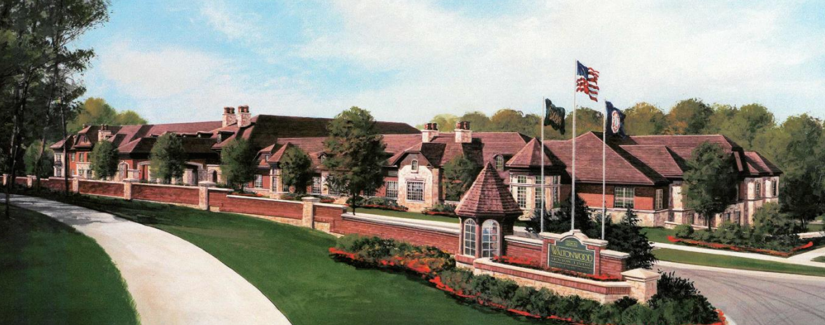 The Fairfax County Board of Supervisors have unanimously approved a 155-bed assisted living and memory care facility for Leesburg Pike (Route 7) near Baron Cameron Avenue.
Singh Senior Living of Cary, NC, plans to build Waltonwood Reston on a 23-acre parcel at 10819 Leesburg Pike. Singh currently manages more than two dozen Waltonwood facilities nationwide, including one in Ashburn.
The special exception is required to build a medical care facility on land that is currently zoned residential. The land currently contains a 1,500-square-foot unoccupied house, which will be torn down, according to an October report by the Fairfax County Department of Planning and Zoning.
The staff report recommended approval of the project, as did the Fairfax County Planning Commission at a December meeting.
Hunter Mill Supervisor Cathy Hudgins said she appreciated Singh’s flexibility in making the design something that fits in with the residential neighborhood nearby.
“I also appreciate county staff working to develop conditions so it could be an asset to the Hunter Mill District and the county’s 50+ plan, which reflects the aging we will see as a community,” Hudgins said.
The 155,150-square-foot facility will feature about 20 acres of open space on the the 23-acre property. There will be 113 parking spots, but Hudgins added the additional development condition that Singh provide free shuttle bus service for employees from nearby Metro or bus stations.
Other development conditions agreed to by the developer: to add a right turn lane on Leesburg Pike and build a retaining wall and vegetation to screen the front of the building from Leesburg Pike.
Singh will also contribute $10,000 for additional traffic signals.
The brick-and-stone building will be designed in a courtyard configuration. It will include additional common areas, including: a common dining room, hair salon, convenience store and cafe, library, hobbies & crafts room, movie theatre and assorted lounge areas. A complete physical therapy and exercise area is also planned.
No residents spoke out at the public hearing portion on the issue at Tuesday’s board of supervisors’s meeting. Read More
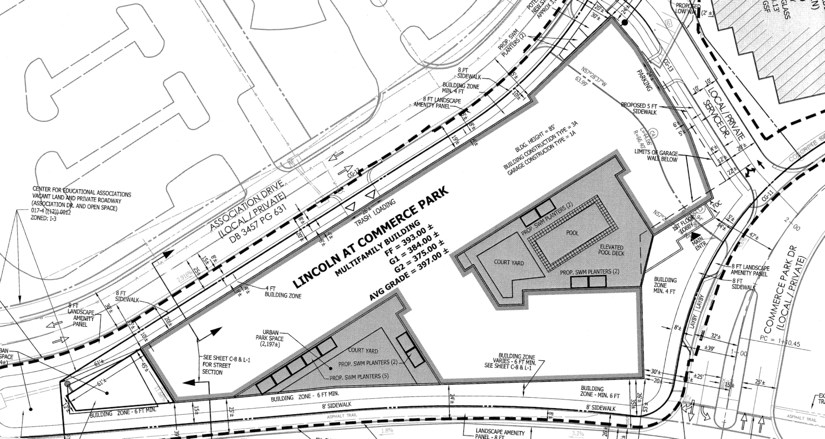
Another residential building is being planned for the area around the Wiehle-Reston Metro Station.
Wiehle Station Venures LLC, has filed rezoning and development plans for Lincoln Commerce Park at Commerce Park Drive, Association Drive and Sunrise Valley Drive.
The application seeks to develop a surface parking lot and turn it into 260 residential units across the street from the Sunrise Valley convenience center, and, beyond that, Reston National Golf Course.
The property is also close to Soapstone Drive, where a future 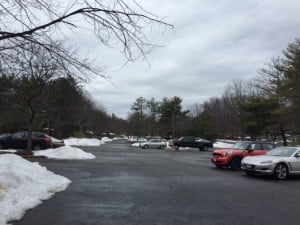 toll road crossing is planned.
A portion of the property (approximately 1.99 acres) will remain Industrial District I-3 and provide parking for the condo office building.
The developer is seeking a special exception to to permit commercial off-street parking to serve the office condo building.
The Planning Commission public hearing is scheduled for May 12.
This is one of several potential developments located south of the Dulles Toll Road.
Among the others in the works (mostly still in the first steps of development applications):
Major development Commerce Park, which is adjacent to the Lincoln Commerce Park project.
That plan calls for 500 residential units, a hotel, office and retail. CESC Commerce Executive Park, L.L.C. has a rezoning/final development plan, concurrent with special exception amendment for 1850 Centennial Park Drive, 11400 Commerce Park Drive, and 11440 Commerce Park Drive to rezone from light industrial to Planned Development Commercial to permit the development of the multifamily buildings, as well as the 175-room hotel, a 400,000-square-foot office building and additional retail.
Two existing office buildings will be retained (totaling 356,496 square
feet). The Application also includes an option to convert the proposed hotel to multifamily residential, and the proposed new office building to multifamily residential and/or hotel.
A plan by Sekas Homes for 37 townhomes on the site of the former American Press Institute building
JBG’s application for building 504 residential units and other development at 1831 Wiehle Ave., currently an office building.
Farther down Sunrise Valley, Reston Heights’ second phase of development is underway. That development by JBG — called VY at Reston Heights — will have 498 residential units in mid-rise buildings and a 10-story building that mixes office space, parking and retail space.