

Before we head off into the weekend, let’s take a look back at the biggest stories on Reston Now in recent days.
- UPDATED: Fairfax County Public Schools Closed Friday
- Boston Properties Taps New Leasing Agent as Stores Shutter
- RTC Apple Store Eyes Neighboring Space Vacated by Pottery Barn
- Food Truck Vending Zone May Soon Arrive in Herndon Area
- Fundraising Starts to Help Family After Herndon Home Fire
If you have ideas on stories we should cover, email us at [email protected] or submit an anonymous tip.
Feel free to discuss these topics, your weekend plans or anything else that’s happening locally in the comments below.
File photo
 This is an opinion column by Del. Ken Plum (D), who represents Reston in Virginia’s House of Delegates. It does not reflect the opinion of Reston Now.
[Note: This column was written before the release of the photos from Gov. Northam’s medical school yearbook.]
The 2019 session of the General Assembly has reached its mid-point, or crossover, when the two houses start to consider bills that have survived the other house. It also represents the final action on many bills giving an indication of what the ultimate legislation for the session is likely to be.
In the back of most legislators’ minds is the fact that when the legislature adjourns sine die (until another day) the election season will begin. The thought of going home to meet their voters motivates many votes. After all, that is the way it should be in a representative democracy. The results, however, create some absurdities.
Republicans appear to be planning to focus once again on abortion. Although Roe v. Wade — decided in 1973 — was supposed to set the rules for abortions, the debate still goes on. This week in a massive media campaign linked to fundraising, the opponents accused Gov. Ralph Northam, who is a pediatrician, and first-term Del. Kathy Tran, a mother of four (the youngest of whom she was nursing during the session last year), of favoring infanticide!
I witnessed the verbal ambush by some of the most skilled lawyers in the House who with some editing of the tape of their cross-examination of her created a false impression of her bill and what it did. Calling the episode absurd is a mild description; I think Gov. Northam came closer to an accurate description when he called it disgusting. (Read more at abortion restrictions bill.)
Thirty-seven states have ratified the Equal Rights Amendment. It is looking doubtful that Virginia will join that group this year. In floor speeches on the amendment, one of the women opposing the amendment said that she did not need “words on a piece of paper” to get what she wanted.
Bills that would have created an independent redistricting commission including my perennial bill have been defeated in the House. A bill introduced by the Speaker of the House that would create a commission to redistrict the legislature is far from independent in that it still has legislators picking their voters in order to protect incumbents and hold onto the majority. If the bill makes it through the legislature, it will be amended or vetoed by the governor.
It remains difficult for the majority to play fair especially when it holds control by such a slim sliver of power. A two-vote shift in both houses would put Democrats in charge of the legislature.
Major divisions continue to exist between the parties on finalizing the budget. Republicans favor a plan that continues the federal approach of giving tax breaks to those with the highest income. My bill to establish a partially refundable Earned Income Tax Credit (EITC) was defeated. About half the states have used an EITC to help raise the income of working families. There is a slight possibility that Gov. Northam could get the EITC in a compromise budget as he is a strong proponent of it.
Several weeks remain for the legislature to work its will. Some good bills are passing that will be favorable to the people of the Commonwealth, and I will discuss these in future columns. With an election looming in the fall, we may still see more absurdities!
File photo
After bouts of snow hit Reston last month, the winter weather is finally on a vacation.
Forecasters expect temperatures to possibly reach 60 degrees for today (Feb. 5), Thursday and Friday in the Reston area.
The warmer weather doesn’t plan to stick around, though.
The Capital Weather Gang tweeted that snow might make a comeback in the D.C.-area on Sunday night. (And while the famous groundhog Punxsutawney Phil predicted an early spring on Feb. 2, meteorologists and statisticians point to his track record of inaccuracies.)
Let us know if your weekday plans are influenced by the forecasts.
File photo
Before we head off into the weekend, let’s take a look back at the biggest stories on Reston Now in recent days.
- Peet’s Coffee, DC Row Among Six Newcomers Slated to Open in RTC
- Wooboi Chicken to Bring ‘Nashville Hot Chicken’ to Herndon
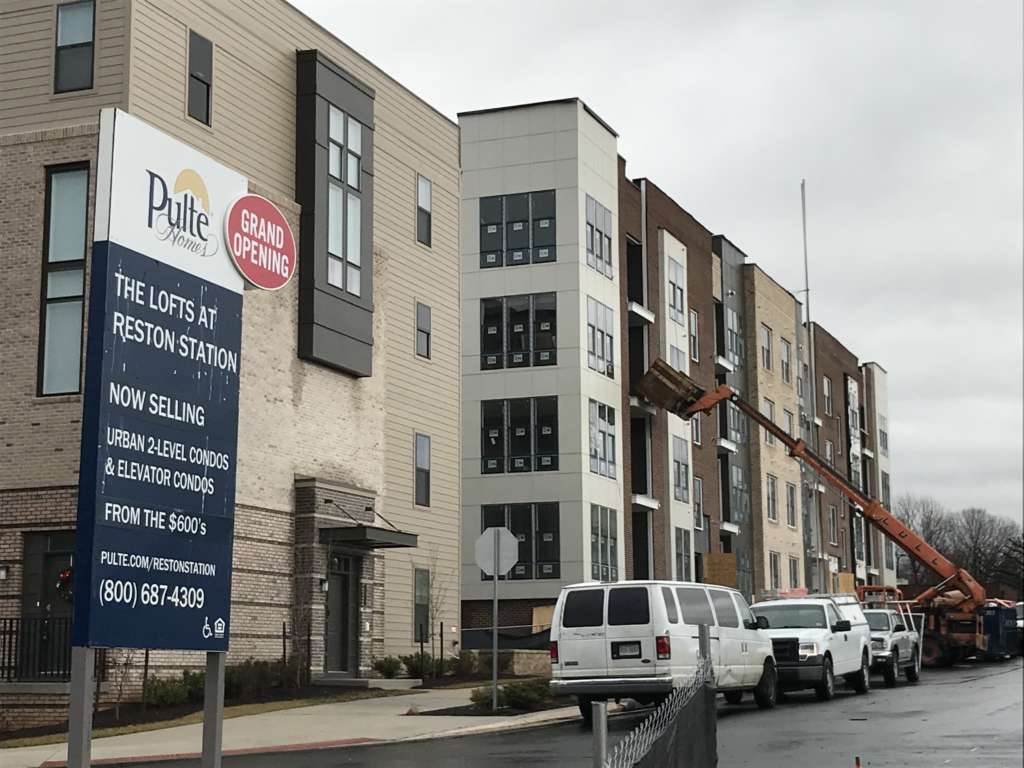
- Photos: Lofts at Reston Station Almost Ready by Wiehle Metro Stop
- Boston Properties Taps New Leasing Agent as Stores Shutter
- UPDATED: Williams-Sonoma, Pottery Barn Set to Close This Week in Reston Town Center
If you have ideas on stories we should cover, email us at [email protected] or submit an anonymous tip.
Feel free to discuss these topics, your weekend plans or anything else that’s happening locally in the comments below.
This is an opinion column by Del. Ken Plum (D), who represents Reston in Virginia’s House of Delegates. It does not reflect the opinion of Reston Now.
The arrival of W-2 forms in the mail reminds us, even if we may have momentarily tried to forget, that tax season is upon us. This is no ordinary tax year, however. Massive changes in federal tax laws will result in significant changes at the state level as well. No one can speak with authority as to what the differences will be for an individual taxpayer as the General Assembly has not revised state tax law to reflect the federal changes.
The situation we are in is not new. Anytime the Congress makes changes in federal tax policy, the state must adjust to those changes and decide whether to adopt the federal policy or to put in new state provisions. As a conformity state, Virginia has generally followed federal policy allowing taxpayers to file state returns using the information on their federal form.
The difference this year is that the federal changes are so massive that conformity is not realistic without major changes in the way state forms are filed. Adding to the fact that the forms may be different is that there are major differences between the way deductions and credits have been handled and what will constitute taxable income. High-income taxpayers that were the winners with the federal changes could significantly reduce monies to a state that is already struggling to meet its obligations to funding schools, mental health programs and other priorities.
Essentially, Gov. Ralph Northam proposed that additional revenues be used for investments in education, workforce development, expanded broadband and targeted tax relief to those who work at the lowest wages. Republicans have proposed a plan to return more monies to taxpayers, but there is strong concern that the Republican plan will make big dents in the state budget.
All agree that a decision needs to be reached soon for taxpayers to file their tax forms as soon as possible and as accurately as possible. In past years as many as 650,000 taxpayers have filed in the first 10 days of February.
I am the patron of a bill supported by Northam that would make a portion of the Earned Income Tax Credit (EITC) refundable to taxpayers based on their income and family size. The current Virginia EITC set at 20 percent of the federal EITC does not allow for a refund of its full value as is done in 23 other states. Under the bill I introduced, it is estimated that as much as $250 million would be returned to the pockets of hard-working Virginians who are at the lowest pay levels. This helps not only those workers, but — since low-income residents typically spend that money on goods and services — it boosts the local economy as well.
There is a sense of urgency in the General Assembly that this issue needs to be resolved as soon as possible, because it impacts every household. Not only is there a great deal of confusion, but that confusion will be multiplied many times as people start to prepare their returns with incomplete directions. The challenge has been known for several months. Tax season is upon us. Our tax policy needs to be resolved now.
File photo
 This op-ed was submitted by John Farrell, who is a Reston resident. It does not reflect the opinions of Reston Now. We publish article and opinion contributions of specific interest to the Reston community. Contributions may be edited for length or content.
With the announcement that Cathy Hudgins will not seek re-election and the entry of at least four (and maybe more) people in the June 11 primary to succeed her, it seems appropriate to propose an agenda for the candidates to address over the coming weeks as they knock on our doors and ask for our support.
The Hunter Mill District hasn’t had a primary for supervisor in many decades. And given Hunter Mill’s voting history, it’s reasonable to expect that whoever wins the June Democratic primary will be the next Hunter Mill Supervisor.
What follows is offered as a start of that conversation. Happy to see others add their questions.
1. Should the Hunter Mill Supervisor lift the PRC ordinance’s 80,000 person population cap on Reston to 100,000 or higher?
The Planning Commission held a five hour hearing on raising the cap last Wednesday (Jan. 23). Few of the 30 some odd speakers spoke in favor of raising the cap.
2. Should the Hunter Mill Supervisor use the county’s zoning power to end or reduce paid parking at Reston Town Center?
3. Should Reston National Golf Course or Hidden Creek Golf Course be redeveloped for housing or preserved as a central part of Reston’s open space plan?
It’s been quiet on the RNGC front lately, but the owners of Hidden Creek have been holding focus groups trying to find any community support for redevelopment of that property and adjacent projects that it has recently acquired.
4. Should high-rise housing be allowed to replace North Point or Hunters Woods shopping centers?
The Reston Master Plan allows 50 units per acre as a redevelopment option for those shopping centers. The pending PRC amendment would raise that number to 70. Should this high-rise option be preserved or eliminated?
5. Which recreational facilities are maintained better: County Park Authority facilities or Reston Association’s facilities?
There are only four Fairfax Park Authority facilities in Reston, but they are badly in need of maintenance or improvement. Neither South Lakes Drive Park nor North Point Park has water to keep the grass ball fields alive in the summer or provide in-door sanitation facilities. Yet over the last decade, millions of proffer dollars have been promised to the Park Authority. What should that money be used for in Reston?
6. The Tysons Master Plan calls for office developers to make proffer donations for recreational facilities. Should the same be expected of commercial developers in Reston?
The tenants and guests of the commercial developers will use Reston Association’s trails and other amenities. Should they contribute to their renovation?
7. Should proffer donations by developers for recreation facilities go exclusively to the Park Authority to be used anywhere in the county or go to Reston Association for use in Reston?
Developers’ attorneys report to me that even when they write proffers to give recreational proffer money to RA, the current supervisor’s staff directs them to rewrite the proffer for the money to go to the Park Authority with no strings requiring the money to be used in Reston.
8. Should Reston Association have a prominent voice in land use decisions in Hunter Mill?
The turn-out for RA elections will approach the turn-out in the June Democratic primary in Reston. Isn’t RA as legitimate a voice of our community as the McLean Citizen Association is in McLean? MCA is entirely voluntary and yet has virtual veto power over McLean land use application with the Dranesville Supervisor.
What would RA’s Design Review Board have had to say about the Blue Monster next to Plaza America or the Azkaban Apartments at the corner of New Dominion and Reston Parkways? They were never asked.
9. Should four-lane roads be reduced to two-lane roads, and the closed lane devoted to the exclusive use of bicyclists?
South Lakes Drive is getting horrible reviews from locals and the suicide lanes on Lawyers, Soapstone and Colts Neck are inviting head-on collisions and traffic jams when folks try to make overlapping left turns.
No doubt there are other questions that these candidates should answer. So let’s hear them but keep it to issues they can do something about.
— John Farrell
Photo via Len Spoden Photography
Before we head off into the weekend, let’s take a look back at the biggest stories on Reston Now in recent days.
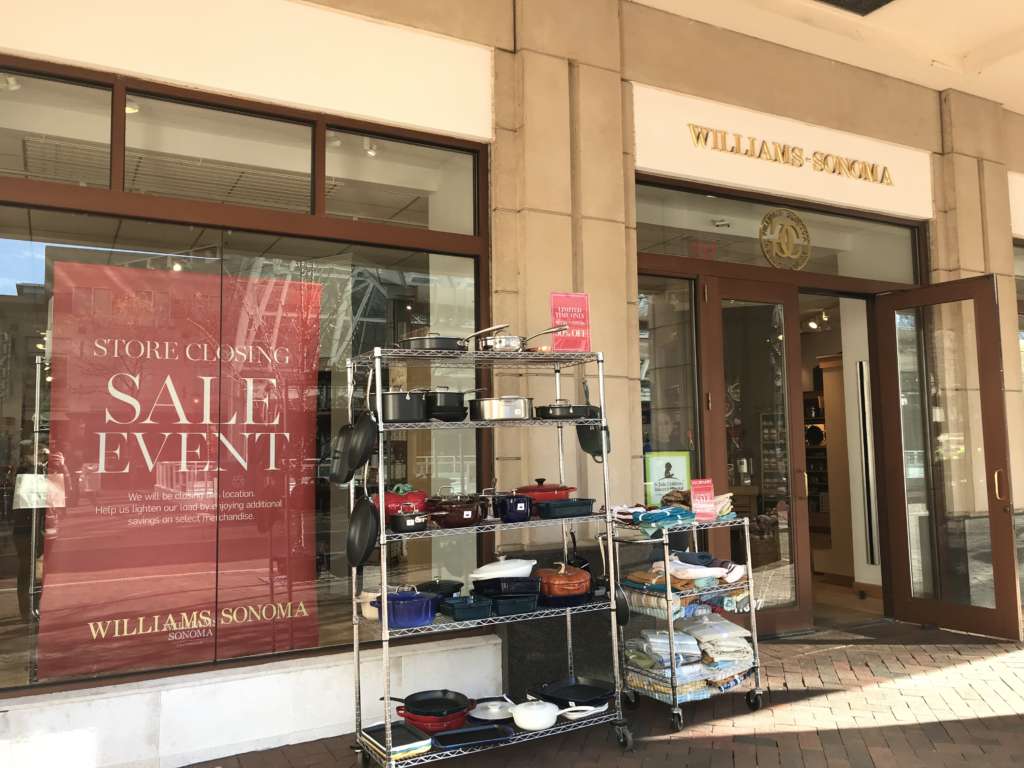
- UPDATED: Williams-Sonoma, Pottery Barn Set to Close This Week in Reston Town Center
- Herndon Man Pleads Guilty to Running a Prostitution Ring
- Plans for Jinya Looking More Uncertain for Reston Town Center
- Peet’s Coffee, DC Row Among Six Newcomers Slated to Open in RTC
- FCPD Investigating Possible Weather-Related Deaths Outside Reston Senior Facilities
If you have ideas on stories we should cover, email us at [email protected] or submit an anonymous tip.
Feel free to discuss these topics, your weekend plans or anything else that’s happening locally in the comments below.
This is an opinion column by Del. Ken Plum (D), who represents Reston in Virginia’s House of Delegates. It does not reflect the opinion of Reston Now.
The General Assembly had not been in session for more than two weeks until the differences between the House of Delegates and the State Senate became obvious. The Founding Fathers who conceived the structure of government built-in safeguards and checks and balances to ensure that a runaway government would be less possible. Two houses in the legislature were part of that scheme.
The lower house would be elected by a popular vote, but in the federal model the so-called “upper house” was first elected by state legislatures before the popular vote was instituted. Another major difference in Virginia is that in the House of Delegates, 100 members were given two-year terms and smaller districts. The 40-member Senate was given four-year terms and districts two-and-a-half the size of delegate districts.
The result is that in some parts of the state there are election contests where the delegate and the senator reflect different values and positions on issues. That is not the case in my district where Sen. Janet Howell and I have taken the same position on every issue I can remember. These structural differences bring about different results as is being dramatically shown in the current General Assembly session.
In alternate election cycles, as is the case this year, senators and delegates all run for office. In light of the last election for House seats, I approached this legislative session with the hope that there might be more flexibility in the House leadership that might result in the consideration of bills that had been summarily defeated in past sessions. My hopes have already been dashed.
Even this early the session has demonstrated the differences that the two-house legislature presents. Certainly, there has been strong public support for Virginia being the 38th and final state needed to ratify the Equal Rights Amendment. The Senate passed a resolution for ratification, but was defeated in a subcommittee in the House.
This major struggle between the two houses is the same for establishing an impartial and nonpartisan system for legislative redistricting. The Senate has passed a bill to establish such a process while House leadership is expressing opposition. Since the legislation is a constitutional amendment, it is important that a resolution is passed this year and next to go to a popular referendum in 2020 in time for redistricting after the 2020 census results are known.
Sometimes differences between the two houses can be resolved in a conference committee if both houses pass bills on the same subject. If differences are not resolved, the bill dies. Legislation must be passed in identical form from both houses to be sent to the governor for signature. If the governor disagrees with the bill sent to him, he can send down amendments or veto the legislation. It takes a two-thirds vote of the legislature to override a veto.
Legislating with a two-house body can be cumbersome and difficult. Sometimes it seems to be easier to say how bills are defeated rather than how they pass. In either case, voters can be assured that the two-house legislature ensures full consideration of issues.
File photo
 This letter was submitted by Terry Maynard, who resides in Reston. It does not reflect the opinions of Reston Now. We publish article and opinion contributions of specific interest to the Reston community. Contributions may be edited for length or content.
As a Restonian who has worked hard on Reston planning and zoning for more than a decade, I was stunned by the letter mentioned in a recent Reston Now article. It was signed by 17 people — many of whom are associated with the leadership of the Greater Reston Chamber of Commerce (GRCOC) — to Hunter Mill District Supervisor Cathy Hudgins.
One of the most stunning claims in the letter was that “Reston’s Comprehensive Plan was the product of a five-year planning process involving the full community.” The fact of the matter is that the Reston community was marginalized throughout this timeframe, and its contributions were opposed by developers and ignored by the county.
No community representative, then or now, has opposed reasonable residential and commercial development in the transit station areas. They have objected and continue to object to the excessive development proposed by private and county land use interests.
Only six of the two dozen primary members of the RTF studying Phase 1 for the transit station areas were Reston residents who represented the interests of Reston residents. They included representatives from three community organizations — Reston Association, Reston Citizens Association and Alliance of Reston Clusters and Homeowners — and three independent “at large” residents.
The Task Force recommended 27,932 dwelling units — homes for about 59,000 people — in the station areas based on a study of multiple density and mix scenarios — a development level community representatives could live with. That was set at 27,900 when the Board of Supervisors (BOS) approved the Phase 1 plan in early 2014 — a number Reston community representatives could live with.
Then that Phase 1 planned station area dwelling unit number was raised by more than half to 44,000 dwelling units — 92,000 people — in mid-2015 by the BOS in the process of approving the Phase 2 plan without any community involvement or even foreknowledge. Yet the county insists it only revises plans every five years.
Community involvement in Reston planning was even more limited during Phase 2 for Reston’s suburban areas. It included only four county-led and controlled community meetings and an open house. It was agreed that residential areas should remain “stable,” but the redevelopment of Reston’s village centers drew controversy. Draft county language to require a comprehensive plan amendment to redevelop village centers was dropped from the Board-approved mid-2015 Reston Master Plan because it would make the redevelopment approval process more cumbersome. This effectively shut off public comment on critical changes and eases development.
No meaningful commitment was made in the Reston Master Plan to provide needed infrastructure on a timely basis, despite the GRCOC letter saying, “The Plan requires that infrastructure be ‘phased’ with development.” In fact, that is illegal in Virginia and the RMP planning principles say it “should occur with development.” Language about specific infrastructures–transportation, schools, parks, etc., is vague and the proposals are inadequate.
Moreover, no meaningful funding has been committed to building any of the so-called “planned” infrastructure elements, which are all generally inadequate against even county policy standards, excluding the library where a $10 million bond funding may disappear in 2022.
Now the county is proposing to amend the Reston Planned Residential Community (PRC) zoning ordinance to increase allowable community-wide population density from 13 to 15 people per acre in suburban Reston and increase the allowable density on a single PRC property designated “high density” from 50 to 70 dwelling units per acre, including the village centers and several so-called “hot spots.” In its staff report on the proposed zoning density change, the county calculates roughly a quadrupling of planned housing in the village center areas from less than 1,500 to 5,800.
It also identifies three suburban residential “hot spots”– Saint Johns Wood, Charter Oaks and Fairway — for high-density redevelopment that would more than double the number of dwelling units to 1,863 residences.
The bottom line is that Restonians have had — and continue to have — limited access to the planning and zoning process throughout and their contributions and concerns have almost universally been ignored.
The cumulative effect of the new zoning in the station areas and the prospect of increasing the Reston PRC zoning density would be to allow Reston’s population to triple from its current 63,000 people to more than 180,000. At the same time, there is little or no assurance of the arrival any time soon of needed infrastructure that would maintain Restonians’ quality of life as a model planned community.
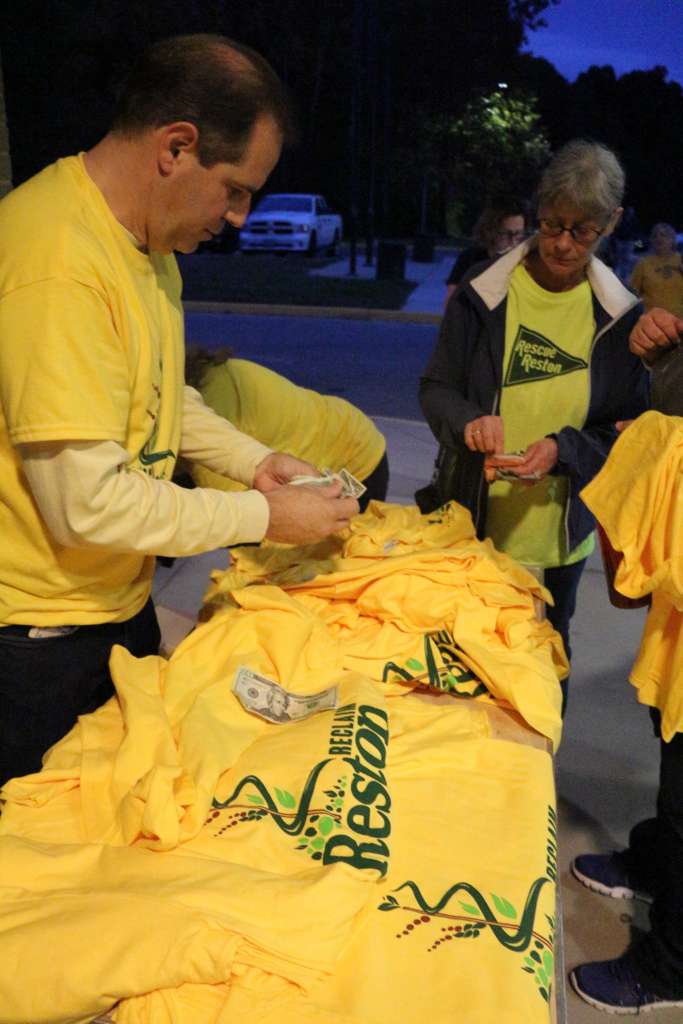
Now it is imperative that Restonians rise up and stop the county’s ill-considered PRC density increase proposal driven by Supervisor Hudgins. Attend the Planning Commission hearing on the PRC amendment at 7 p.m. on Jan. 23 in the Fairfax County Government Center wearing a yellow shirt. The presence of hundreds of Restonians will be as great a message to the Planning Commission as the testimony of Reston’s representatives and residents.
— Terry Maynard
File photo
Before we head off into the weekend, let’s take a look back at the biggest stories on Reston Now in recent days.
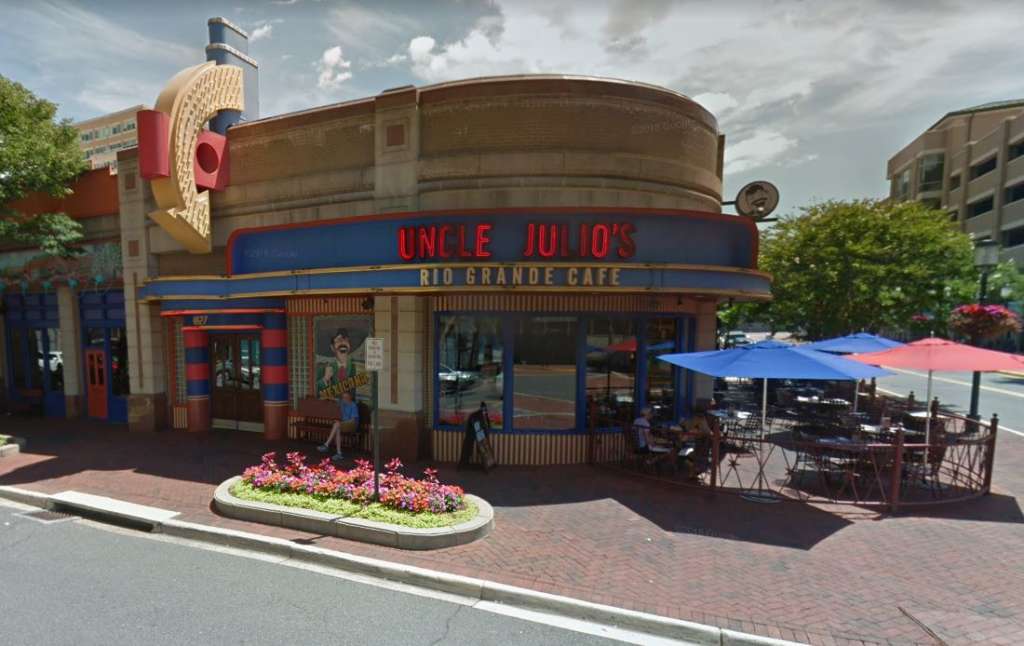
- Uncle Julio’s Fights Paid Parking with Suit Against Boston Properties
- Snow is Sticking on Reston Roads as Gov. Declares State of Emergency
- UPDATE: Snow and Slick Roads in Reston, FCPS Closed Monday
- Fairfax County Public Schools to Open Two Hours Late Tomorrow
- Fundraising Starts for Family of Killed South Lakes HS Teen
If you have ideas on stories we should cover, email us at [email protected] or submit an anonymous tip.
Feel free to discuss these topics, your weekend plans or anything else that’s happening locally in the comments below.
Image via Google Maps
Who’s hungry for more dining options?
As Winter Restaurant Week winds down this weekend, foodies in Reston and Herndon may have noticed some changes to their dining options in an area. Over the last few years, the food scene has seen newcomers pop up and long-established restaurants close.
(For comparison, Winter Restaurant Week in 2016 featured eight Reston-area participants. That’s double the number of participants for this year and 2018.)
Last year alone, several restaurants and two dessert shops shut their doors in Reston Town Center at almost the same rate as new options — Honeygrow, Balducci’s, Mason’s Famous Lobster Rolls and &pizza — popped up.
It’s a new year with new food. Openings already nearing for some of the seven restaurants coming to Reston and Herndon in the first three months of 2019.
Foodies, let us know your thoughts about which dining option the food scenes in Reston and Herndon really need.
This is an opinion column by Del. Ken Plum (D), who represents Reston in Virginia’s House of Delegates. It does not reflect the opinion of Reston Now.
In a recent social media post, I indicated that the annual General Assembly session would be underway very soon. AutoCorrect changed the text to be “underwater very soon.” My son alerted me to the change, and I made what I thought was a correction. As the General Assembly session has gotten underway I am starting to wonder if AutoCorrect knew something that I am now coming to realize: the General Assembly may well be underwater!
The session is scheduled to go until Feb. 22. Meeting five days a week means 38 actual days for work on more than 2,000 bills and resolutions. While I have highlighted big issues like redistricting reform, preventing gun violence and ERA ratification, there are many more issues large and small that make up the agenda for the session.
Virginia has always conformed its income tax policies to the federal system. With the massive changes that have been made in federal tax law, the General Assembly will wrestle with what we will do in Virginia. There will be an effort to resolve the issue early in the session to accommodate taxpayers who want to file their returns early. Part of the tax policy debate will be making the Earned Income Tax Credit (EITC) refundable as promoted by the governor in a bill that I have introduced. The purpose would be to allow persons of low income to keep more of the money they earn and be more self-supporting.
As a Dillon Rule State — meaning local governments have only the powers granted to them by the state — dozens of bills called “local bills” are introduced to extend powers some of which are very minor to a particular locality. Another group of bills is called “housekeeping” to make corrections or clarifications to legislation that passed in previous sessions. All these bills are important but add to the workload of a session.
Challenging environmental issues will be coming before the legislature many of which relate to energy. There are proposals to increase the required uses of alternative and renewable fuels. Cleaning up from the past use of fossils fuels and the resulting growth in coal ash ponds will be taken up. There is a strong need to deal with the degradation of water quality in the Chesapeake Bay area. The Tidewater area is subject to recurrent flooding coming about with climate change that needs addressing now rather than later.
There are many bills dealing with criminal justice reform including bills intended to reduce the school to prison pipeline. The governor has announced his support of decriminalizing possession of small quantities of marijuana. A bill that has been introduced would allow casino and sports gambling.
There will be a number of dog and cat bills that include high levels of emotion from interested parties. Being able to limit dogs running across the properties of landowners is a big concern in rural areas.
You can review all the bills on the agenda of the General Assembly.
If you have not done so already, let me know your positions on issues by going to my website and click on Legislative Session Survey.
File photo
 This letter was submitted by Bruce Ramo, a member of community groups Reclaim Reston and Coalition for a Planned Reston. It does not reflect the opinions of Reston Now. We publish article and opinion contributions of specific interest to the Reston community. Contributions may be edited for length or content.
It’s a lot to ask of everyone in Reston to understand the minutiae of land use law. We have families and jobs and other responsibilities. And, after all, we chose to live in a planned community with loads of covenants and design guidelines. We can leave it to the “experts.” Except we can’t.
Like it or not Restonians have little say over how our community is being developed, and the elected official who should be watching out for us, our county supervisor, has retreated to a defensive posture. She frequently tells us “we just don’t understand” and has suggested that Reston, perhaps the most progressive community in Virginia, opposes the proposed increase in the density cap out of fear of “the other” sharing our neighborhoods. This is simply untrue. The community group Coalition for a Planned Reston proposed an increase in the required affordable housing levels for Reston–our supervisor did not support us.
So what’s the big deal about increasing the density cap, from 13 to 15 persons per acre, in the primarily residential areas of Reston called the Planned Residential Community district? The supervisor and county staff tells us that the increase is necessary to implement 2015 changes to the Reston Master Plan. Those changes allow significantly increased density in the Village Centers and other “hot spots” throughout established neighborhoods of Reston, far from the Metro stations. We are also scolded about speaking up now because, as the story goes, the public had lots of opportunities back in 2014-15 to comment on changes to these portions of the Reston Master Plan changes called “Phase 2.” (Phase 1 involved only the transit station areas.)
Our supervisor and county staff frequently repeat the myth of significant community involvement in Reston Master Plan Phase 2. However, the county disbanded the citizen “task force” set up for community review before the Phase 2 review. There simply was little in-depth public review of the changes that are the driver for increasing the density cap.
Why should you care? Because if the zoning density cap is lifted, the ability of the community to push back on significant high-density development in our established residential neighborhoods effectively will be eliminated. Sure, each of us can watch out for individual development applications, but the force of overall community oversight based on a reasonable density cap will have been taken from us forever.
We have invested our financial resources, identities and emotional loyalty to Reston as a planned community. The density increase is an existential threat to those investments.
Take action to protect your hometown. Help maintain the current density cap and the modicum of control it provides over those who would rob us of a community grounded in diversity, environmental stewardship and quality of life.
Attend the Jan. 23 meeting of the Planning Commission at the Fairfax County Government Center at 7 p.m. (and wear your yellow shirts!)
Write to our County officials: Supervisor Hudgins: [email protected]; other Fairfax County Supervisors: [email protected]; and the Fairfax County Planning Commission: [email protected].
File photo
Before we head off into the weekend, let’s take a look back at the biggest stories on Reston Now in recent days.
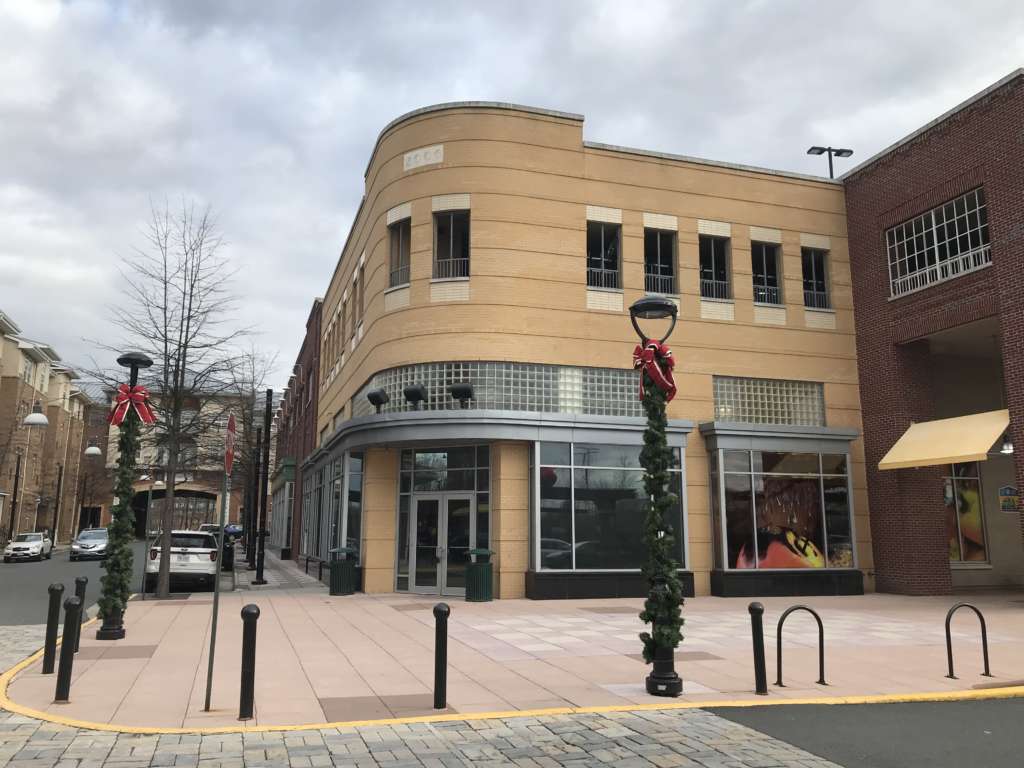
- Sprouts Farmers Market to Bring 140 Jobs to Herndon This Year
- Elden Corner Center in Herndon Nears Final Construction in February
- Four Businesses Left Woodland Park Crossing in Herndon Last Year
- Langston Hughes Middle School Begins Renovations, Expansion
- Fundraising Starts for Family of Killed South Lakes HS Teen
If you have ideas on stories we should cover, email us at [email protected] or submit an anonymous tip.
Feel free to discuss these topics, your weekend plans or anything else that’s happening locally in the comments below.
This is an opinion column by Del. Ken Plum (D), who represents Reston in Virginia’s House of Delegates. It does not reflect the opinion of Reston Now.
The Virginia General Assembly will convene for its annual session at noon today. The opening session will no doubt note that a form of representative government first met at the church at Jamestown 400 years ago. I am honored to have served nearly 10 percent of the span of existence of the Assembly.
The events of 400 years ago are being observed through a coordinating body, American Evolution, that in its publicity states that “1619 was a pivotal year in the establishment of the first permanent English colony in North America. It was the year of the first representative legislative assembly in the New World, the arrival of the first recorded Africans to English North America, the recruitment of English women in significant numbers, the first official English Thanksgiving in North America, and the development of the Virginia colony’s entrepreneurial and innovative spirit.”
I encourage constituents to participate in the events of the year for I believe they form an excellent starting point for an understanding of where Virginia is today and most importantly where Virginia is headed.
Some historians and public relations experts would proclaim what happened in Virginia in 1619 as the birth of democracy in America. Certainly, it was a small step, but that was 400 years ago. It is time to take another step in our evolution to a more democratic phase in our government. Namely, it is time for the people of Virginia to pick their legislative representatives rather than their representatives picking them. I am referring to the process of redistricting legislative boundaries after the federal census that is often referred to as “gerrymandering.”
In 1982 I introduced what I believe to be the first bill in Virginia to create a nonpartisan and independent legislative redistricting commission. The Democrats who overwhelmingly controlled the General Assembly at the time dismissed the idea for they were firmly in control. When the Republicans took the majority in the General Assembly years later, they also rejected my proposal because they were now in control.
I am pleased with the growth of awareness on the part of the public that the current partisan-controlled system of dividing up the population into legislative districts serves the legislators’ interests instead of their constituents and the issues important to them.
The General Assembly must act in this session to get a constitutional amendment on the ballot in time for a commission to be organized to do redistricting after the 2020 census. Thanks to all associated with OneVirginia 2021 for the advocacy they are doing to bring about this evolution of democracy in the Commonwealth.
Plan to visit the General Assembly during this session that runs five days a week through Feb. 22. All committee meetings are open to the public. Legislator offices are just across Bank Street from the Capitol, and I am always pleased to see constituents. Let’s make sure that when the history of the 2019 session is written that a major step in representative government will have taken place.
File photo